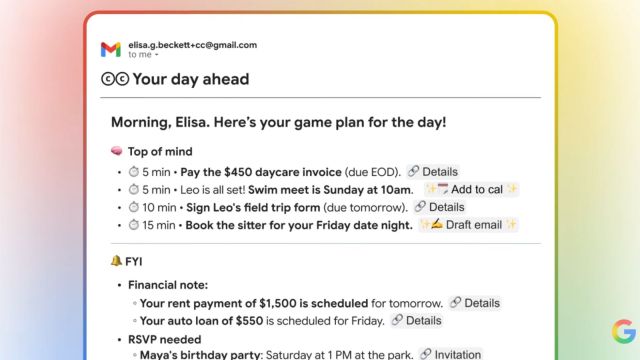
ChatGPT
Free- Best for: All-in-one assistant, Essays, Explanations
- Free Plan: Yes (GPT-4o mini)
ChatGPT remains the most versatile all-in-one assistant. It handles essays, problem-solving, tutoring, and explanations across all subjects.
A complete theoretical guide for school and college students.
Academic success is no longer about "writing more." It's about cognitive mapping and the ethical orchestration of AI.
Most students believe assignments are about writing a lot. This belief is incorrect. Assignments are evaluation tools used to measure your understanding of concepts, your ability to structure knowledge, and your clarity of thought.
Scoring high is not just about effort—it's about academic engineering. Marks are rarely lost because of lack of effort. They are lost because of structural and tonal errors that signal a lack of discipline. Examiners are looking for depth over length, and logic over language.
To consistently score high, you must understand how knowledge is evaluated cognitively. This requires moving beyond simple memorization into higher-order thinking skills like analysis and evaluation.
Before we dive into the deep theory, you need the right instruments. In 2025, tools are no longer just about generating text; they are about enhancing critical thinking and streamlining research. Use these as your exoskeleton for intelligence, not a replacement for it.
ChatGPT remains the most versatile all-in-one assistant. It handles essays, problem-solving, tutoring, and explanations across all subjects.
Rated as one of the best overall homework helpers, ai-tutor.ai covers math, science, and essay assignments with detailed explanations.
Grammarly is excellent for polishing your writing with real-time grammar suggestions, plagiarism detection, and AI Chat features.
Specifically designed for student assignments, Blainy offers AI automation, citation generation, and a built-in plagiarism detector.
Tutorly.ai specializes in providing detailed feedback on essays, highlighting weak arguments and suggesting improvements.
A comprehensive academic writing tool with a free plagiarism checker, grammar correction, and paraphrasing.
Yomu features an intelligent document assistant with AI autocomplete specifically tuned for academic contexts.
Excels at step-by-step math solutions—simply photograph a problem and get visual breakdowns.
Offers purpose-built math help with a 'teach me' mode that explains how to solve problems.
Specializes in paraphrasing, rewriting, summarizing, and citation generation for academic styles.
Excels at step-by-step math solutions—simply photograph a problem and get visual breakdowns.
To consistently score high, you must understand how knowledge is evaluated cognitively. Most educational systems implicitly follow Bloom’s Taxonomy, which ranks thinking skills from basic recall to complex creation.
Low-scoring assignments remain stuck at levels 1–2 (Remembering and Understanding). High-scoring assignments operate at levels 4–6 (Analyzing, Evaluating, Creating). Marks increase as the depth of cognition increases.
Do you actually grasp the topic foundation?
What unique independent reasoning are you taking?
The logical proof of your claim (Toulmin Model).
Reducing cognitive load for the examiner.
Examiners subconsciously ask: "Does the student show independent reasoning?". AI can assists by identifying analytical angles and stress-testing your arguments before you submit.
Recalling facts and explaining ideas. Necessary but basic.
Breaking down info to identify relationships and hidden patterns.
Judging validity using evidence and producing original insights.
Every good assignment is an argument, even when it appears descriptive. To craft a distinction-level paper, you must move beyond simple facts and into Toulmin’s Model of argumentation. This involves defining your Claims, Grounds, and importantly, your Warrants.
Ignoring rebuttals weakens credibility. High scorers acknowledge limitations to show independent reasoning.
Academic writing values measured certainty. Avoid overgeneralization and absolute conclusions. AI can help soften overconfident claims without diluting meaning.
Assignments are evaluated differently across fields. Using the wrong logic model reduces marks. Whether you are in Science or Humanities, you must adapt your tone and structure to discipline-specific norms.
Focus on Precision, Methodology, and Replicability. Structure emphasizes the Problem, Method, and Interpretation of Results.
Focus on Argument strength, Interpretation, and Theoretical framing. Structure emphasizes Context and perspectives.
Presentation influences perceived intelligence. Examiners process dozens of scripts; assignments that reduce their mental effort score higher. This is known as Cognitive Load Theory.
By using clear headings, logical spacing, and a consistent visual hierarchy, you make it easy for the examiner to find your core arguments and award marks.
Use labels that map directly to the mark scheme.
Subheadings and bullet points guide the reader's eye.
A standard layout builds trust with the examiner.
Perfect formatting signals a disciplined mind.
A perfect academic assignment follows a rigid, yet effective structure. Advanced introductions situtate the topic theoretically and position the assignment within that space. Strong conclusions synthesize, not summarize, reinforcing your thesis with future implications.
One clear sentence stating the objective.
Citations and scholarly proof.
The logic connecting evidence to claim.
Transition connecting to the next topic.
Originality lies in structure and interpretation, not wording alone. Distinction-level work (Chapter 16) focuses on depth over length and anticipates examiner expectations.
Safe AI usage means generating outlines and rewriting them with your own reasoning, always citing all sources. Plagiarism includes uncited AI-generated content.
Most students spend 90% of their time writing and loss marks on planning. High-scoring assignments are strategically allocated: 20% planning, 50% writing, and 30% editing.
Most questions answered in under 30 seconds — but if you still have one, write to us at contactgetaitool@gmail.com and we reply within a few hours.
Assignment writing trains critical thinking, structured communication, and professional discipline. These skills extend beyond academics into research, management, and entrepreneurship.
AI, when used correctly, accelerates mastery. Engineering Marks is a skill, not a talent.
Continue Exploring Tools
ChatGPT is an advanced AI-powered chatbot developed using cutting-edge natural language processi

Gemini is a powerful AI model developed by Google designed to deliver intelligent, accurate, and

ai-tutor.ai is an AI-powered learning and education platform designed to provide personalized tuto

Microsoft Math Solver is an AI-powered educational tool designed to help students solve math probl

Photomath is an AI-powered math learning and problem-solving app that helps students understand an

Socratic AI is an AI-powered learning platform developed by Google that helps students understand

SpeechPulse is an advanced AI-powered speech-to-text platform designed to help users convert spo


Film Flow is an AI-powered cinematic analysis tool designed to help filmmakers, critics, and film e

Tutorly.ai is an AI-powered tutoring and homework assistance platform designed to help students un

Yomu.ai is an AI-powered writing assistant built specifically for academic writing, essays, and re

Eureka Survey is an AI-powered survey platform that enables users to earn rewards by sharing thei


PDF Guru is an innovative AI-powered PDF document assistant that enables users to chat directly