A peek inside Physical Intelligence, the startup building Silicon Valley’s buzziest robot brains
Physical Intelligence (often called **Pi** inside Silicon Valley) is quickly becoming one of the most talked-about startups in robotics and AI.

Physical Intelligence (often called Pi inside Silicon Valley) is quickly becoming one of the most talked-about startups in robotics and AI. While many AI companies focus on language, images, or software-only agents, Physical Intelligence is tackling a much harder problem: giving robots a general-purpose “brain” that works in the real, physical world.
Backed by top-tier investors and founded by leading researchers in robotics and machine learning, the company is trying to do for robots what large language models did for text — create a foundation model that can be adapted to many tasks, environments, and machines.
What Is Physical Intelligence?
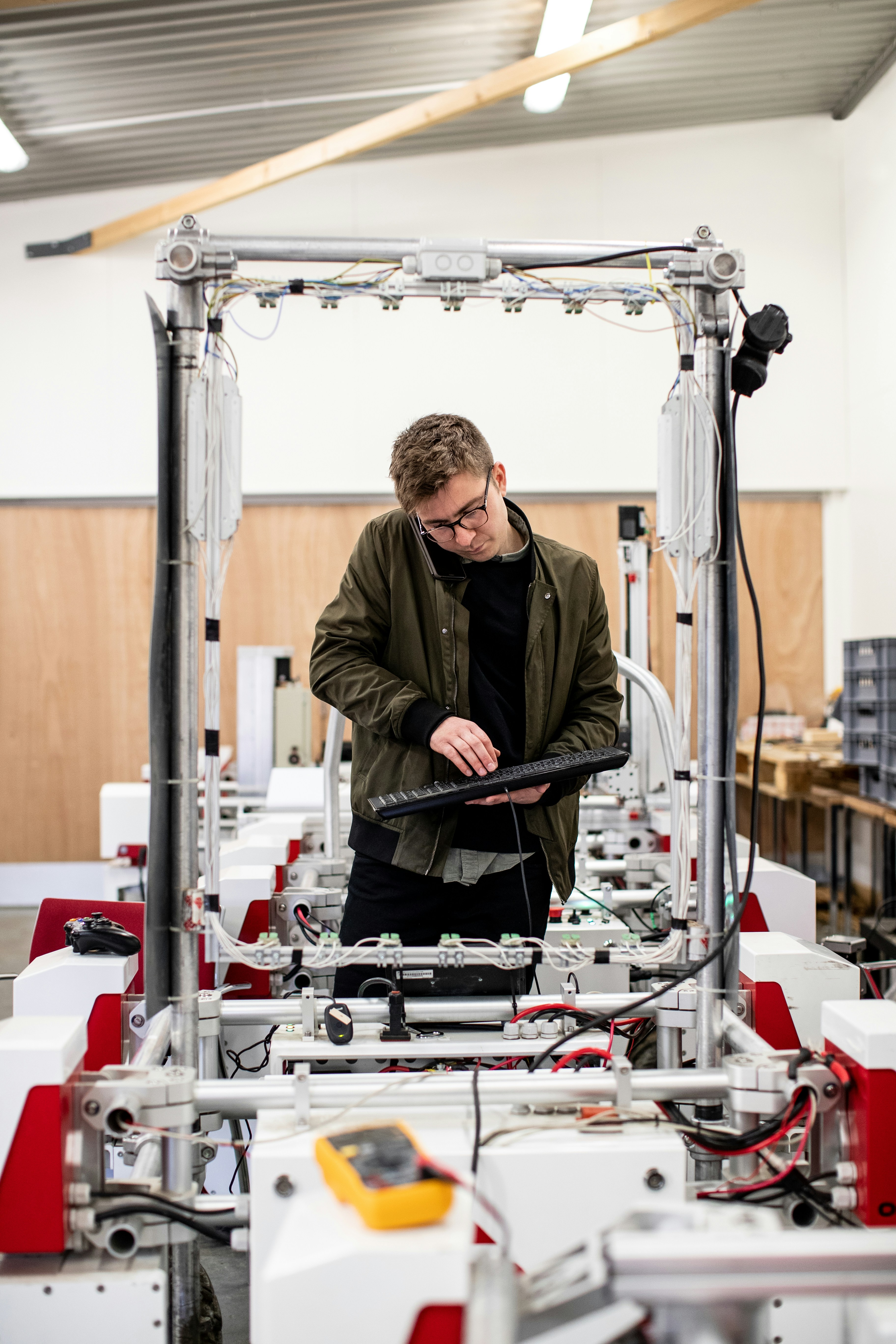
Physical Intelligence is building general robotic intelligence, sometimes described as a “robot foundation model.” Instead of programming robots task by task, Pi’s approach is to train large models that can:
- Understand the physical world
- Learn from demonstration and experience
- Generalize across tasks (grasping, moving, assembling, navigating)
- Transfer knowledge between different robot bodies
The goal is simple to describe but extremely difficult to execute:
one AI system that can power many different robots, in many environments, with minimal re-programming.
Why Silicon Valley Is Buzzing
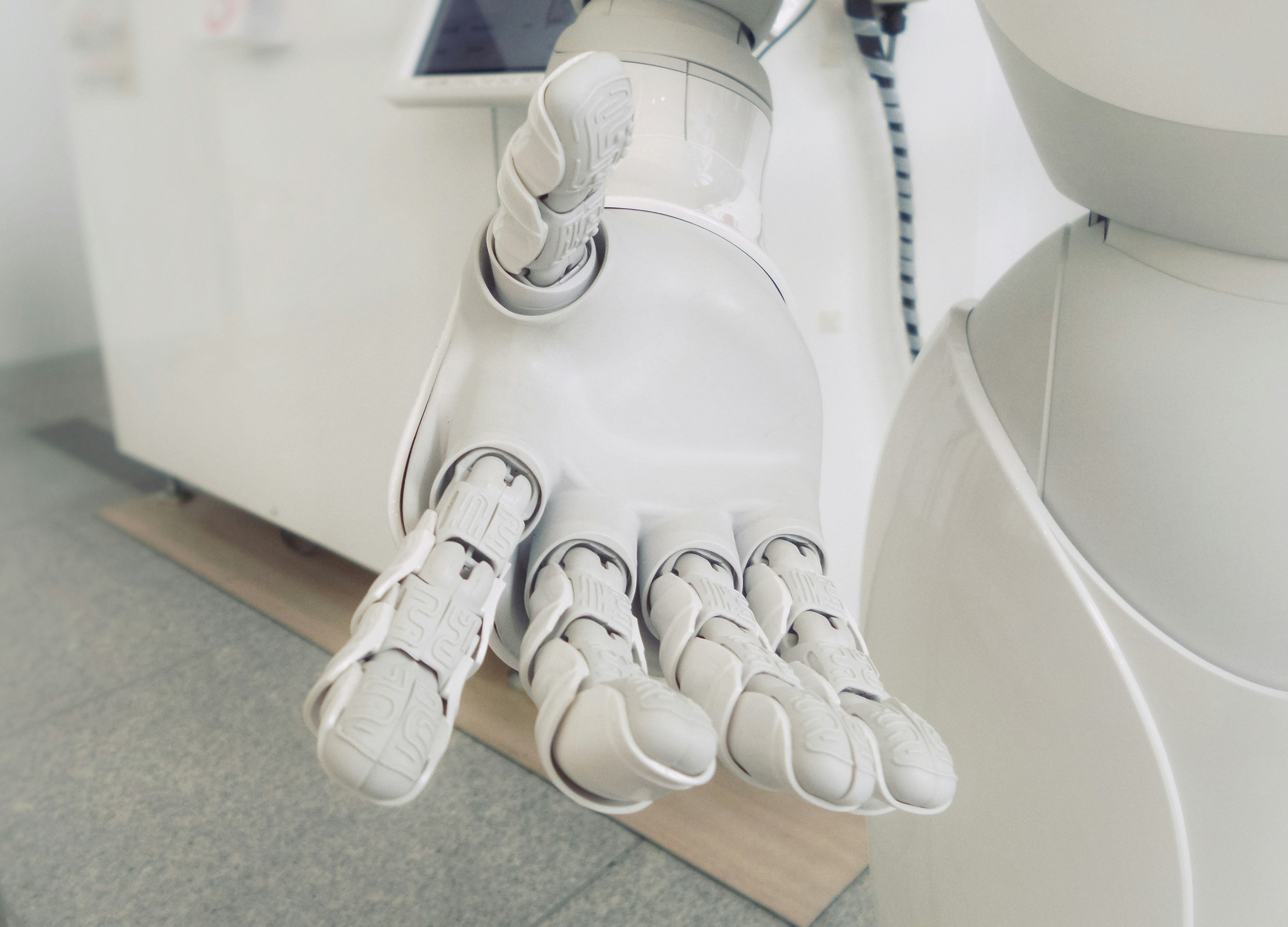
Robotics has long been called “the next big wave,” but progress has been slow due to fragmentation — every robot, sensor, and task required custom software.
Physical Intelligence is exciting investors and engineers because it promises to break that pattern.
Key reasons for the hype:
- Founding team pedigree: Researchers from top AI labs and robotics institutions
- Foundation-model approach: Similar philosophy to GPT-style models, but for the physical world
- Cross-robot learning: Skills learned on one robot can help another
- Timing: Advances in simulation, compute, and multimodal AI finally make this plausible
In short, Pi is betting that robot intelligence, not robot hardware, is the real bottleneck.
How the “Robot Brain” Works

At the core of Physical Intelligence’s work is a model trained on massive amounts of robot interaction data. This includes:
- Camera feeds (vision)
- Proprioception (joint angles, force, torque)
- Action sequences
- Success and failure outcomes
Much of this data is generated in high-fidelity simulation, then refined with real-world robot experiments. The model learns patterns like:
- How objects behave when pushed, lifted, or dropped
- How friction, gravity, and contact affect motion
- How to recover when something goes wrong
Instead of memorizing instructions, the system learns physical intuition — something humans develop naturally, but robots historically lack.
A Foundation Model for Robotics

Physical Intelligence is often compared to OpenAI or DeepMind — but for robots.
Just as language models can write emails, code, or poetry, Pi’s model aims to:
- Control a robotic arm in a factory
- Help a humanoid robot tidy a room
- Enable a mobile robot to navigate new spaces
- Adapt to new tools without reprogramming
Developers would build on top of this core model instead of starting from scratch.
How Pi Differs From Traditional Robotics Companies

Traditional robotics companies usually:
- Build tightly integrated hardware + software
- Focus on narrow, repetitive tasks
- Require months of tuning per deployment
Physical Intelligence flips this approach:
| Traditional Robotics | Physical Intelligence |
|---|---|
| Task-specific code | General learning model |
| Fixed environments | Adaptable environments |
| Limited transfer | Cross-robot learning |
| Slow iteration | Data-driven scaling |
This is why some investors see Pi as infrastructure, not just another robotics startup.
Potential Use Cases

If Physical Intelligence succeeds, the impact could span multiple industries:
- Warehouses & logistics – adaptable picking and sorting
- Manufacturing – flexible assembly lines
- Healthcare – assistive robots in hospitals
- Home robotics – general-purpose household helpers
- Research & labs – faster experimentation
Rather than building a new robot for each job, companies could deploy one intelligence across many machines.
The Hard Problems Ahead
Despite the excitement, challenges remain enormous:
- Data scarcity: Real-world robot data is expensive and slow to collect
- Safety: Mistakes in the physical world can cause damage
- Generalization: Real environments are messy and unpredictable
- Cost: Training large physical models requires massive compute
Physical Intelligence is betting that scale + learning beats hand-engineering, but this remains an open question.
Why This Matters Beyond Robotics

If Pi’s approach works, it could redefine how we think about AI:
- AI wouldn’t just understand the world — it could act in it
- Software agents and physical agents could share intelligence
- The boundary between digital and physical automation would blur
Some researchers believe this is a key step toward general artificial intelligence — systems that can reason, plan, and act across domains.
Conclusion
Physical Intelligence isn’t building just another robot. It’s building a brain — one meant to live inside many bodies, learn continuously, and adapt to the real world’s chaos.
That ambition is why Silicon Valley is paying attention. Whether Pi becomes the “OpenAI of robotics” or hits the brutal limits of the physical world, one thing is clear:
The race to give robots true intelligence has entered a new phase — and Physical Intelligence is at the center of it.
FAQ
What is Physical Intelligence?
Physical Intelligence is a startup developing a foundation AI model designed to control and generalize across many types of robots.
How is this different from existing robotics AI?
Instead of task-specific code, Pi focuses on a general model that can learn and adapt across tasks and robot platforms.
Is Physical Intelligence building its own robots?
The company focuses primarily on robot intelligence, not mass-producing hardware.
Why is it compared to OpenAI?
Because it applies the foundation-model philosophy — successful in language — to the physical world.
When will this reach consumers?
Most early applications are expected in industry and research, with consumer robotics taking longer.
Mentioned in this article
Tools

Productivity Page
Productivity Page is an AI-powered productivity app designed to help users manage tasks, notes,

Productivity Page is an AI-powered productivity app designed to help users manage tasks, notes, habits, and goals in a unified and streamlined manner. It addresses the common problem of fragmented digital workflows by providing a central hub for all essential productivity elements, leveraging i

Higgsfield.ai
Higgsfield.ai is an advanced AI-powered video generation platform focused on creating cinematic, h
Higgsfield.ai is an advanced AI-powered video generation platform focused on creating cinematic, high-quality AI videos with realistic motion, camera movement, and visual storytelling. It is designed for creators, filmmakers, marketers, and brands who want to produce professional-grade videos us
Socratic AI Math Helper
Socratic AI is an AI-powered learning platform developed by Google that helps students understand

Socratic AI is an AI-powered learning platform developed by Google that helps students understand concepts, solve problems, and learn more efficiently by providing step-by-step explanations, visual guides, and study resources. It combines artificial intelligence with educational content to make l

MUSID.AI
Musid.ai is an all-in-one AI music and video generation platform that enables users to create orig

Musid.ai is an all-in-one AI music and video generation platform that enables users to create original music, professional music videos, and visual content from text prompts or uploaded audio — all without needing editing skills or software. It combines powerful AI engines to handle music creatio

Browser MCP
BrowserMCP.io is a platform and browser automation tool that connects AI applications directly to
BrowserMCP.io is a platform and browser automation tool that connects AI applications directly to your web browser so they can control, navigate, and automate tasks within real browser sessions. It leverages the Model Context Protocol (MCP) to enable AI tools like Claude, Cursor, Windsurf, VS
Kimi K2
Kimi K2 for AI Agents refers to the use of Kimi K2’s AI-powered presentation and visual content ge
Kimi K2 for AI Agents refers to the use of Kimi K2’s AI-powered presentation and visual content generation capabilities in concert with autonomous AI agents to automate the creation of slides, reports, dashboards, and visual outputs as part of an AI-driven workflow. Instead of manual slide desi


