India and US Kick Off Trade Talks in Delhi With Tariffs, AI on Agenda
India and the US kicked off high-stakes trade talks in Delhi today (June 1-4), with artificial intelligence , pharmaceuticals , and tariff reductions...
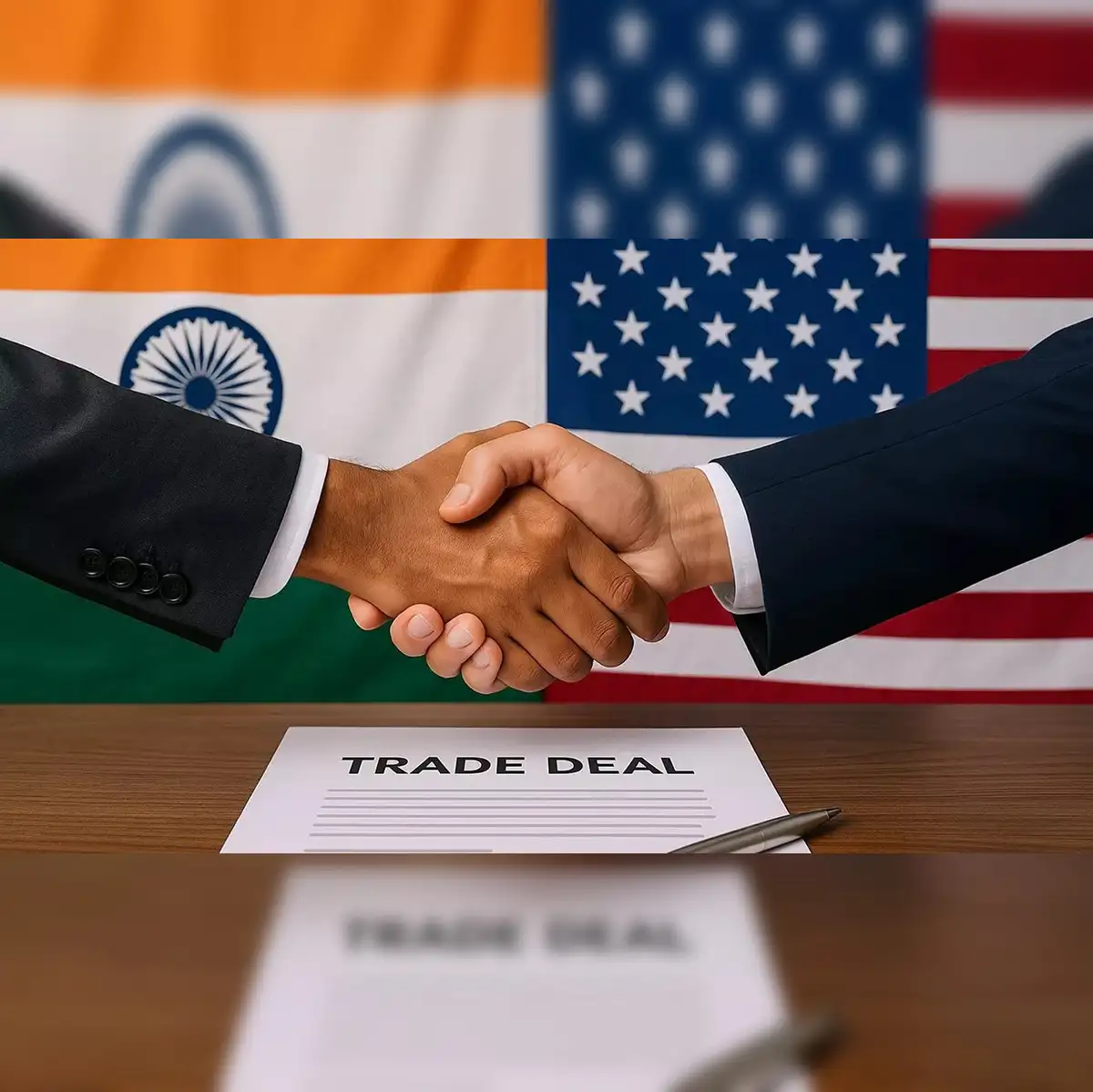
India and the US kicked off high-stakes trade talks in Delhi today (June 1-4), with artificial intelligence, pharmaceuticals, and tariff reductions topping the agenda. With bilateral trade having surged from $20 billion to $220 billion over two decades, this interim deal could reshape supply chains for AI chips, generic drugs, and digital services — directly impacting Indian startups and global tech players.
What Are the India-US Trade Talks?
These are bilateral negotiations aimed at finalising an interim trade agreement between India and the United States, covering market access, non-tariff barriers, customs facilitation, and new cooperation in high-tech sectors. The talks follow months of back-channel discussions, with US Ambassador Sergio Gor stating just last week that the deal is in its “final stretch.”

- Indian chief negotiator: Darpan Jain, additional secretary in the Department of Commerce.
- US chief negotiator: Brendan Lynch.
- Previous milestones: India sent a team to Washington DC last week to resolve the “last 1%” of the deal.
- Sectors highlighted: financial services, healthcare, manufacturing, AI, digital payments, and critical minerals.
The Core News: Tariffs, AI, and Pharma on the Table
The most concrete developments revolve around three pillars:
1. Artificial Intelligence and Emerging Tech
Both sides are formalising a cooperation framework for AI, semiconductors, and quantum computing. India expects to join a US-led “network of trusted ecosystems” for resilient supply chains — a direct shot at reducing dependency on China for chips and rare earths.
2. Pharmaceuticals
The US imports 40% of its generic drugs from India. The talks aim to streamline regulatory approvals and ensure uninterrupted supply of life-saving medicines. Ambassador Gor explicitly said, “we trust India” for pharma.
3. Tariffs and Market Access
An interim deal would likely include tariff reductions on select goods, simplified customs procedures, and removal of non-tariff barriers. Commerce Minister Piyush Goyal emphasised “investor confidence and predictable regulatory environment” during his US visit.
| Sector | India’s Offer | US Expectation | Status |
|---|---|---|---|
| AI & Semiconductors | Join trusted supply chain network | Access to talent and data flows | Framework agreed; implementation in progress |
| Pharmaceuticals | Guaranteed supply of generics | Regulatory alignment and IP protection | Under negotiation; likely phased |
| Tariffs / Trade | Reduce duties on US goods (e.g., EVs, agri) | Market access for US services | Interim deal expected in weeks |
Why This Matters: The Stakes for AI and Tech
This isn’t just a trade deal — it’s a strategic pivot for India’s AI ambitions.
- AI models and data: A closer US-India tech alliance could mean easier cross-border data flows for training AI, especially for Indian startups building LLMs for local languages.
- Semiconductor supply: India’s push for chip fabrication (e.g., the Vedanta-Foxconn plant) gets a reliable partner for design and packaging tech.
- Cloud and digital payments: US cloud providers (AWS, Azure) and fintech players will get clearer rules to operate in India, benefiting SaaS and AI tool developers.
For Indian AI news publishers and tool reviewers, this deal is a licence to cover how regulatory shifts affect product launches, funding rounds, and compliance requirements for both homegrown and foreign AI firms.
Key Details and Technical Breakdown
What’s in the “Last 1%”?
The remaining issues likely include:
- Intellectual property protections for US pharma and software patents.
- Digital trade rules (e.g., data localisation exemptions).
- Reciprocal tariffs on steel, aluminium, and agricultural goods.
- Labour and environmental standards demanded by the US.
How the AI Cooperation Will Work
- India and the US will jointly fund research in foundational AI and quantum computing.
- A mutual recognition framework for AI safety standards will be developed.
- Indian firms can access US government AI procurement under “trusted ecosystem” status.
- Semiconductors: India gains preferential access to US chip design tools and EDA software.
Pharma Focus
- US FDA may streamline approvals for Indian manufacturing sites.
- India will pre-commit to maintaining supply of 50+ essential generic drugs.
- Price controls on patented drugs remain a sticking point.
Competitive Landscape: China, Europe, and the Rest
This deal positions India as a US counterweight to China in tech and trade.
- China’s response: Beijing has already tightened rare-earth export controls, making the US-India critical minerals framework urgent.
- Europe’s angle: The EU is negotiating its own India trade deal (likely finalised by 2027). A US-India interim agreement could set precedents for data, AI, and pharma that Europe will have to match.
- Other Asian rivals: Vietnam and Taiwan also court US tech investment, but India’s pharma and AI talent pool gives it an edge.
For AI-tool publishers, this means more stories on how Indian AI startups compete with Chinese (e.g., DeepSeek) and US giants, and how trade policies create winners and losers.
What This Means for AI-Tool and AI-News Publishers
Yes, this is a policy story — but it’s also a content goldmine for your audience. Here are five concrete angles:
- Regulatory deep-dive: Write “How the India-US AI Framework Changes Compliance for Tool Builders” — cover data localisation, cross-border model sharing, and IP.
- Sector opportunity analysis: “Pharma AI Tools Could Boom Thanks to US-India Deal” — explore how AI for drug discovery (e.g., using generative models) gets new funding and regulatory pathways.
- Founder interviews: Pitch stories to Indian AI founders who are expanding to the US. Ask how the deal affects their go-to-market and server costs.
- Comparison tables: “India vs. China vs. EU AI Supply Chains — Who Wins Under the New Trade Deal?” — great for SEO and link-building.
- Tool reviews with policy context: When reviewing a US-based AI tool (e.g., OpenAI, Anthropic), add a “What the India-US Deal Means for Pricing” section.
Challenges Ahead and Risks
- Time pressure: The deal is expected “over the next few weeks and months,” but US mid-term politics could derail ratification.
- Data sovereignty: Indian regulators remain cautious about free data flows — expect pushbacks from the Ministry of Electronics and IT.
- Pharma pricing: US drugmakers want higher margins; India wants affordable generics. Compromise may be messy.
- Implementation lag: Many such trade frameworks take years to fully operationalise — don’t expect immediate changes for AI startups.
- China retaliation: Beijing may block Indian pharma ingredients or rare-earth shipments if the deal is seen as anti-China.
Final Thoughts
The India-US trade talks are not just about tariffs — they are a blueprint for the next decade of tech sovereignty. For AI tool developers and bloggers in Delhi, this is a reminder that policy is the new product: understanding the regulatory landscape is now as important as knowing the latest GPT release. Watch this space — the “last 1%” could unlock the first major AI trade corridor of the 21st century.
FAQ
What exactly is being negotiated in the India-US trade talks?
An interim trade agreement covering tariffs, market access, pharmaceuticals, and cooperation in AI, semiconductors, and quantum computing.
How does this impact Indian AI startups?
It could ease cross-border data flows, provide access to US government tech procurement, and unlock joint research funding — making it easier to scale globally.
When will the deal be signed?
US officials expect finalisation in “the next few weeks and months.” The current talks (June 1-4) aim to resolve the final sticking points.
What’s the biggest risk for AI and tech in this deal?
Data localisation rules and IP protections could create friction. Implementation delays are also likely.
How does this compare to the US-China tech rivalry?
It’s a direct move to build a trusted supply chain that excludes China, especially in semiconductors, critical minerals, and AI.
Will Indian pharma companies benefit immediately?
Export volumes may rise quickly, but price controls and FDA approvals may take 6-12 months to see tangible relief.
Mentioned in this article
Tools

ChatGPT
ChatGPT is an advanced AI-powered chatbot developed using cutting-edge natural language processi
ChatGPT is an advanced AI-powered chatbot developed using cutting-edge natural language processing (NLP) and machine learning technology. It is designed to understand human language, generate intelligent responses, and assist users with a wide range of tasks such as content creation, coding,

LusyChat
LusyChat is an AI chatbot designed to provide users with engaging and interactive conversations,

LusyChat is an AI chatbot designed to provide users with engaging and interactive conversations, specializing in roleplaying and adult-oriented scenarios. It addresses the need for a customizable and responsive AI companion, offering a platform for personalized interactions that go beyond typical


