OpenAI allows users to directly adjust ChatGPT???s enthusiasm level
ChatGPT users can now tweak the chatbot???s warmth, enthusiasm, and emoji use, according to a social media post from OpenAI.

ChatGPT Users Can Now Customize Tone, Warmth, and Emoji Use
OpenAI has rolled out expanded personalization controls for ChatGPT, giving users greater authority over how the AI communicates. These new options allow users to fine-tune warmth, enthusiasm, and emoji usage, adding another layer of control on top of previously introduced tone and formatting preferences.
This update reflects OpenAI’s broader effort in 2025 to make ChatGPT more adaptable, transparent, and user-centricΓÇöresponding directly to feedback from professionals, educators, developers, and everyday users.
What’s New in ChatGPT Personalization?
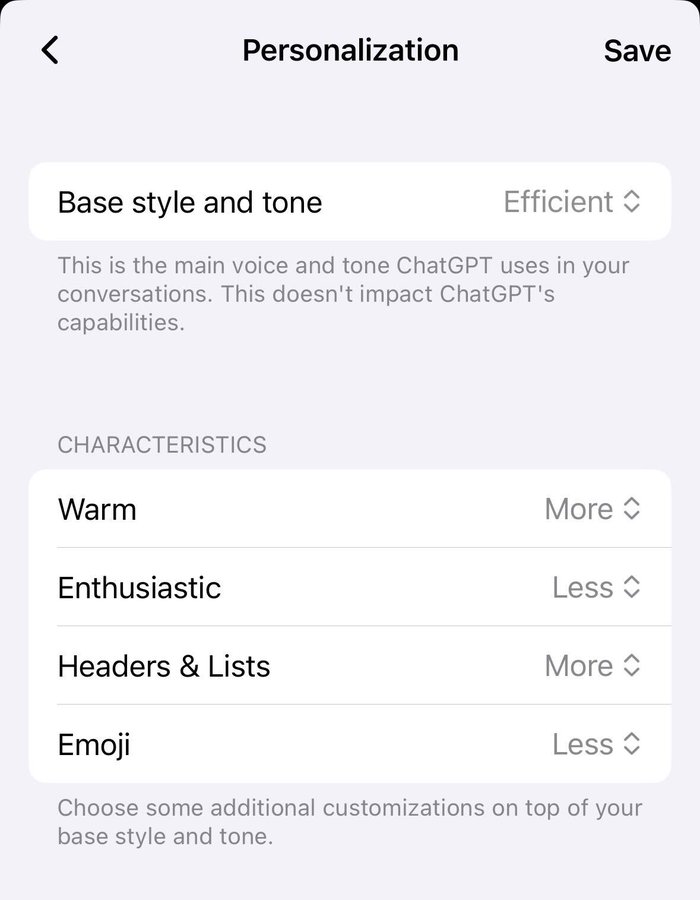
The latest update introduces granular communication controls inside the Personalization menu, where users can now adjust:
- Warmth (friendliness and conversational feel)
- Enthusiasm (energy and excitement in responses)
- Emoji Use (frequency or complete removal)
- Headers and Lists (structure and formatting preferences)
Each setting can typically be toggled between More, Less, or Default, allowing users to shape responses without changing the underlying intelligence or accuracy of the model.
These settings work alongside existing base style and tone options, such as:
- Professional
- Candid
- Quirky
Together, they enable ChatGPT to adapt to a wide range of communication contextsΓÇöfrom corporate documentation to casual conversations.
Why Tone Customization Matters
Tone plays a critical role in how information is perceived. A response that feels appropriate in a casual chat may seem unprofessional in a business setting, while a strictly formal response can feel cold or unhelpful in creative or educational contexts.
By introducing tone-level controls, OpenAI aims to:
- Reduce friction in professional use cases
- Improve comfort and engagement for casual users
- Make ChatGPT more adaptable across cultures and communication styles
This update acknowledges that one conversational style does not fit all users.
Ongoing Tone Adjustments in 2025

Throughout 2025, ChatGPT’s tone has been the subject of active discussion. Earlier updates were rolled back after users described the chatbot as being overly agreeable or “sycophant-like.” Later iterations of GPT-5 were adjusted again to feel warmer and more approachable, following criticism that responses had become too robotic or emotionally distant.
These changes highlight the difficulty of balancing:
- Helpfulness vs. neutrality
- Warmth vs. professionalism
- Engagement vs. emotional dependency
The new personalization controls shift that balance from the model to the user, letting individuals decide what feels right.
Academic and Ethical Concerns
Some academics and AI critics have raised concerns about highly affirming conversational AI. Excessive praise or agreement, they argue, can act as a dark pattern, subtly encouraging emotional reliance or reinforcing existing beliefs without sufficient critical distance.
Key concerns include:
- Potential for addictive conversational behavior
- Reinforcement of confirmation bias
- Mental health implications for vulnerable users
By allowing users to reduce enthusiasm or warmth, OpenAI provides a way to mitigate these risks while maintaining usability.
Personalization Features Explained
Warmth
Controls how friendly and conversational ChatGPT sounds.
- Higher warmth: more personable, empathetic tone
- Lower warmth: neutral, direct, and factual
Enthusiasm
Adjusts the energy level of responses.
- Higher enthusiasm: expressive, motivational style
- Lower enthusiasm: calm, restrained, professional
Emoji Use
Lets users decide whether emojis appear in responses.
- Useful for casual chats and social content
- Can be disabled for formal writing or documentation
Headers and Lists
Allows users to control structural formatting.
- Ideal for users who prefer concise answers or detailed breakdowns
These settings do not affect reasoning, intelligence, or factual reliabilityΓÇöonly presentation and delivery.
FAQs: ChatGPT Personalization Features Explained
What new personalization features has OpenAI introduced?
OpenAI has added controls for warmth, enthusiasm, and emoji usage, allowing users to tailor ChatGPT’s communication style more precisely.
Why would users want to adjust enthusiasm or warmth?
Different tasks require different tones. A professional email, academic explanation, or customer support reply often benefits from a calmer tone, while creative writing or brainstorming may benefit from higher energy.
How do users change these settings?
Users can access these options in the Personalization menu within the ChatGPT interface and adjust preferences before or during conversations.
Do these settings affect accuracy or reasoning?
No. These controls only influence tone, style, and formatting. The underlying model behavior and factual accuracy remain unchanged.
Are these features available to free users?
Yes, core personalization options are available to free users. Some advanced customization features may vary depending on subscription plans.
Can developers use similar controls via the API?
Yes. Developers can apply tone and style parameters when building applications with the ChatGPT API, enabling more context-aware and brand-aligned AI interactions.
Do these changes address concerns about AI emotional influence?
Partially. By allowing users to reduce affirming or enthusiastic responses, OpenAI gives individuals more control over emotional tone, addressing some ethical and mental health concerns.
What This Means for the Future of AI Conversations
This update signals a broader shift in conversational AIΓÇöfrom one-size-fits-all personalities to user-controlled communication styles. Instead of debating what ChatGPT should sound like, OpenAI is allowing users to decide for themselves.
As AI becomes more embedded in work, education, and daily life, such personalization will likely become standard, helping AI tools feel useful without being intrusive or emotionally manipulative.
The new tone, warmth, and emoji customization options mark an important step in ChatGPT’s evolution. By placing control in the hands of users, OpenAI is making conversations more adaptable, ethical, and context-awareΓÇöensuring that ChatGPT can fit seamlessly into a wide range of real-world use cases.