BeemervsClaude in PowerPoint
Side-by-side battle & analysis. Compare features, pricing, real community ratings, and pros & cons in 2026.

Beemer
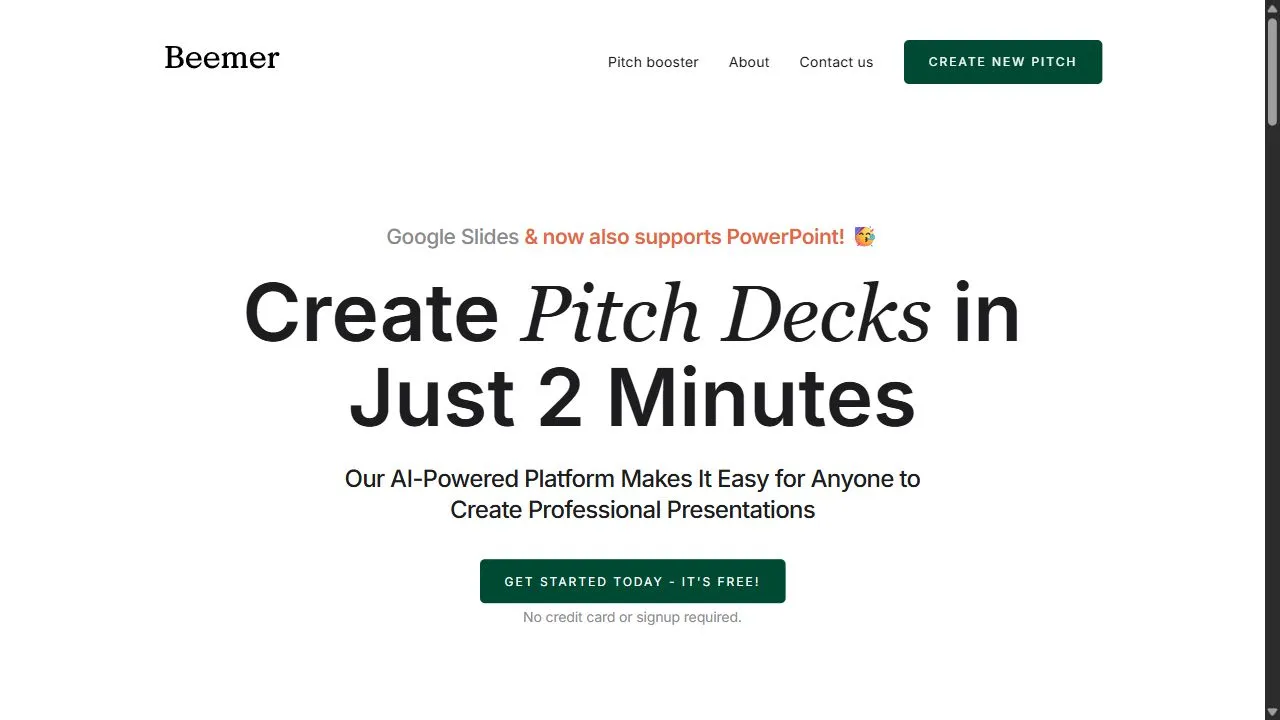
Create a fully structured pitch deck in under two minutes with AI-powered automation from Beemer.

Claude in PowerPoint
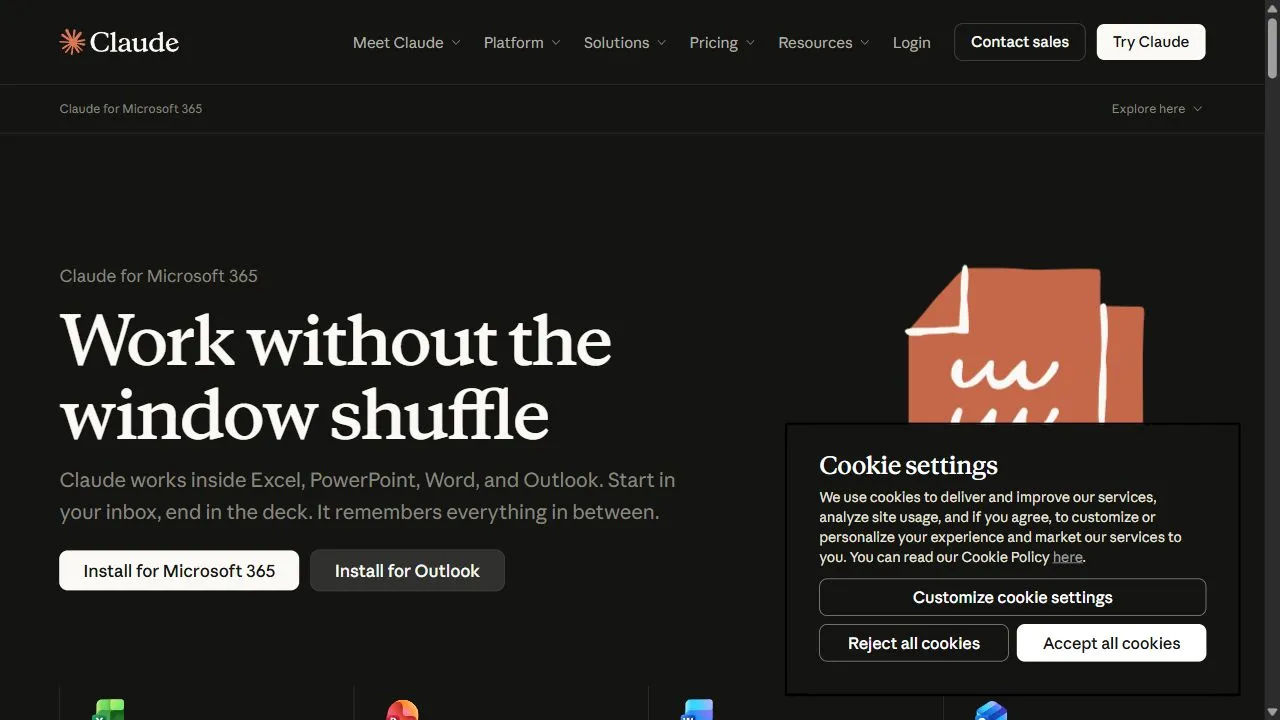
Build and manage your PowerPoint slides in real-time with AI assistance.
Quick Verdict & Takeaway
Head-to-head summary recommendation
Both Beemer and Claude in PowerPoint provide high-performance solutions in the Ai Presentation ecosystem. Both platforms are top-rated in their respective categories.
Choose Beemer if:
You need a subscription tool optimized for Pitch Deck Generator with TEXT input formats.
Choose Claude in PowerPoint if:
You prefer a subscription platform geared towards PPT Generator with TEXT, OTHERS output options.
Specification & Feature Matrix
Direct technical comparison between Beemer and Claude in PowerPoint
| Feature / Spec | Beemer | Claude in PowerPoint |
|---|---|---|
| Pricing Model | SUBSCRIPTION | SUBSCRIPTION |
| Starting Price | $10/mo | $17/mo |
| Category | Ai Presentation | Ai Presentation |
| Subcategory | Pitch Deck Generator | PPT Generator |
| Supported Inputs | TEXT | TEXT |
| Generated Outputs | TEXT | TEXT, OTHERS |
| User Rating | ★ 4.0 / 5.0 (0) | ★ 4.0 / 5.0 (0) |
| Verified Status | Unverified | Unverified |
Interface & UI Showcase
Visual previews and interface screenshots
Beemer Interface
Claude in PowerPoint Interface
Pros & Cons Comparison
Beemer Pros & Cons
Strengths
- Incredibly fast
- Easy to get started
Limitations
- Generic design options
- Limited advanced narrative control
Claude in PowerPoint Pros & Cons
Strengths
- Seamless M365 integration
- Very powerful text synthesis
- Improves slide narrative
Limitations
- Requires active subscription to both platforms
- Design elements limited to slide layouts
About Beemer
Beemer is a powerful AI-powered pitch deck generator designed to help entrepreneurs and startup founders accelerate the fundraising process by leveraging artificial intelligence, automation, and intelligent content structuring . The tool specifically addresses the common bottleneck faced by founders: the exhaustive amount of time and effort required to transform a raw business idea into a professional, investor-ready presentation. By automating the heavy lifting of slide creation, Beemer allows users to move from a conceptual stage to a structured pitch in a matter of minutes. The platform utilizes advanced AI to analyze basic startup information and automatically distribute that data across a series of strategically sequenced slides. This ensures that the resulting presentation adheres to the logical flow that venture capitalists and angel investors expect. Rather than starting with a blank canvas, users provide essential text inputs, and the AI handles the narrative architecture, layout, and content placement. This approach minimizes the friction associated with slide design and copywriting, enabling founders to focus more on their core product and less on the logistics of presentation software. Designed primarily for early-stage founders, serial entrepreneurs, and business development professionals , Beemer streamlines the transition from idea to execution. By integrating AI-driven automation, the tool eliminates the need for expensive design agencies or hours of manual formatting in traditional presentation software. It is an essential utility for anyone operating in fast-paced environments where the ability to iterate quickly on a pitch is a competitive advantage. Key Features of Beemer Rapid AI generation of complete pitch decks in under two minutes. Automated creation of problem-solution fit slides to establish market need. Intelligent generation of market size slides to demonstrate scalability. Automated business model slide creation to outline revenue streams. Text-to-presentation conversion based on basic startup descriptions. Exportable slide formats compatible with various presentation environments. Structured narrative sequencing based on investor expectations. Simplified input interface for rapid data entry. Iterative design capabilities for refining pitch content. Automated layout distribution to ensure visual consistency across slides. Why People Use Beemer The primary motivation for using Beemer is the drastic reduction in the time required to produce a high-quality first draft of a pitch deck. In traditional workflows, creating a pitch deck is a grueling process involving multiple iterations of copywriting, layout adjustments, and visual formatting. Founders often spend days or even weeks toggling between documents and slide software, often getting bogged down in aesthetic details before the core narrative is even finalized. Beemer shifts this paradigm by prioritizing the structure and speed of the initial output. Many users turn to Beemer to overcome the "blank page syndrome," where the sheer scale of creating a comprehensive investor presentation leads to procrastination. By providing a fully structured deck almost instantaneously, the tool gives users a tangible foundation that can be tweaked and polished, rather than forcing them to build from scratch. This allows for a much faster iteration cycle; a founder can test different value propositions or business models by generating several versions of a deck to see which narrative feels most compelling. Furthermore, Beemer is used to ensure professional standardization. Many founders possess great ideas but lack the design skills or the knowledge of "investor psychology"—the specific sequence of information that investors look for when evaluating a startup. Beemer implicitly encodes these industry standards into its AI, ensuring that critical components like market opportunity and the business model are not overlooked. This shift from manual creation to AI-assisted generation results in a higher level of consistency and a professional appearance that builds credibility with potential stakeholders. Popular Use Cases Pre-Seed and Seed Funding Rounds: Founders use the tool to quickly generate a professional deck to secure their first round of external investment without hiring a design firm. Pitch Competitions and Demo Days: Entrepreneurs participating in time-sensitive competitions use Beemer to create a concise, high-impact presentation that fits strict time limits. Internal Stakeholder Alignment: Business leads use the tool to visualize a new project or internal venture for executive approval, ensuring the logic is sound and the presentation is polished. Rapid Prototyping of Business Ideas: Serial entrepreneurs use Beemer to quickly map out the logic of multiple business concepts, using the generated decks as a way to "stress test" the viability of a startup idea. Updating Decks for Different Investor Personas: Users generate variations of their pitch to emphasize different strengths—such as focusing more on the technical innovation for a VC or the market growth for an angel investor. Bootstrapped Startup Documentation: Small teams use the tool to maintain a professional outward-facing presentation for potential partners or early adopters without diverting engineering resources to design. Benefits of Beemer Dramatic Increase in Speed: The most immediate outcome is the reduction of production time from days to minutes, allowing founders to reach the "pitch-ready" stage significantly faster. Enhanced Professionalism: Users achieve a polished, cohesive look that conveys competence and seriousness to investors, regardless of their personal design skills. Focus on Strategy over Formatting: By automating the layout and slide creation, the tool frees the user to spend their cognitive energy on refining the business strategy and value proposition. Reduced Cognitive Load: The AI-driven structure removes the stress of deciding what information goes on which slide, providing a proven framework for success. Higher Iteration Velocity: The ability to generate decks quickly means users can experiment with different narratives and pivot their messaging in real-time based on feedback. Improved Investor Readiness: By ensuring that all essential slides—such as the problem, solution, and market size—are included, the tool reduces the risk of a deck being rejected for missing critical information. Lower Entry Barriers for Non-Designers: Beemer democratizes the ability to create high-quality presentations, ensuring that great ideas are not ignored simply because they were presented in an unappealing format.
About Claude in PowerPoint
Opening Overview Claude in PowerPoint is a sophisticated AI-powered presentation assistant that integrates the advanced linguistic capabilities of Anthropic’s Claude model directly into the Microsoft 365 ecosystem. This integration solves the persistent challenge of converting complex data and lengthy documents into concise, visually structured slides, effectively bridging the gap between raw research and final presentation delivery. By utilizing artificial intelligence and intelligent automation, the tool allows users to generate, edit, and populate PowerPoint slides using natural language commands, significantly reducing the manual effort typically required for slide construction. The core functionality of this tool centers on the use of a Large Language Model (LLM) to handle the cognitive load of synthesis and structuring. Instead of manually distilling information from reports or meeting notes, users can leverage Claude to analyze the source material and distribute it logically across a slide deck. The AI acts as a collaborative design and content partner, transforming the traditional static process of presentation building into a dynamic, conversational workflow. This ensures that the transition from a conceptual outline to a polished deck is fluid and data-driven. Designed primarily for corporate professionals, consultants, educators, and data analysts, Claude in PowerPoint is optimized for those who operate under strict deadlines and manage high volumes of information. By integrating directly into the software users already employ, it eliminates the need to toggle between separate AI chat interfaces and the presentation software. This streamlined approach maximizes productivity and allows users to focus on the strategic delivery of their message rather than the tedious mechanics of text placement and slide organization. Key Features of Claude in PowerPoint Real-time generation of PowerPoint slides based on natural language prompts. Automated drafting of comprehensive presentation outlines from raw text inputs. Intelligent synthesis of large datasets and long-form documents into concise bullet points. Contextual editing and refinement of existing slide content through an AI chat interface. Suggestion of slide layouts that align with the structure of the generated text. Direct integration within the Microsoft 365 environment for seamless workflow execution. Ability to import existing files for AI-driven expansion or content updates. High-fidelity text generation that maintains professional tone and narrative consistency. Rapid population of slide content to remove the friction between research and visualization. Intelligent restructuring of complex narratives into presentation-ready formats. Why People Use Claude in PowerPoint The primary motivation for using Claude in PowerPoint is the elimination of the "blank page syndrome" and the significant time investment required for manual slide synthesis. In a traditional workflow, creating a professional presentation involves several disparate steps: conducting research, summarizing findings in a document, manually creating slides, and then painstakingly distilling that document into short, punchy bullet points. This process is not only time-consuming but often leads to a loss of critical detail or a disjointed narrative flow. By leveraging AI, users can bypass the tedious transcription phase. The tool allows the user to shift their role from a manual content creator to a strategic editor. Instead of spending hours moving text from a PDF to a slide, the user provides the source material and instructs the AI to organize it. This shift drastically reduces cognitive fatigue and ensures that the most relevant insights are highlighted without the risk of human oversight during the manual condensation process. Furthermore, scalability is a major driver for adoption. For professionals who must produce multiple decks per week—such as consultants or agency account managers—the ability to automate the first draft of a presentation is a competitive advantage. The speed of execution provided by the AI integration allows for more iterations and refinements, resulting in a higher-quality final product that is more closely aligned with the intended data insights. Popular Use Cases Corporate Quarterly Business Reviews (QBRs): Executives use the tool to synthesize quarterly performance data and KPIs from spreadsheets into a narrative-driven slide deck for stakeholders. Consulting Market Analysis: Management consultants utilize the integration to convert extensive industry research and competitive benchmarking reports into structured client presentations. Educational Lecture Preparation: Professors and instructors transform detailed curriculum notes and academic papers into organized lecture slides for students. Project Milestone Reporting: Project managers use the tool to turn weekly status updates and technical logs into concise progress reports for senior leadership. Investor Pitch Decks: Startup founders leverage the AI to refine their value propositions and condense complex business models into high-impact slides for venture capitalists. Internal Meeting Summarization: Team leads convert detailed meeting transcripts and action items into a summary deck to align cross-functional teams. Sales Enablement: Sales teams quickly tailor generic product decks to specific client pain points by feeding the AI client-specific data and requesting customized slide content. Benefits of Claude in PowerPoint Drastic Reduction in Production Time: By automating the drafting and population phases, users can create a complete first draft of a presentation in a fraction of the time required by manual methods. Enhanced Narrative Cohesion: The AI ensures that the tone and logical flow remain consistent across all slides, preventing the fragmented feel often found in decks created by multiple contributors. Increased Accuracy in Data Synthesis: The powerful linguistic capabilities of the Claude model reduce the likelihood of omitting key details when condensing large volumes of information. Improved Professional Quality: Users can generate polished, executive-level language and structured layouts that meet corporate standards without requiring advanced copywriting skills. Lowered Cognitive Load: By handling the mechanical task of distilling text, the tool allows users to focus on the high-level strategy, storytelling, and delivery of the presentation. Seamless Ecosystem Integration: The ability to work directly within Microsoft 365 removes the inefficiency of switching between different applications, maintaining a focused state of deep work. Greater Flexibility in Iteration: Because content can be updated via simple natural language commands, users can pivot the direction of a presentation rapidly based on new feedback or data.
More AI Competitors to Compare

Kimi Slides
Ai Presentation

Grist
Ai Presentation
CopySlides
Ai Presentation

Raccoon AI
Ai Presentation
Plus AI for PowerPoint
Ai Presentation

Tenorshare AI Diagrimo
Ai Presentation
Frequently Asked Questions
Most questions answered in under 30 seconds — but if you still have one, write to us at contactgetaitool@gmail.com and we reply within a few hours.
Which is better in 2026, Beemer or Claude in PowerPoint?
How does the pricing compare between Beemer and Claude in PowerPoint?
Can I use Beemer and Claude in PowerPoint for free?
What input and output formats do Beemer and Claude in PowerPoint support?
What are the key advantages of Beemer?
What are the key advantages of Claude in PowerPoint?
What are top alternative competitors to Beemer and Claude in PowerPoint?
Ready to Choose Your AI Tool?
Try both platforms or explore thousands of other curated artificial intelligence tools on GetAiTools.
Tags & Core Competencies
Specific tags and feature capabilities