OpenAI Codex

Overview
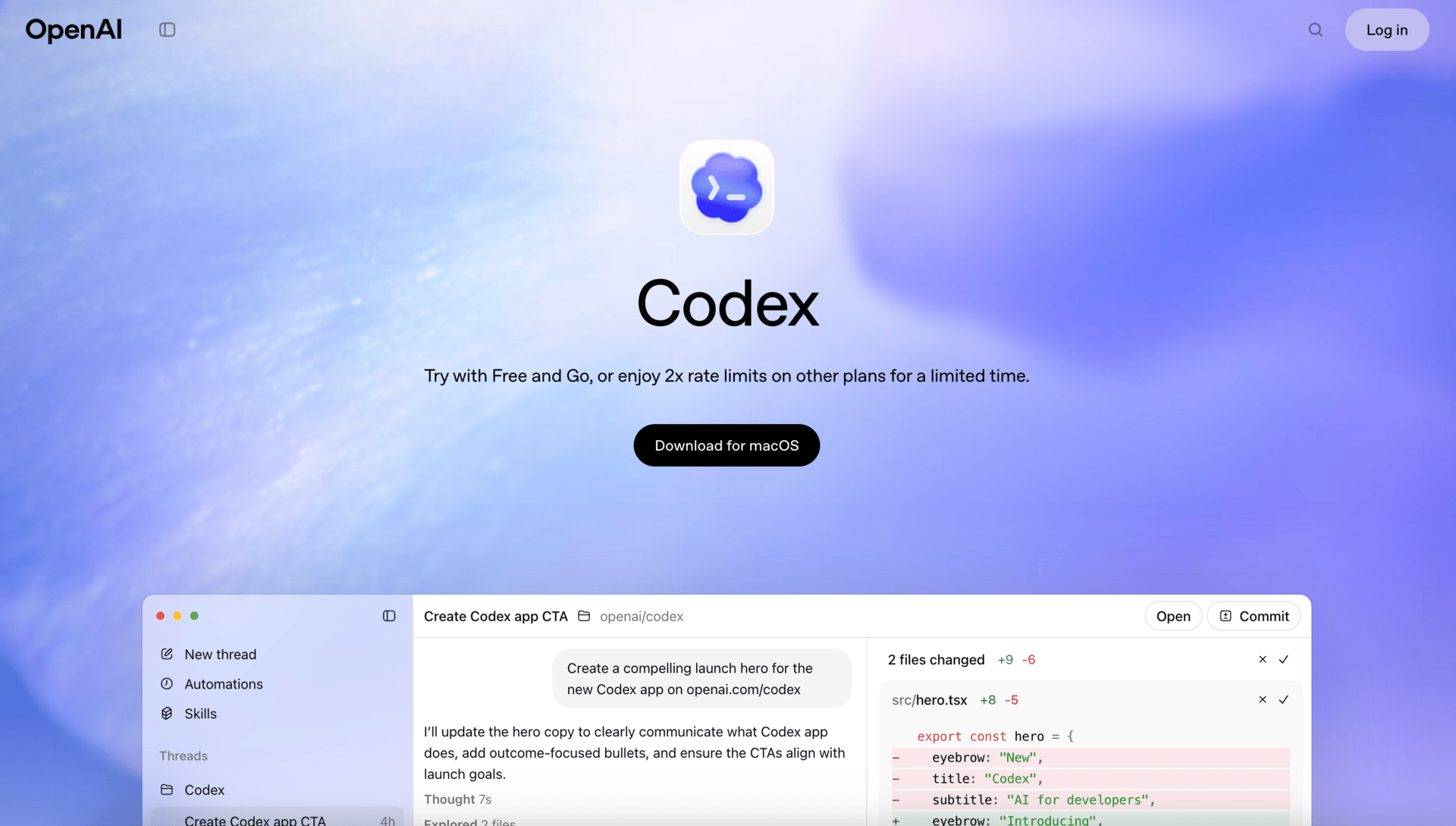
OpenAI Codex is an advanced artificial intelligence model designed to understand natural language and generate computer code across multiple programming languages. It helps developers write, edit, debug, and explain code using simple instructions, making software development faster and more accessible.
Codex powers various AI coding tools and development assistants that allow programmers to build applications, automate workflows, and accelerate the coding process without manually writing every line of code.
What Is OpenAI Codex?
OpenAI Codex is an AI model trained on programming languages and technical documentation to understand both human language and software development concepts. Developers can describe what they want to build in plain English, and Codex can generate functional code, scripts, or programming solutions.
It is commonly used in code editors, developer tools, automation platforms, and AI-powered app builders.
Key Features
- Natural language to code generation
- Multi-language programming support
- Code completion and auto-suggestions
- Bug detection and debugging assistance
- Code explanation and documentation generation
- Script automation and workflow creation
- API integration support
- Software prototyping assistance
- Learning support for new programmers
Why People Use OpenAI Codex
Writing code manually can be time-consuming and complex. OpenAI Codex simplifies development by automating repetitive tasks, generating boilerplate code, and helping developers understand unfamiliar programming concepts.
It is especially useful for rapid prototyping, building MVPs, automating scripts, and accelerating software development workflows.
Popular Use Cases
- Web and mobile app development
- Automation scripts and tools
- API integration and backend development
- Learning programming concepts
- Debugging and code optimization
- Software prototyping and MVP creation
- AI-powered development environments
Benefits
- Speeds up software development
- Reduces repetitive coding tasks
- Improves developer productivity
- Assists beginners in learning programming
- Generates functional code from simple instructions
- Enhances debugging and troubleshooting workflows
Who Should Use OpenAI Codex?
- Software developers and programmers
- App developers and startup founders
- Technical students and coding learners
- Automation engineers
- Product builders and technical creators
- Companies building AI-powered development tools
Frequently Asked Questions
What is OpenAI Codex used for?
OpenAI Codex is used to generate, understand, and improve computer code using natural language instructions.
Can beginners use OpenAI Codex?
Yes. Beginners can use it to learn programming concepts and generate example code.
Does Codex support multiple programming languages?
Yes. It supports many popular languages including Python, JavaScript, Java, C++, and more.
Can Codex help debug code?
Yes. It can analyze code, suggest improvements, and help fix common errors.
Is OpenAI Codex used in real development tools?
Yes. Many AI coding assistants and development platforms are built using Codex or similar AI models.
OpenAI Codex, AI Coding Assistant, AI Code Generator, AI Programming Tool, AI Developer Model, Natural Language Coding AI, AI Software Development Tool
Key use cases and capabilities
- OpenAI Codex
- OpenAI Codex AI
- Codex code generation
- AI coding assistant Codex
- OpenAI programming model
- AI code generator tool
- natural language to code AI
- Codex developer platform
- AI software development tool
- automated coding AI
- OpenAI Codex API
- AI programming assistant
- machine learning code generator
- Codex for developers
- AI pair programming tool
- intelligent code completion AI
- generative AI for coding
- Codex software engineering AI
- AI developer productivity tool
- OpenAI coding technology
Page Insights
Related AIs
Featured

GetAi
@getai
Professional New releases tools for creators.
Pricing Details
More Related AIs
View All
Jude
Jude is an advanced AI assistant designed to function as a virtual employee, proactively managing

Jude is an advanced AI assistant designed to function as a virtual employee, proactively managing and executing various business operations. It solves the problem of operational bottlenecks and resource constraints by automating tasks and providing consistent, reliable support. Jude utilizes art

NovelCraft ai
NovelCraft is an AI-powered writing platform designed to help authors, storytellers, and content cre
 Mary Perry3.0 stars
BingWow
BingWow is a free online bingo card generator that enables users to create and instantly access m

BingWow is a free online bingo card generator that enables users to create and instantly access multiplayer bingo games without any registration. It solves the problem of needing to manually create bingo cards, which can be time-consuming and prone to errors, especially for large groups. BingWow

EchoWrite
EchoWrite is an innovative AI-powered speech-to-text platform that empowers users to generate wri

EchoWrite is an innovative AI-powered speech-to-text platform that empowers users to generate written content simply by speaking, effectively eliminating the need for traditional typing. It addresses the challenge of slow and often physically straining typing methods by leveraging the speed and n
LuxReal
LuxReal.ai is an advanced AI-powered 3D video and visual content creation platform designed to gener

LuxReal.ai is an advanced AI-powered 3D video and visual content creation platform designed to generate spatially consistent videos from images, sketches, and 3D models. The platform focuses on producing realistic visuals with accurate object positioning and natural scene movement, solving common pr

AI UGC Video Gen
AI UGC Video Gen is an AI-powered video creation platform designed to generate realistic user-genera

AI UGC Video Gen is an AI-powered video creation platform designed to generate realistic user-generated content (UGC) style videos for marketing, advertising, and social media. It allows businesses, creators, and marketers to produce engaging promotional videos using artificial intelligence without


