Drogue Wants to Power Floating Data Centers Using the Ocean's Heat
A six-month-old startup out of Washington, D.C. has quietly raised $20 million to power data centers using the ocean's own heat, and it says working servers...

A six-month-old startup out of Washington, D.C. has quietly raised $20 million to power data centers using the ocean's own heat, and it says working servers could be bobbing at sea by early 2028. Drogue, founded by former U.S. Navy E-2D Hawkeye pilot Sam Sipe, is reviving a 1950s technology called ocean thermal energy conversion (OTEC) and pointing it at the one industry that cannot wait for a power grid upgrade: AI. In a year when data center power queues stretch to 2035 in parts of the U.S. and India, "just put the servers on a boat" has gone from a joke to a funding round.
What Is OTEC, and Why Is It Back?

Ocean thermal energy conversion is a heat engine that runs on the temperature gap between warm surface water and cold deep water. The concept was first pursued in the 1950s, prototyped seriously in the 1980s, and then shelved because it was too expensive and there was no customer willing to sit in the middle of the sea to use the power.
Drogue's bet is that both problems have flipped:
- Manufacturing changed. Sipe argues that modern pipe fabrication and heat exchanger techniques, both matured by the LNG and offshore oil industries, remove the cost barriers that killed the 1980s experiments.
- A customer finally exists. AI data centers are compact, need enormous uninterrupted power, and ship their product (tokens and bits) over fibre or satellite for almost nothing.
- The fuel is free and permanent. Surface water is sun-warmed; water at 1,000 metres sits near 39°F (4°C) year-round. That differential does not fluctuate with weather, season, or geopolitics.
Sipe spent months tracking down engineers from the earlier attempts. Their collective verdict, as he tells it: the physics works, the only missing ingredient was capital for a plant big enough to hit the economic sweet spot.
How Drogue's System Actually Works
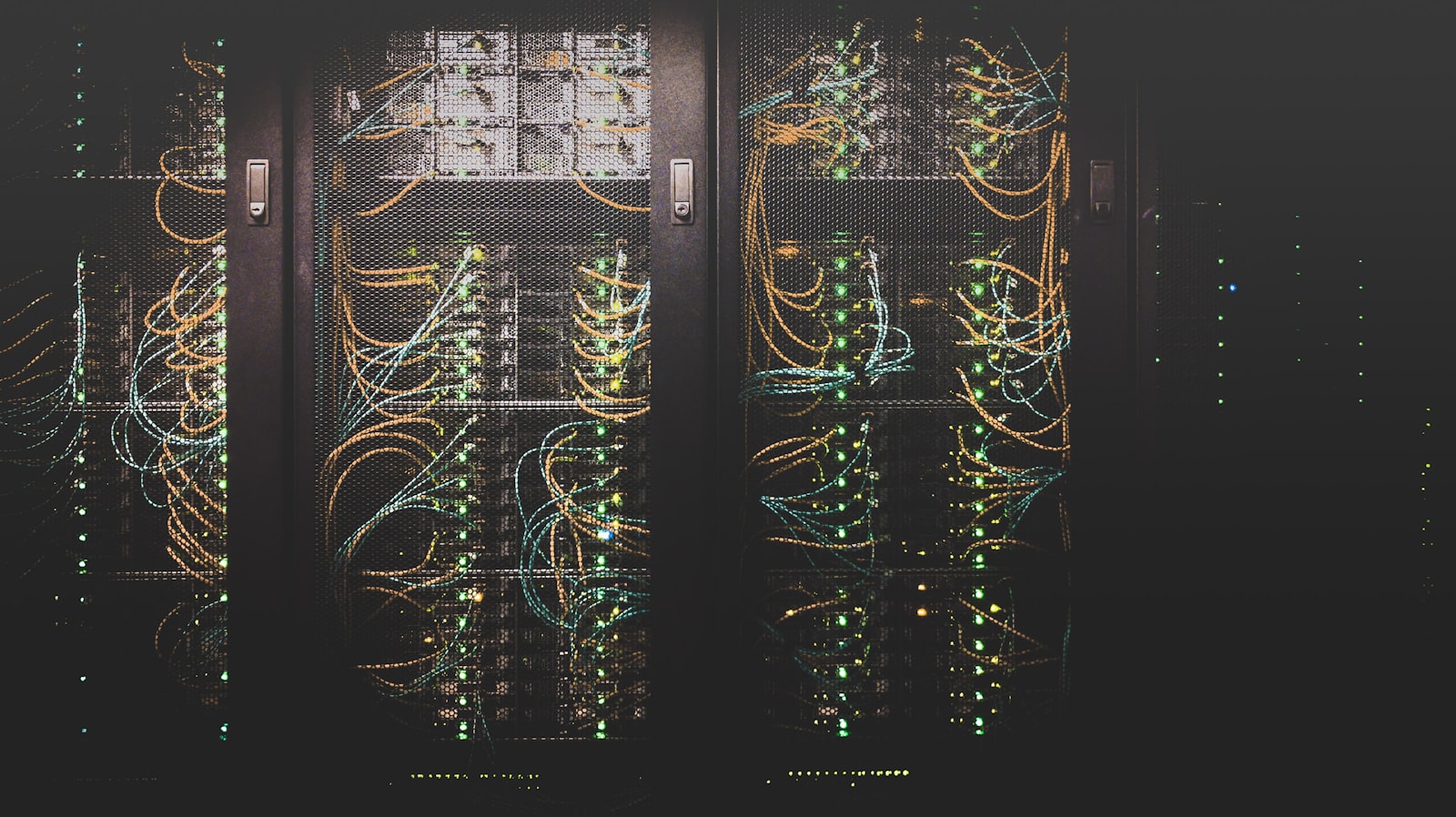
Think of it as a heat pump running in reverse. A heat pump burns electricity to move heat. Drogue uses a heat difference to make electricity, and it gets a second job out of the same water.
- Warm surface water is drawn in and used first as a coolant for the onboard server halls.
- That water, now warmer, passes through a heat exchanger and boils ammonia, which vaporises at -28°F (-33°C).
- The expanding ammonia gas spins a turbine, generating electricity for the racks.
- The gas enters a condenser, where cold water piped up from 1,000 metres deep absorbs the heat and turns the ammonia back into liquid.
- The ammonia loops back to the start inside a sealed cycle; the warmed deep water is released and dissipates.
Nothing is burned, nothing is emitted, and the ammonia never leaves the loop. The vessel is designed to stay at sea for roughly a decade per deployment.
The scale of the resource
The numbers Sipe cites are genuinely hard to get your head around. The oceans are absorbing an extra 5.8 million terawatt-hours of energy every year as the planet warms. All of human civilisation uses about 180,000 terawatt-hours annually. In other words, the ocean soaks up more than 30 years' worth of global energy demand every single year, and Drogue wants to skim a rounding error off the top.
Where the project stands today
- Founded six months ago in Washington, D.C.
- $20 million raised, with XYZ Venture Capital, Toyota Ventures, Tamarack Global, Dream, FDVC, Garuda Ventures, Flexcap, Boost VC, and Slow Ventures participating
- "Approval in principle" granted by the American Bureau of Shipping, a preliminary safety sign-off
- Actively buying its first ship to install a multi-megawatt prototype
- Target: prototype at sea in early 2028, with later units built on structures resembling offshore oil platforms
Why This Matters: The Power Bottleneck Is Now an AI Bottleneck

Sipe's core argument is a timing argument, and it is the most quotable thing in the story: "The data center industry is a real estate game... AI demand has increased 10x in just the last three years. It's completely incompatible."
Land-based hyperscale campuses run on 8 to 10 year cycles once you factor in utility interconnection, grid studies, ISO approvals, land acquisition, and water rights. AI capacity demand is compounding on a 12 to 18 month cycle. That mismatch is why Microsoft, Google, Amazon, and Meta are all signing nuclear PPAs, why gas turbines are back in fashion, and why Elon Musk is pitching orbital data centers.
| Approach | Time to power | Fuel cost | Key bottleneck |
|---|---|---|---|
| Land-based hyperscale | 8 to 10 years | Grid rates, rising | Interconnection queues, water, land |
| Nuclear SMRs | 7 to 10+ years | Low, once built | Licensing, fuel supply, cost overruns |
| Orbital data centers | Unproven | Effectively free sunlight | Launch cost, thermal rejection, latency |
| Drogue OTEC vessels | ~2 years to prototype | Zero fuel | Deep-water pipe, corrosion, maintenance at sea |
The contrast with orbital data centers is the sharpest one. Both ideas chase cheap energy by moving the compute to it. But one needs a rocket, and the other needs a hull, a pipe, and a mooring. Humanity has been putting things on the ocean for thousands of years.
For India specifically, the timing is pointed. The country's data center capacity is projected to roughly double from around 1 GW toward 2 GW+ by 2027, concentrated in Mumbai, Chennai, and Hyderabad, and land-based power in those clusters is already tight. A floating, fuel-free option that can be moored off a coastline without touching state transmission infrastructure is not a novelty here. It is a workaround for a real constraint.
Key Details and Technical Hurdles
The cold water pipe is the whole ballgame
Pulling millions of litres of near-freezing water up from a kilometre down requires an enormous, fatigue-resistant pipe that stays intact in swell and current for 10 years. This single component sank more than one OTEC project historically. Sipe's claim that modern fabrication fixes this is the most important sentence in the announcement, and the least independently verified.
Heat rejection is underrated
For every megawatt of computing, you must dump roughly a megawatt of heat. On land that means chillers and water. At sea, Drogue gets the cooling medium for free, which is arguably a bigger deal than the electricity generation itself. Water is the real AI infrastructure crisis in 2026, and OTEC sidesteps it entirely.
Maintenance economics
A vessel at sea for a decade needs either robotic servicing or crew. Servers fail. GPUs fail. Swapping a Blackwell-class accelerator 200 nautical miles offshore is not a same-day operation. Drogue has not published its field service model.
Regulatory reality
Approval in principle from the American Bureau of Shipping is a genuine first step, but it is not a flag state licence, an environmental permit, or a data sovereignty clearance. All three matter for enterprise customers.
Competitive Landscape: Who Else Is Racing for Off-Grid AI Power
Drogue is not alone in refusing to wait for the grid, but it is the only one doing OTEC for compute.
- Orbital players like Starcloud and Musk's SpaceX/xAI ambitions chase solar in space; launch cadence is the gating factor.
- Nuclear-first hyperscalers: Microsoft's Three Mile Island restart deal, Amazon's Talen and X-energy moves, Google's Kairos order. These are grid-connected and slow to permit.
- Underwater and coastal compute: Microsoft's Project Natick proved sealed subsea data centers can work, and its successor work continues. Drogue is essentially the commercial, power-generating cousin of that experiment.
- Floating offshore wind developers (Ørsted, Principle Power) are fighting for the same marine spatial permits and shipyard slots, and they have a decade head start on moorings and marine ops.
Drogue's real competition is not other startups. It is the cost of a natural gas turbine and the willingness of utilities to say yes. If grid interconnection speeds up in Texas or Gujarat, the case gets harder.
What This Means for AI-Tool and AI-News Publishers
This story is an unusually rich content seam because it combines three high-search-volume topics: AI compute, energy, and climate tech. Concrete angles:
- "OTEC explained with one diagram." Search interest in ocean thermal energy conversion is tiny today and will spike when Drogue's 2028 prototype sails. Publish the definitive explainer now and own the SERP for two years. Target keywords: ocean thermal energy conversion data center, OTEC explained, floating data center.
- The AI power race scoreboard. A living comparison page tracking every off-grid compute bet, from nuclear PPAs to orbital solar to Drogue's ships. Update it monthly. Comparison pages earn links and get cited by other newsletters.
- India-angle commentary. "What a floating data center means for Mumbai's 1 GW bottleneck" is a piece nobody in the U.S. will write, and it is exactly what Delhi and Bengaluru founders will share.
- The contrarian teardown. A video or post titled "Why OTEC failed twice already" with the 1980s history and the cold water pipe problem. Balanced skepticism outperforms hype on technical audiences.
- Newsletter hook: the 5.8 million TWh vs 180,000 TWh comparison is a one-line stat that gets quoted. Wrap any article around that number and you get screenshots and shares.
Challenges Ahead
- Capital intensity. $20 million buys a ship and a prototype. Full-scale multi-platform deployment will need hundreds of millions. OTEC has never been financed at that scale.
- Never proven commercially. No OTEC plant has ever operated profitably at utility scale. Drogue is betting manufacturing advances close a gap that has been open since 1950.
- Corrosion and biofouling. Salt water destroys everything eventually. Sipe dismisses this as a "majestic resource" problem, but marine engineers will want data, not poetry.
- No named customer. No hyperscaler, neocloud, or colocation partner has been announced. That is normal at six months old, but it is the number to watch.
- Data sovereignty and latency. Floating compute sits outside any jurisdiction. Regulated industries and governments, including India's DPDP Act regime, will need answers on where data physically exists.
- The 2028 deadline. Sipe's own timeline is aggressive for a company that has not yet bought its first ship.
Final Thoughts
Drogue is making one of the cleanest bets in AI infrastructure right now: the constraint is not chips, it is electrons and permits, so remove the permits. Whether a kilometre-long cold water pipe survives ten years of Atlantic swell is an engineering question, but the strategic logic is hard to argue with, and $20 million from serious climate and deep-tech investors says others agree.
Watch two signals: the first ship purchase, and the first named compute customer. If both land by 2027, "data center" stops meaning a building and starts meaning a vessel.
FAQ
What exactly is Drogue building?
Drogue is developing floating data centers powered by ocean thermal energy conversion, using the temperature difference between warm surface water and near-freezing deep water to generate electricity while simultaneously cooling servers.
How does ocean thermal energy conversion generate power?
Warm surface water boils ammonia, which vaporises at -28°F, and the expanding gas spins a turbine. Cold water pumped from 1,000 metres deep condenses the ammonia back into liquid, and the sealed loop repeats.
Who is funding Drogue?
The startup has raised $20 million from XYZ Venture Capital, Toyota Ventures, Tamarack Global, Dream, FDVC, Garuda Ventures, Flexcap, Boost VC, and Slow Ventures, and holds preliminary American Bureau of Shipping approval.
When will there be a working floating data center?
Drogue plans to install a multi-megawatt prototype on an existing ship and put it to sea in early 2028, with later units built on offshore-platform-style structures.
What are the biggest risks?
The cold water pipe, saltwater corrosion, decade-long maintenance at sea, unclear maritime and data jurisdiction, and the fact that OTEC has never been operated commercially at scale.
How does this compare to orbital data centers?
Both chase cheap energy by relocating compute, but Drogue avoids launch costs entirely by using ships and offshore platforms. Its main trade-off is marine engineering risk rather than rocket economics.


