Nine Korean Startups Compete for Disrupt 2027 Startup Battlefield 200 Spot
Nine South Korean deep tech startups walked into a Seoul conference hall this week with one prize on the line: a slot in **TechCrunch Disrupt 2027's Startup...

Nine South Korean deep tech startups walked into a Seoul conference hall this week with one prize on the line: a slot in TechCrunch Disrupt 2027's Startup Battlefield 200. Only one walked out with it. Voinosis, an AI company that claims it can flag early signs of cognitive decline by analyzing how you speak, took the win at DETO 2026 on November 12, beating eight other early-stage Korean teams spanning fintech, energy, semiconductors, and AI. The significance is bigger than one pitch trophy: a five-minute voice test that needs no new language training is the kind of cheap, scalable screening tool that could reshape how brain health gets checked in aging economies from Seoul to Delhi.
What Is Startup Battlefield 200 and Why Is Seoul Pitching?
TechCrunch's Startup Battlefield 200 is one of the most-watched startup competitions in the world. Hundreds of companies apply every year for the chance to pitch in front of investors, press, and the global tech community at Disrupt, the outlet's flagship conference.

What makes this edition notable is the geography. DETO 2026, a technology conference held in Seoul, hosted a dedicated regional qualifier, effectively turning the Korean capital into a feeder pipeline for a US-stage competition.
- All nine competing startups are early-stage and deep tech focused, not consumer app clones.
- Every single one listed US market entry as part of its growth plan.
- The sectors on display: healthcare, fintech, energy, semiconductors, and AI.
- Korea has been aggressively exporting its startup ecosystem playbook, pairing government-backed deep tech funding with a push into American markets.
The Core News: Nine Korean Startups, One Winner
Voinosis won the DETO 2026 pitch competition, earning the right to compete for a place in the Startup Battlefield 200 at Disrupt 2027. The other eight finalists were not individually detailed in the announcement, but TechCrunch confirmed they span the same five deep tech categories.
Here is the quick read on what the win signals:
| Element | Detail |
|---|---|
| Event | DETO 2026, Seoul |
| Prize | Consideration for Startup Battlefield 200 at Disrupt 2027 |
| Winner | Voinosis (AI voice analysis for brain health) |
| Total competitors | 9 Korean early-stage startups |
| Sectors represented | Healthcare, fintech, energy, semiconductors, AI |
| Common goal | US market entry and international expansion |
| Announced | November 12, 2026 |
The "so what" here is subtle but important. Pitch competitions are usually a beauty contest for SaaS dashboards. This one handed the trophy to a company that does clinical-adjacent AI in a regulated category, which tells you what Korean deep tech investors and organizers think the next exportable advantage looks like.
Why This Matters: Voice as the Next Health Biomarker
Your voice is a biological signal. Pitch, pauses, rhythm, and response latency all shift when the brain's processing machinery changes. Researchers have spent years trying to turn that into a cheap screen for Alzheimer's, mild cognitive impairment, and depression, because the alternative is expensive imaging, specialist waitlists, and paper questionnaires.

Why this moment matters:
- Aging populations are exploding. Korea is one of the fastest-aging societies on earth, and India's 60-plus population is projected to cross 190 million in the coming decade. Screening at scale needs to be cheap.
- Voice checks need no specialist. A nurse, a caregiver, or the user at home can run a five-minute test.
- Language portability is the real unlock. Voinosis says its model works across Greek, Japanese, and English without separate training per language. If true, that is a genuine technical moat, because most clinical speech models are locked to one language and one dataset.
- Insurers are the wedge. Voice screening sold to insurers and senior living operators is a B2B2C business, not a direct-to-consumer app gamble.
Key Details: How Voinosis Actually Works
This is where the story gets specific. The company's pitch is not "AI for wellness." It is a structured screening product with named inputs, named buyers, and a published accuracy claim.
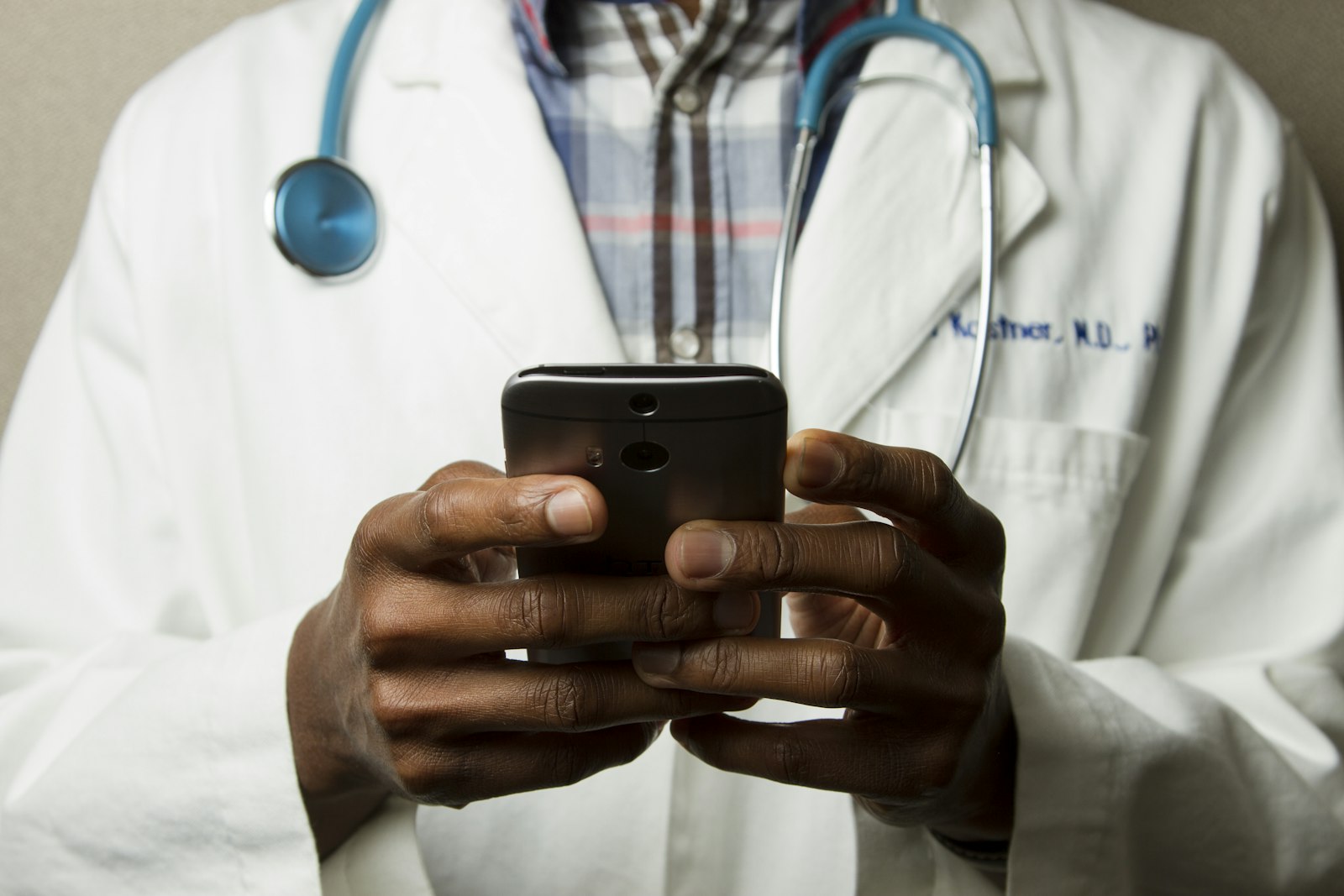
The product in five steps
- The user speaks for a few minutes. The session captures free speech and guided prompts, measuring pitch, pauses, rhythm, and response times.
- The model extracts acoustic and timing features. It is not transcribing what you said; it is measuring how you said it.
- A cognitive risk signal is generated. Each check is designed to complete in under five minutes.
- Results route to a professional. The company wants to link voice checks with cognitive training, formal assessments, and treatment delivered by clinicians.
- Repeat checks build a trend line. Change over time, not a single score, is where longitudinal value lives.
The validation claim
| Metric | Voinosis claim |
|---|---|
| Study size | 146 participants |
| Reported accuracy | 88% in screening for potential cognitive issues |
| Languages tested | Greek, Japanese, English |
| Per-language retraining required | None, per the company |
| Time per check | Under 5 minutes |
| Target buyers | Hospitals, senior living facilities, insurers, individual consumers |
Why the language claim is the headline
Most speech-biomarker startups treat each language as a fresh model. If Voinosis has genuinely built a language-agnostic acoustic layer, it can enter a new country without collecting thousands of local clinical recordings first. That cuts market-entry timelines from years to months, and it is exactly why a Korean startup pitching to a US audience makes sense.
Competitive Landscape: Who Else Is Listening to Your Voice
Voinosis is not alone in this category, and the field includes better-funded US players with longer clinical histories.
| Company / Project | Base | Focus | Regulatory posture |
|---|---|---|---|
| Voinosis | South Korea | Cognitive decline screening via voice | Clinical study published in-house, early stage |
| Sonde Health | US | Voice-based health checks (respiratory, mental health) | Partner-led, multiple condition models |
| Canary Speech | US | Voice biomarkers for cognitive and behavioral health | FDA-facing, enterprise partnerships |
| Ellipsis Health | US | Voice for depression and anxiety screening | Healthcare system partnerships |
| Vocalis Health | Israel | Voice as a biomarker for chronic conditions | Clinical validation partnerships |
The wider context: deep tech is now Korea's export strategy. Samsung and SK Hynix made the country a semiconductor superpower, and a new generation of founders is trying to replicate that model in healthcare AI and chips. That is why nine of nine finalists at DETO named the US as a target, not a nice-to-have.
What This Means for AI-Tool and AI-News Publishers
If you run an AI newsletter, a tool-review site, or a YouTube channel covering health tech, this story is a ready-made content cluster. Concrete angles:
- "Voice is the new blood test" explainer. Write a 1,200-word piece on voice biomarkers, with Voinosis as the news hook and Sonde and Canary as the comparison set. High search intent around "voice AI health screening."
- Head-to-head tool page. A living comparison table of voice-health tools, refreshed as each company publishes new validation data. Tables rank well and get linked.
- India angle piece. Connect the 88% accuracy claim to India's 22 scheduled languages and the lack of cognitive screening capacity in tier-2 cities. Indian founders will share this.
- SEO cluster around "5-minute cognitive test." Long-tail queries like "AI memory test," "early dementia screening at home," and "voice check for brain health" are low competition right now.
- Pitch-competition case study. "What a winning Startup Battlefield pitch looks like in 2026" is evergreen content for founder audiences, and you can use Voinosis's structure (metric, study size, named buyers) as the template.
Challenges Ahead
A pitch win is not a product launch. Here is what remains unresolved.
- 146 participants is a small cohort. An 88% figure on a study of that size is promising, not definitive. Sensitivity and specificity numbers, plus peer review, are what regulators and clinicians will actually ask for.
- Screening is not diagnosis. Any marketing that drifts toward "detects Alzheimer's" invites regulatory trouble from the FDA, EU MDR, and India's CDSCO.
- Accents and dialects are the hard test. Japanese, Greek, and English is three languages. India alone has dozens of major dialects. A model that ignores accent variation risks silent bias.
- Reimbursement is unsolved. Insurers may love cheaper screening, but someone has to agree to pay for it per check.
- Recording conditions break models. Home microphones, background noise, and hearing loss all corrupt acoustic features. Clinic-grade accuracy rarely survives the living room.
- The US market is crowded. Korean deep tech entering America faces entrenched incumbents, longer sales cycles, and visa and hiring friction.
Final Thoughts
The most interesting thing about DETO 2026 is not the trophy. It is that a Korean jury, a US competition, and a five-minute voice test all point at the same conclusion: health screening is becoming a software problem measured in speech, not scans. Korea has now put a flag in the ground on language-agnostic voice diagnostics, and it did so with a clinical claim attached rather than a demo reel.
Watch for the peer-reviewed paper and the first hospital pilot. Whichever company publishes real-world data from a diverse, multilingual population first will define the category, and that company may not be the one holding the trophy in Seoul.
FAQ
What exactly happened at DETO 2026?
Nine early-stage South Korean deep tech startups pitched at DETO 2026 in Seoul for a chance to enter TechCrunch's Startup Battlefield 200 at Disrupt 2027. Voinosis, an AI voice-analysis company for brain health, won the competition.
How does Voinosis detect cognitive issues?
It analyzes speech patterns such as pitch, pauses, rhythm, and response times, then generates a risk signal in under five minutes. The company says it does not need separate model training per language and has tested in Greek, Japanese, and English.
How accurate is it, and should people trust the 88% figure?
The company reports 88% accuracy in screening for potential cognitive issues across a 146-participant clinical study. That is a promising early signal, but the sample is small and the result should be treated as an in-house claim until peer-reviewed.
When will Voinosis or these startups be available in the US or India?
No launch timeline was announced. All nine startups described US market entry as part of their expansion plans, but passing FDA, CDSCO, or EU requirements and securing hospital partners typically takes years.
Who else is working on voice-based health screening?
US players include Sonde Health, Canary Speech, and Ellipsis Health, plus Israel's Vocalis Health. Most are locked to specific languages and conditions, which is where Voinosis claims an edge.
What does this mean for the broader AI health market?
It confirms that voice is being treated as a clinical biomarker, not a novelty. Expect more funding into low-cost, multilingual screening tools as aging populations strain hospital capacity across Asia and the West.


