Oshen Builds the First Ocean Robot to Collect Data in a Category 5 Hurricane
In a major breakthrough for climate science and ocean engineering, **Oshen**,

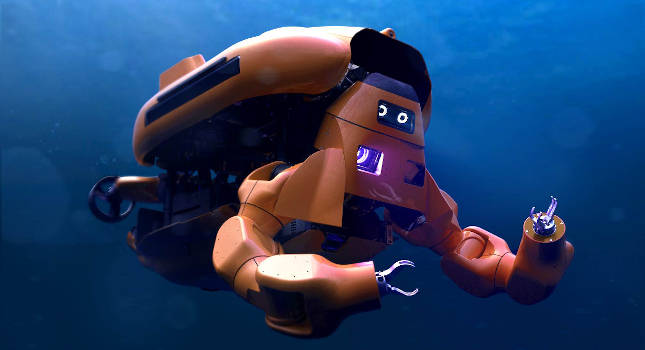
In a major breakthrough for climate science and ocean engineering, Oshen, an ocean-technology startup, has built what it claims is the world’s first autonomous ocean robot capable of collecting real-time data inside a Category 5 hurricane. The achievement represents a significant leap forward in how scientists study extreme weather events — especially as climate change fuels stronger, more destructive storms.
For decades, researchers have struggled to gather accurate, close-range data from the most dangerous parts of hurricanes. Ships avoid them. Aircraft can only sample from above. Satellites offer broad views but lack fine-grained detail. Oshen’s robot aims to close that gap by going where no human-operated system safely can.
Why Hurricane Data Matters More Than Ever

Category 5 hurricanes are among the most violent natural phenomena on Earth. With sustained winds exceeding 157 mph (252 km/h), these storms cause catastrophic damage, flooding, and loss of life.
Yet paradoxically, they remain poorly understood.
The problem:
- Most storm data comes from satellites (indirect measurements)
- Aircraft missions are limited, expensive, and risky
- Ocean conditions during peak intensity are largely invisible
Without direct ocean-surface and sub-surface data, forecasts can miss:
- Rapid intensification events
- Accurate storm surge predictions
- Energy exchange between ocean and atmosphere
Oshen’s robot is designed specifically to solve this problem.
Meet the Oshen Ocean Robot

Oshen’s system is an uncrewed, autonomous surface vehicle (USV) engineered to survive the most extreme ocean conditions ever recorded.
Key design features include:
- Hurricane-grade structural materials
- Self-righting hull design
- Satellite-based autonomous navigation
- AI-driven decision-making to adapt to changing conditions
- Long-duration endurance without human intervention
Unlike traditional buoys or drifting instruments, the robot can actively maneuver into the core of a storm and stay there.
What Data Does It Collect?

The robot is equipped with a dense array of scientific instruments designed to capture real-time, high-resolution data.
Collected data includes:
- Sea surface temperature
- Wave height and wave direction
- Wind speed at ocean level
- Atmospheric pressure
- Salinity and upper-ocean heat content
- Energy transfer between ocean and air
This data is transmitted in near real time to researchers, even while the storm is ongoing.
Surviving a Category 5 Hurricane

Building hardware that survives a Category 5 hurricane is not trivial.
The robot must endure:
- Waves taller than multi-story buildings
- Continuous violent motion
- Saltwater corrosion
- Communication dropouts
- Zero possibility of human rescue
Oshen engineers reportedly tested the robot in:
- Extreme wave tanks
- Simulated hurricane conditions
- Long-duration open-ocean trials
The result is a system capable of remaining operational where conventional equipment would fail within minutes.
A Breakthrough for Climate Science

Scientists say direct measurements from inside major hurricanes could dramatically improve climate and weather models.
Potential benefits include:
- More accurate hurricane intensity forecasts
- Better early warnings for coastal communities
- Improved storm surge and flooding predictions
- Deeper understanding of rapid storm intensification
- Stronger long-term climate models
As hurricanes grow more powerful due to warming oceans, this type of data is no longer optional — it’s essential.
How This Changes Forecasting
Modern weather forecasting relies heavily on AI and numerical models. But models are only as good as the data they ingest.
Oshen’s robot provides:
- Ground-truth ocean data during peak storm intensity
- Continuous measurements instead of snapshots
- Validation for satellite and aircraft readings
Over time, this could:
- Reduce forecast uncertainty
- Increase lead times for evacuations
- Save lives and billions in economic losses
Beyond Hurricanes: Wider Applications

While hurricanes are the headline use case, Oshen’s technology has far broader potential.
Possible future applications:
- Studying polar storms and extreme cold oceans
- Monitoring climate change impacts in remote seas
- Supporting offshore energy infrastructure
- Naval and maritime safety operations
- Long-term ocean health monitoring
The robot represents a new class of persistent, intelligent ocean observers.
The Rise of Autonomous Climate Tech
Oshen’s breakthrough fits into a larger trend: using autonomous systems to study an increasingly unstable planet.
As extreme weather events become more frequent, human-centered data collection becomes riskier and less scalable. Robots don’t get tired, don’t need evacuation, and can operate continuously in conditions that would ground aircraft and sink ships.
This shift may redefine how climate science is conducted in the coming decades.
What Comes Next for Oshen
Looking ahead, Oshen is expected to:
- Deploy multiple robots simultaneously into storms
- Partner with government weather agencies
- Share data with global climate research institutions
- Expand capabilities for deeper ocean measurements
If successful, future hurricane seasons may be tracked not just from space — but from inside the storm itself.
Final Thoughts
Oshen’s Category 5-capable ocean robot is more than a technological milestone — it’s a glimpse into the future of climate intelligence. As storms grow stronger and the stakes rise, tools like this may become critical to protecting lives, infrastructure, and ecosystems.
For the first time, humanity has built a machine willing — and able — to stare directly into the heart of the storm.
Frequently Asked Questions (FAQ)
What makes Oshen’s robot different from ocean buoys?
Unlike passive buoys, Oshen’s robot can actively navigate, reposition itself, and remain inside a hurricane’s core.
Has it really operated in a Category 5 hurricane?
According to Oshen, the system is designed and tested to withstand Category 5 conditions and is built specifically for that purpose.
Why not use satellites instead?
Satellites provide broad coverage but cannot measure fine-scale ocean-atmosphere interactions at the surface.
Is this dangerous for the environment?
No. The robot is uncrewed, non-polluting, and designed to minimize environmental impact.
Who will use this data?
Climate scientists, meteorological agencies, emergency planners, and weather-forecasting organizations.
Could this improve hurricane warnings?
Yes. Better real-time data can significantly improve forecast accuracy and warning lead times.
Will there be more robots like this?
Very likely. Oshen’s success could inspire a new generation of autonomous climate-monitoring systems.
Mentioned in this article
Tools

DocGPT
Opening Overview DocGPT is a powerful AI-powered Google Sheets integration designed to help users

Opening Overview DocGPT is a powerful AI-powered Google Sheets integration designed to help users automate bulk content generation and data enrichment by leveraging artificial intelligence, automation, and intelligent workflows . By embedding leading large language models (LLMs) directly into

Blushly Chat
Blushly Chat is an innovative AI companion platform that delivers immersive and uncensored conver

Blushly Chat is an innovative AI companion platform that delivers immersive and uncensored conversations with lifelike digital characters, utilizing both voice and text interaction. It addresses the need for users seeking engaging, unrestricted, and personalized AI companionship, offering a space