TechEx North America Warns AI Success Hinges on Infrastructure and Security
AI is a matter of power, infrastructure and security: TechEx North America Visitors to TechEx North America expected flashy demos and cutting-edge AI age...
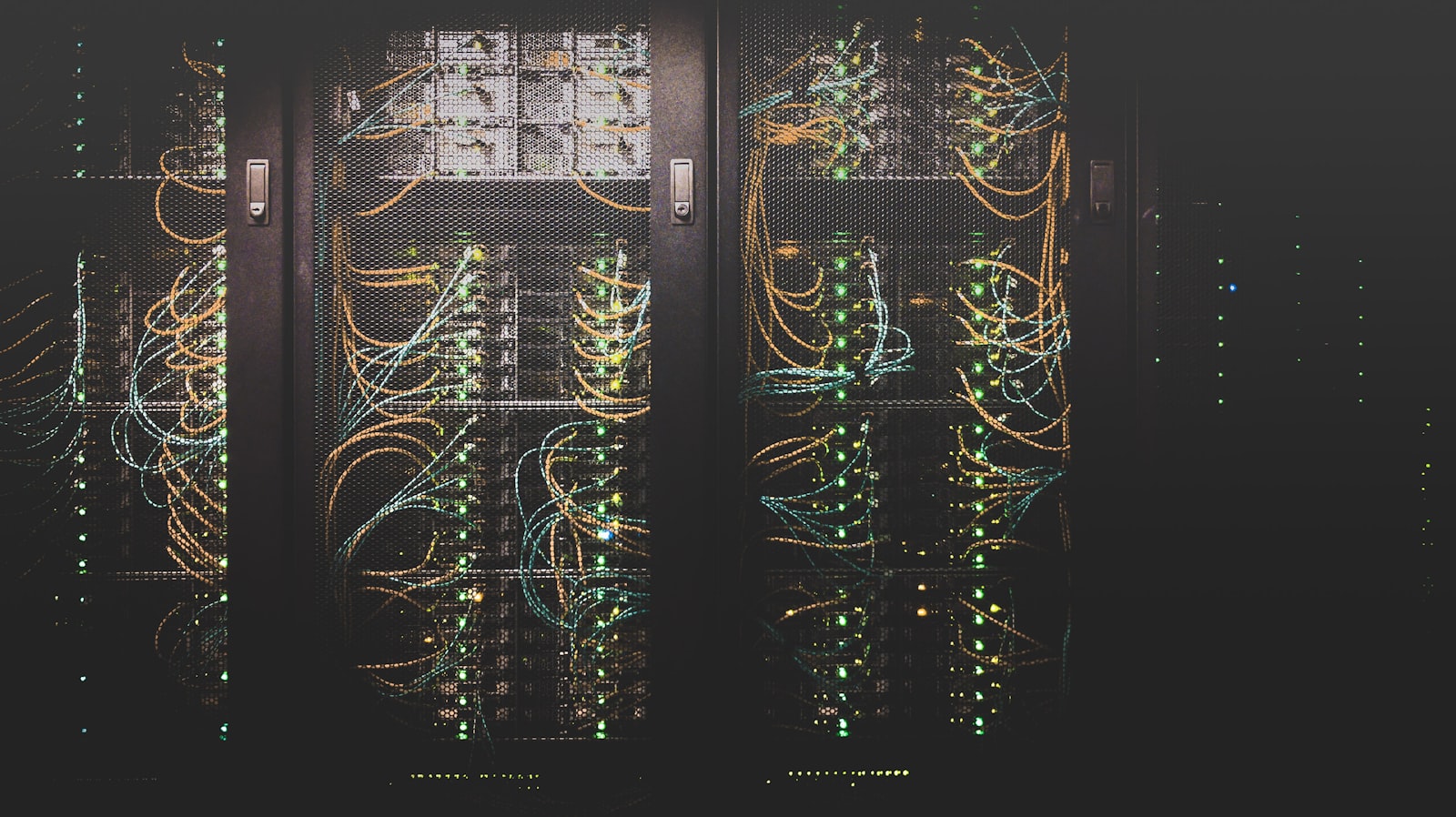
AI is a matter of power, infrastructure and security: TechEx North America
Visitors to TechEx North America expected flashy demos and cutting-edge AI agents, but the real story from the show floor was far more grounded: AI doesn't work without power, networks, and security. From edge computing to data centre constraints, the message was clear — enterprises that ignore the mundane infrastructure behind AI will watch their flashy pilots stall in pilot purgatory.
What TechEx North America is and why it matters
TechEx North America is a multi-track conference covering Edge Computing, IoT, Data Centre Congress, and Cyber Security, co-located with AI & Big Data Expo. It brings together enterprise decision-makers, vendors, and infrastructure providers to discuss the physical and operational realities of deploying AI at scale.

- The event's core thesis: AI is not just software — it depends on buildings, grids, networks, and security policies.
- The day-one tracks covered everything from distributed inference to shadow AI governance.
- Key exhibitors included Akamai, Spectro Cloud, Schneider Electric, Rockwell Automation, Ford, Siemens, LG CNS, and Boston Dynamics.
The core news: AI infrastructure challenges take centre stage
The most important takeaway from the event is that enterprises are grappling with the gap between AI demo and production deployment. This was a recurring theme across all tracks.
| Challenge | Edge / IoT Track | Data Centre Track | Cyber Security Track |
|---|---|---|---|
| Power constraints | On-prem edge deployment limited by local grid capacity | Construction chaos, water cooling limits, permit delays | Not directly addressed |
| Latency vs. control | Distributed inference vs. cloud dependency | Network spine needed for AI DCs | Observability and logging for AI workloads |
| Legacy systems | Old machines vs. new AI agents | Aging data centre infrastructure | Outdated security policies exposed by AI |
| Shadow AI | Unauthorized use of AI on factory floor tools | Unsanctioned cloud AI usage for data analysis | Data exfiltration through unapproved AI tools |
- Pilot purgatory was a buzzword: projects that work in concept but fail when hitting real-world constraints.
- The Rockwell Automation and Ford session on physical AI highlighted how scaling connected asset intelligence requires more than a dashboard.
- Digital twins were redefined: not just visual replicas for demos, but operational models that actually help factories, cities, or municipal facilities.
Why this matters: The stakes for AI adoption
For developers, content creators, and startup founders reading this blog, the message is simple: your AI tool is only as good as the infrastructure it runs on.
- Power and cooling are now boardroom conversations. A data centre that takes years to build cannot keep up with AI models that change every quarter.
- Shadow AI is a growing risk — employees using ChatGPT or other tools without approval can expose company data.
- Legacy systems are the silent killers of AI ROI. If your AI can't talk to old ERP or factory PLCs, you're stuck in demo land.
The conference linked these dots across tracks: for example, cybersecurity’s concerns around legacy systems were echoed on the IoT and Edge stages. Modern AI meeting older plant systems creates vulnerabilities that neither side is fully prepared for.
Key details from the tracks
Edge Computing and IoT
- Latency reduction is a primary driver for edge AI, but it comes with new risk profiles.
- Zero-trust cybersecurity principles are being applied to control systems and industrial IoT.
- Agentic network operations — letting AI manage network routing autonomously — was discussed as a future capability.

Data Centre Congress
- Construction chaos: Data centre building is bottlenecked by power, water, land permits, and supply chain issues.
- Cooling innovation is critical — water usage is a growing concern in drought-prone areas like Santa Clara.
- AI economics disrupts the infrastructure stack: AI workloads require dense compute, but infrastructure takes years to mature.
Cyber Security and Cloud Expo
- Shadow AI detection tools are emerging as a must-have for enterprises.
- Data governance and cyber governance are now the same conversation — any AI service used by staff without logging creates a compliance gap.
- The CISO-C-suite relationship is under strain: business demands speed, but security demands caution.
Competitive landscape and industry context
TechEx North America competes with events like NVIDIA GTC, AWS re, and Data Centre World, but its unique value is the cross-track integration. No other event brings edge computing, data centre, and cybersecurity under one roof with a strong AI focus.
| Event | Focus | Strength | Weakness |
|---|---|---|---|
| TechEx North America | AI infrastructure (power, network, security) | Holistic view of deployment barriers | Less focus on pure AI model breakthroughs |
| NVIDIA GTC | AI hardware and software ecosystem | Deep tech demos | Skips physical infrastructure challenges |
| AWS re | Cloud-native AI and services | Broad adoption | Underrepresents on-prem and edge |
| Data Centre World | DC construction and operations | Detailed infrastructure deep dives | Lacks AI model and cybersecurity tracks |
- The Edge AI Foundation (chaired by Ed Doran) and sessions from Schneider Electric and TÜV Rheinland showed that industrial AI is moving beyond hype.
- Ford’s physical AI session with Rockwell Automation demonstrated that even automotive giants struggle with scaling.
What this means for AI-tool and AI-news publishers
If you run a blog, newsletter, or tool-review site covering AI, this story is pure gold for actionable content.
- Write a deep-dive on "pilot purgatory" — why AI demos fail in production and how to avoid it. Include real examples from manufacturing (like Ford) and back-office AI.
- Review tools for shadow AI detection — products like Zscaler, Netskope, or CrowdStrike have features to monitor unauthorized AI usage. Compare them.
- Create a "Infrastructure Readiness Checklist" for enterprises adopting AI — covering power, latency, legacy systems, and security. This is perfect for an SEO-optimized listicle.
- Analyze the data centre bottleneck — how power constraints affect AI model availability. Relate it to cloud versus on-prem deployment costs.
- Interview a CISO about AI security risks — data exfiltration through AI tools is a hot topic for your cybersecurity audience segment.
Challenges ahead and risks
- Power grid limitations are not solved by software. AI's appetite for compute could trigger regional energy crises.
- Legacy system integration remains expensive and slow — many factories run 20-year-old PLCs.
- Shadow AI is nearly impossible to eliminate completely; the focus should shift to governance and logging.
- Cybersecurity and AI speed are natural enemies. The desire for real-time AI decisions can override security protocols.
- Talent shortage: Few engineers understand both AI and physical infrastructure (power, cooling, networking).
Final thoughts
TechEx North America delivered a much-needed dose of reality to the AI industry. The biggest barrier to AI adoption isn't model accuracy or funding — it's the mundane, physical world of buildings, cables, and security policies. Enterprises that invest in infrastructure first, and flashy demos second, will be the ones that actually deploy AI at scale. The conference's cross-track integration proved that AI strategy is now every department's job.
FAQ
What is pilot purgatory in AI deployment?
It's the state where an AI project works in a demo or controlled test environment but fails when scaled to real-world conditions due to legacy systems, data integration issues, or infrastructure constraints.
How does power and cooling affect AI adoption?
AI data centres consume massive electricity and water for cooling. In regions like Santa Clara, permit delays and water scarcity can stall new data centre construction, limiting AI compute availability.
What is shadow AI and why is it risky?
Shadow AI is the unauthorized use of AI tools (like ChatGPT) by employees within business workflows. It risks data exfiltration, compliance violations, and loss of governance over how AI is used.
Who should attend TechEx North America?
Enterprise architects, CTOs, CISOs, data centre managers, and industrial IoT engineers — anyone responsible for the infrastructure that supports AI deployments.
What are the main differences between cloud, edge, and hybrid AI inference?
Cloud inference offers high compute but higher latency; edge inference reduces latency but requires more local power and security; hybrid balances both by running part of the model on edge and part in the cloud.
How can AI-tool publishers cover this story for their audience?
By creating infrastructure checklists, reviewing shadow AI detection tools, analyzing the data centre bottleneck, and writing case studies on companies that escaped pilot purgatory.


