20pathsvsScribe
Side-by-side battle & analysis. Compare features, pricing, real community ratings, and pros & cons in 2026.
20paths
A streamlined tool for creating and sharing interactive product guides and walkthroughs to improve user onboarding and support.

Scribe
Scribe is an AI-powered documentation platform that instantly transforms user actions into clear, step-by-step visual guides.
Quick Verdict & Takeaway
Head-to-head summary recommendation
Both 20paths and Scribe provide high-performance solutions in the Tutorials ecosystem. Both platforms are top-rated in their respective categories.
Choose 20paths if:
You need a mixed tool optimized for Guides with IMAGE, VIDEO input formats.
Choose Scribe if:
You prefer a mixed platform geared towards Guides with TEXT output options.
Specification & Feature Matrix
Direct technical comparison between 20paths and Scribe
| Feature / Spec | 20paths | Scribe |
|---|---|---|
| Pricing Model | MIXED | MIXED |
| Starting Price | $35/mo | $12/mo |
| Category | Tutorials | Tutorials |
| Subcategory | Guides | Guides |
| Supported Inputs | IMAGE, VIDEO | TEXT |
| Generated Outputs | VIDEO, TEXT | TEXT |
| User Rating | ★ 4.0 / 5.0 (0) | ★ 4.0 / 5.0 (0) |
| Verified Status | Unverified | Unverified |
Interface & UI Showcase
Visual previews and interface screenshots
20paths Interface
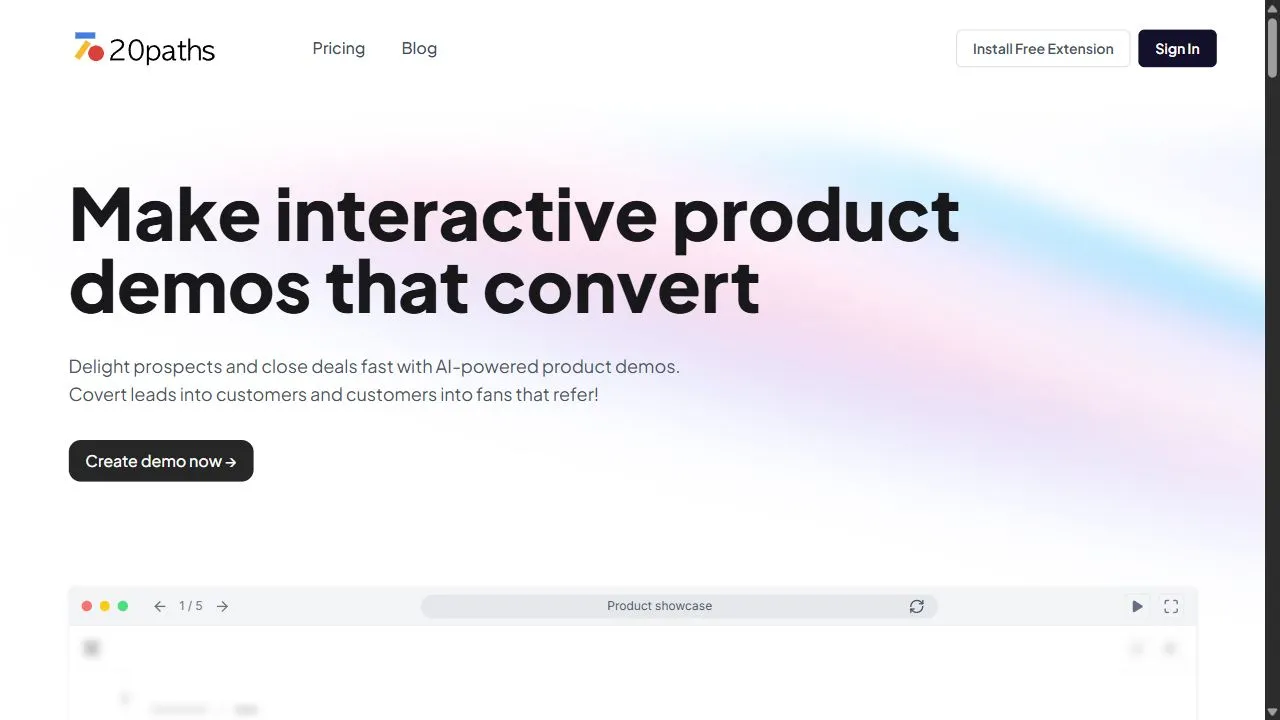
Scribe Interface


Pros & Cons Comparison
20paths Pros & Cons
Strengths
- Simple interface
- Great for user onboarding
Limitations
- Limited video editing features
Scribe Pros & Cons
Real Community Feedback
Verified user reviews from GetAiTools community
20paths Reviews0
No community reviews yet for 20paths.
Scribe Reviews1
"The memory feature is spotty; it often forgets the user’s preferences."
About 20paths
Opening Overview 20paths is a professional AI-powered interactive guide creator designed to help software companies and product teams bridge the communication gap between their application and its end-users by leveraging intelligent workflow capture and automated documentation processes . The platform solves the chronic problem of user friction and high churn rates that occur when customers struggle to understand complex software interfaces. By transforming static manuals into dynamic, step-by-step walkthroughs, the tool ensures that users can achieve their desired outcomes without needing to leave the application or search through endless help documents. The tool utilizes AI-driven automation to streamline the capture of software workflows , allowing creators to record a process and instantly convert it into an interactive guide. This eliminates the need for manual screenshotting, tedious writing, and constant updating of documentation. By focusing on the "learning by doing" philosophy, 20paths enables teams to deploy onboarding flows, troubleshooting tutorials, and feature announcements that guide users in real-time. This platform is primarily built for Product Managers, Customer Success teams, UX Designers, and Operations Managers who need to scale their user education efforts. By implementing interactive product demos and automated onboarding sequences , businesses can significantly reduce the volume of repetitive customer support tickets and increase the overall activation rate of their user base. Through the use of high-intent user onboarding software , companies can ensure that every new sign-up experiences the core value of their product as quickly as possible. Key Features of 20paths Interactive Walkthrough Builder : Create step-by-step guided tours that lead users through specific software functions. Visual Process Capture : Quickly record on-screen actions to generate a foundation for instructional guides. Intelligent Annotation Tools : Add clear, concise call-outs and pointers to highlight critical UI elements. Embedded Guide Deployment : Integrate interactive tutorials directly into the software interface for a seamless user experience. Dynamic Onboarding Flows : Design custom paths for different user personas based on their specific goals. Feature Announcement Modules : Notify users of new updates through targeted, interactive demonstrations. Troubleshooting Tutorial Generator : Build specific guides that solve common user pain points and technical hurdles. Multi-Format Output Support : Generate a combination of video and text-based instructions for versatile learning. Workflow Documentation Automation : Convert complex software operations into easy-to-follow digital manuals. User Engagement Tracking : Monitor how users interact with guides to identify where they get stuck. Why People Use 20paths The primary motivation for adopting 20paths is the inherent failure of traditional software documentation. For decades, businesses relied on static PDFs, long-form knowledge base articles, or pre-recorded videos to teach users how to use their products. However, these methods create a "context switch" where the user must leave the application to learn how to use it, leading to frustration, cognitive overload, and a higher likelihood of abandonment. Users turn to 20paths because it replaces passive learning with active guidance. Instead of reading about a feature, the user is guided to perform the action in real-time. This transition from static to interactive documentation drastically reduces the time-to-value (TTV), ensuring that the customer reaches their "Aha! moment" much faster. Furthermore, the scalability of the tool is a significant draw. In a manual documentation environment, every product update requires a complete overhaul of screenshots and text. With the streamlined capture capabilities of 20paths , teams can update their guides in a fraction of the time. The ability to rapidly iterate on onboarding flows allows companies to respond to user feedback and product changes with agility, ensuring that the guidance provided is always accurate and current. Finally, the tool is used to alleviate the burden on customer support teams. When a significant portion of support tickets are "how-to" questions, it indicates a failure in the onboarding process. By implementing self-service interactive guides, companies can deflect these low-complexity tickets, allowing support agents to focus on high-impact technical issues while users find their own answers through guided exploration. Popular Use Cases SaaS New User Onboarding : Creating a "Welcome Tour" that guides a new sign-up through the initial account setup and first key action. Internal Employee Training : Developing Standard Operating Procedures (SOPs) for new hires to learn internal tools and CRM workflows. New Feature Launches : Deploying a targeted interactive pop-up that demonstrates the utility of a newly released tool to existing users. Customer Support Self-Service : Converting the top ten most frequent support queries into a library of interactive troubleshooting guides. Complex API or Dashboard Navigation : Helping technical users navigate dense data environments by highlighting specific filters and reporting tools. Client Handoffs : Providing a tailored set of walkthroughs for a new enterprise client to ensure they are utilizing the software according to their specific contract. Compliance and Security Training : Ensuring employees follow specific security protocols within a system by mandating a guided walkthrough. Benefits of 20paths Increased User Activation : By guiding users directly to the core value of the product, the tool increases the percentage of users who successfully complete their first session. Reduced Customer Churn : Professional, intuitive onboarding reduces the frustration that typically leads to early-stage cancellations. Lower Support Overhead : Self-service interactive guides reduce the volume of repetitive queries, lowering the cost of customer acquisition and maintenance. Accelerated Time-to-Value : Users reach their goals faster, which correlates directly with higher long-term retention and customer satisfaction. Consistent Training Quality : Every user receives the exact same high-quality instruction, eliminating the variance found in manual human-led training. Enhanced Product Adoption : By highlighting underutilized features through interactive demos, businesses can increase the overall utility and perceived value of their software. Operational Efficiency : The automation of the capture and annotation process saves product and success teams hundreds of hours of manual documentation work. Improved User Confidence : Real-time guidance reduces the fear of "breaking" the software, encouraging users to explore more advanced features.
About Scribe
Scribe is an AI-powered documentation platform that instantly transforms user actions into clear, step-by-step visual guides. It solves the problem of time-consuming and error-prone manual documentation processes, leveraging artificial intelligence to automate the creation of tutorials, standard operating procedures (SOPs), and knowledge base articles. This tool is designed for anyone who needs to document processes, including customer support teams, training departments, educators, and individual subject matter experts seeking to share their expertise. It’s a valuable asset for businesses looking to improve internal knowledge sharing and enhance customer self-service resources, offering a streamlined solution for process documentation and knowledge management . Key Features of Scribe Automatically captures user actions as step-by-step instructions. Generates detailed guides with screenshots and clear text descriptions. Allows for easy editing and customization of generated content. Enables seamless sharing of guides via link or embedding. Offers integrations with popular platforms like Google Docs and Microsoft Word. Provides version control for tracking changes to documentation. Supports creating guides from existing screenshots. Facilitates collaboration with team members on documentation projects. Offers a Chrome extension for capturing processes directly within the browser. Allows for the creation of interactive guides with clickable elements. Why People Use Scribe Individuals and organizations adopt Scribe to overcome the inefficiencies of traditional documentation methods. Manually creating guides often involves taking numerous screenshots, painstakingly annotating them, and writing detailed instructions – a process that is both time-consuming and prone to errors. Scribe automates this entire workflow, significantly reducing the time and effort required to produce high-quality documentation. The platform’s AI-driven approach ensures accuracy and consistency, while its user-friendly interface makes it accessible to users of all technical skill levels. By streamlining the documentation process, Scribe empowers teams to focus on more strategic initiatives, improve knowledge transfer, and enhance overall productivity. It moves documentation from a tedious chore to a readily available resource. Popular Use Cases Customer Support: Creating step-by-step guides to resolve common customer issues, reducing support ticket volume and improving customer satisfaction. Employee Onboarding: Developing comprehensive onboarding materials to quickly train new hires on essential processes and tools. Software Training: Generating tutorials to teach users how to effectively utilize software applications and features. Standard Operating Procedures (SOPs): Documenting standardized workflows to ensure consistency and compliance across teams. Internal Knowledge Base: Building a centralized repository of process documentation for easy access and knowledge sharing. Product Demonstrations: Creating visual guides to showcase product features and benefits to potential customers. Educational Content: Developing instructional materials for online courses and educational programs. IT Documentation: Documenting IT procedures, troubleshooting steps, and system configurations. Process Improvement: Identifying and documenting best practices to optimize workflows and improve efficiency. Compliance Training: Creating guides to ensure employees adhere to regulatory requirements and internal policies. Benefits of Scribe Increased Efficiency: Dramatically reduces the time and effort required to create documentation. Improved Accuracy: Minimizes errors and ensures consistency in process documentation. Enhanced Knowledge Sharing: Facilitates easy access to vital information across teams and organizations. Reduced Support Costs: Empowers customers to self-serve, reducing the burden on support teams. Faster Onboarding: Accelerates the onboarding process for new employees, enabling them to become productive more quickly. Streamlined Training: Simplifies the creation and delivery of training materials. Greater Consistency: Ensures that processes are followed consistently across the organization. Improved Compliance: Helps organizations meet regulatory requirements and internal policies. Increased Productivity: Frees up valuable time for employees to focus on more strategic tasks. Better User Experience: Provides clear, concise, and visually appealing documentation that is easy to understand.
More AI Competitors to Compare

Infinity AI Tools
Tutorials
ZEGOCLOUD
Tutorials

X-Pilot AI
Tutorials

Record Once
Tutorials

Glitter AI
Tutorials
Slides Orator
Tutorials
Frequently Asked Questions
Most questions answered in under 30 seconds — but if you still have one, write to us at contactgetaitool@gmail.com and we reply within a few hours.
Which is better in 2026, 20paths or Scribe?
How does the pricing compare between 20paths and Scribe?
Can I use 20paths and Scribe for free?
What input and output formats do 20paths and Scribe support?
What are the key advantages of 20paths?
What are the key advantages of Scribe?
What are top alternative competitors to 20paths and Scribe?
Ready to Choose Your AI Tool?
Try both platforms or explore thousands of other curated artificial intelligence tools on GetAiTools.
Tags & Core Competencies
Specific tags and feature capabilities