Plasma AIvsFusionOS
Side-by-side battle & analysis. Compare features, pricing, real community ratings, and pros & cons in 2026.

Plasma AI
Build and scale sophisticated AI agents with Plasma AI's robust infrastructure and orchestration layer.

FusionOS
FusionOS is an innovative AI workflow automation platform that empowers users to build, deploy, and manage autonomous AI agents for a wide range of tasks.
Quick Verdict & Takeaway
Head-to-head summary recommendation
Both Plasma AI and FusionOS provide high-performance solutions in the Agentic Ai ecosystem. Both platforms are top-rated in their respective categories.
Choose Plasma AI if:
You need a free tool optimized for AI Workflow Automation with TEXT, OTHERS input formats.
Choose FusionOS if:
You prefer a mixed platform geared towards AI Workflow Automation with TEXT output options.
Specification & Feature Matrix
Direct technical comparison between Plasma AI and FusionOS
| Feature / Spec | Plasma AI | FusionOS |
|---|---|---|
| Pricing Model | FREE | MIXED |
| Starting Price | Free / Not Listed | $10/mo |
| Category | Agentic Ai | Agentic Ai |
| Subcategory | AI Workflow Automation | AI Workflow Automation |
| Supported Inputs | TEXT, OTHERS | TEXT |
| Generated Outputs | TEXT, OTHERS | TEXT |
| User Rating | ★ 4.0 / 5.0 (0) | ★ 4.0 / 5.0 (0) |
| Verified Status | Unverified | Unverified |
Interface & UI Showcase
Visual previews and interface screenshots
Plasma AI Interface
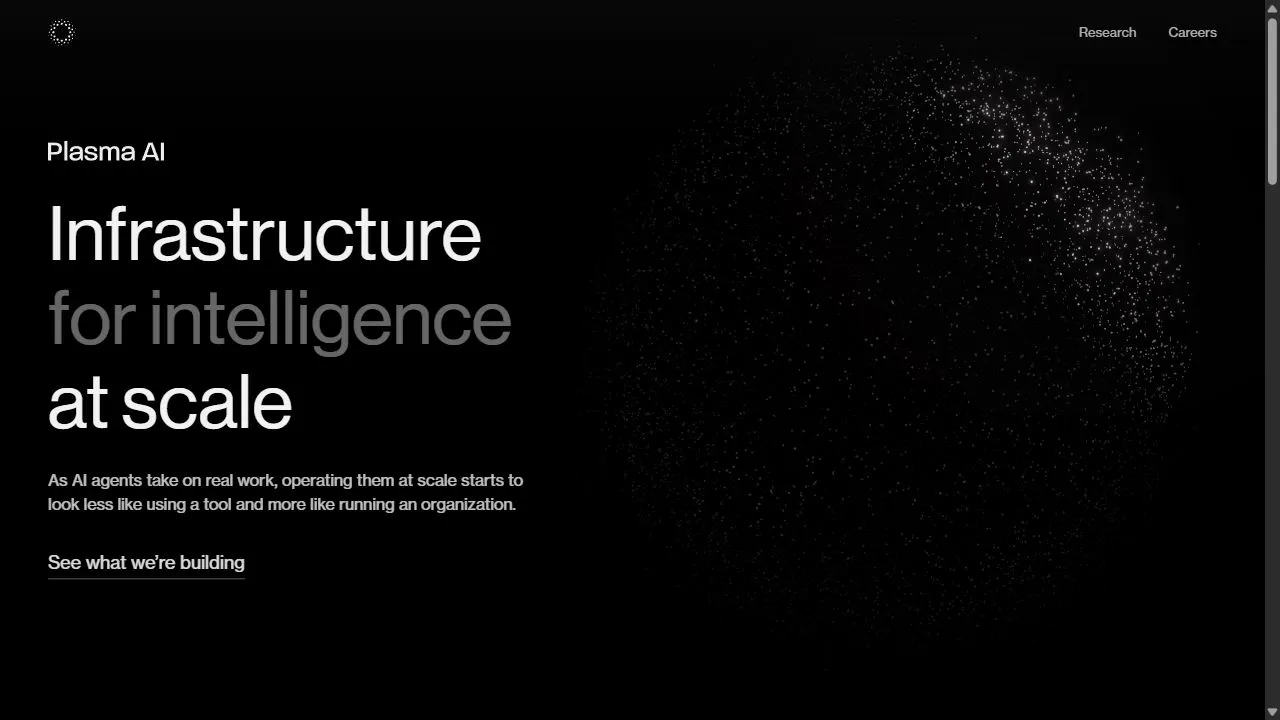
FusionOS Interface


Pros & Cons Comparison
Plasma AI Pros & Cons
Strengths
- Highly scalable
- Developer-centric architecture
- Reduces infrastructure maintenance
FusionOS Pros & Cons
Real Community Feedback
Verified user reviews from GetAiTools community
Plasma AI Reviews0
No community reviews yet for Plasma AI.
FusionOS Reviews1
"Great for summarizing meeting minutes."
About Plasma AI
Plasma AI is a comprehensive AI agent infrastructure layer designed to empower developers and engineering teams to build, deploy, and scale sophisticated autonomous agents by leveraging artificial intelligence, automation, and intelligent orchestration workflows . The platform addresses the critical challenge of infrastructure sprawl and the inherent complexity associated with maintaining reliable agentic architectures. By providing a standardized environment for data management and communication, Plasma AI allows organizations to move beyond simple prompt-based interactions toward fully autonomous systems capable of executing multi-step tasks with precision. The tool is specifically engineered for software developers, data engineers, and enterprise AI teams who are struggling with the "plumbing" of AI development. Instead of spending countless hours configuring servers, managing state, or building custom communication protocols between different AI models, users can utilize Plasma AI as the foundational layer. This enables a strategic shift in focus, allowing teams to concentrate on the high-level behavior, intelligence, and specific logic of their agents while the platform handles the underlying stability and scalability required for production-grade deployments. By integrating advanced orchestration capabilities, Plasma AI solves the problem of fragility in AI agent workflows. In traditional setups, as the number of agents or the complexity of their tasks increases, the system often becomes prone to failure or latency. Plasma AI mitigates these risks through a robust architectural design that ensures high availability and performant execution, making it an essential tool for those building enterprise-grade AI applications that require absolute reliability and the ability to handle high volumes of concurrent operations. Key Features of Plasma AI Orchestration layer for coordinating complex multi-agent workflows and task delegation. Scalable API connectivity to integrate AI agents with external data sources and third-party software. Robust data management systems to handle agent memory, state persistence, and context windows. High-concurrency processing capabilities to ensure system responsiveness during peak operational loads. Modular component architecture allowing developers to swap or update agent behaviors without rebuilding the entire stack. Standardized communication protocols that facilitate seamless interaction between diverse AI agents. Infrastructure abstraction that removes the need for manual server configuration and environment maintenance. Enterprise-grade stability tools designed to prevent system crashes during complex autonomous executions. Flexible input and output handling supporting various text-based and structured data formats. Automated resource allocation to optimize the performance of AI agents based on real-time demand. Why People Use Plasma AI The primary motivation for adopting Plasma AI is the elimination of the technical debt associated with building AI agent infrastructure from scratch. In a manual development environment, engineers must build their own systems for tracking agent states, managing long-term memory, and ensuring that multiple agents can communicate without conflicting. This "infrastructure overhead" often consumes the majority of a development cycle, leaving very little time for the actual refinement of the AI's intelligence and utility. Plasma AI removes this barrier by providing a ready-made foundation, significantly accelerating the development lifecycle. Furthermore, scalability is a recurring pain point for teams transitioning from a prototype or "Proof of Concept" (PoC) to a full-scale production environment. A system that works for one user often fails when scaled to thousands of concurrent users due to bottlenecks in data retrieval or orchestration failures. People use Plasma AI because it is built specifically for scale, offering the stability needed to support enterprise-level traffic without requiring a complete architectural overhaul. Accuracy and reliability are also driving factors. Autonomous agents can often enter "infinite loops" or fail unexpectedly when they encounter an edge case in their workflow. By using a dedicated orchestration layer, developers can implement more rigorous controls and monitoring over how agents behave, ensuring that the final output is consistent and the process is transparent. This transition from fragile, custom-coded scripts to a professional infrastructure layer ensures that AI deployments are sustainable and maintainable over the long term. Popular Use Cases Enterprise Customer Service Ecosystems : Deploying a network of specialized agents—one for billing, one for technical support, and one for account management—all coordinated through a single orchestration layer to provide seamless user experiences. Autonomous Market Research : Building agents that can independently browse the web, extract data from multiple sources, synthesize findings into a report, and update a central database without human intervention. Automated Software Development Lifecycles : Creating agents that can monitor code repositories, identify bugs, suggest fixes, and coordinate with testing agents to ensure code quality before deployment. Financial Analysis and Reporting : Scaling agents that monitor real-time market fluctuations, analyze quarterly earnings reports, and generate predictive insights for portfolio managers. Complex Content Supply Chains : Managing a pipeline of AI agents where one agent generates a content strategy, another drafts the copy, and a third optimizes the text for SEO and compliance. Internal Operational Automation : Developing agents that interface with corporate ERP and CRM systems to automate procurement workflows, employee onboarding, or inventory management. Benefits of Plasma AI Increased Developer Velocity : By abstracting the infrastructure, developers can deploy functional AI agents in a fraction of the time it would take to build the supporting backend manually. Enhanced System Reliability : The platform reduces the likelihood of system failures and "hallucination loops" by providing a structured environment for agent orchestration. Seamless Scalability : Organizations can grow their AI capabilities from a few simple bots to a massive network of autonomous agents without experiencing performance degradation. Reduced Operational Overhead : The shift away from manual infrastructure maintenance lowers the cost of ownership and reduces the need for large DevOps teams to manage AI environments. Improved Architectural Flexibility : The modular nature of the platform allows teams to iterate quickly, updating specific agent behaviors or integrating new LLMs without disrupting the entire system. Higher Quality Outputs : With better state management and data orchestration, AI agents can maintain better context and produce more accurate, relevant results for the end user. Lower Barrier to Entry : Companies without massive internal infrastructure teams can now build enterprise-grade AI agent systems that were previously only possible for the largest tech giants.
About FusionOS
FusionOS is an innovative AI workflow automation platform that empowers users to build, deploy, and manage autonomous AI agents for a wide range of tasks. It addresses the challenge of integrating multiple AI tools and automating complex processes, ultimately streamlining operations and boosting productivity. FusionOS leverages large language models (LLMs) , artificial intelligence , and a visual workflow builder to enable users to create sophisticated AI-driven solutions without requiring extensive coding knowledge. This platform is designed for businesses, developers, and individuals seeking to harness the power of AI automation and agentic AI to solve real-world problems. Key Features of FusionOS Visual workflow builder for designing AI agent logic. Integration with a diverse range of AI models and tools. Customizable AI agents tailored to specific tasks. Real-time monitoring and analytics of agent performance. Secure data handling and privacy controls. Collaboration features for team-based agent development. API access for seamless integration with existing systems. Support for multiple input and output formats. Version control for managing workflow iterations. Automated task execution and scheduling. Built-in error handling and retry mechanisms. User-friendly interface for both technical and non-technical users. Ability to chain multiple AI tools together. Support for conditional logic and branching workflows. Comprehensive documentation and support resources. Why People Use FusionOS Individuals and organizations adopt FusionOS to overcome the limitations of manual processes and fragmented AI toolsets. Traditionally, automating complex tasks required significant coding effort and expertise in multiple AI technologies. FusionOS simplifies this process by providing a no-code/low-code environment where users can visually design and deploy AI agents. This approach dramatically reduces development time and costs, while also making AI automation accessible to a wider audience. The platform’s ability to orchestrate multiple AI tools into cohesive workflows unlocks new levels of efficiency and allows users to tackle problems that were previously too complex or time-consuming to address. By automating repetitive tasks and augmenting human capabilities, FusionOS empowers users to focus on higher-value activities and drive innovation. The platform’s focus on agentic AI allows for the creation of truly autonomous systems capable of handling tasks end-to-end, reducing the need for constant human intervention. Popular Use Cases Customer Support Automation: Building AI agents to handle common customer inquiries, resolve issues, and escalate complex cases to human agents. Sales Lead Qualification: Automating the process of identifying and qualifying potential sales leads based on predefined criteria. Content Creation: Generating articles, blog posts, social media updates, and other content formats using AI-powered writing tools. Data Extraction and Analysis: Automating the extraction of data from various sources and performing analysis to identify trends and insights. Market Research: Gathering and analyzing market data to identify opportunities and assess competitive landscapes. Social Media Management: Scheduling posts, monitoring brand mentions, and engaging with followers using AI-powered social media tools. E-commerce Product Description Generation: Automatically creating compelling product descriptions for online stores. Email Marketing Automation: Personalizing email campaigns and automating follow-up sequences based on user behavior. Financial Data Analysis: Automating the analysis of financial reports and identifying potential risks and opportunities. Legal Document Review: Assisting legal professionals with the review and analysis of legal documents. HR Recruitment: Automating the screening of resumes and scheduling interviews with qualified candidates. Personal Productivity: Building AI agents to manage tasks, schedule appointments, and automate daily routines. Research Assistance: Automating literature reviews and data collection for research projects. Code Generation and Review: Assisting developers with code generation, debugging, and code review. Translation Services: Automating the translation of text between multiple languages. Benefits of FusionOS Increased Efficiency: Automate repetitive tasks and streamline workflows, freeing up valuable time and resources. Reduced Costs: Lower development and operational costs by leveraging a no-code/low-code platform and automating manual processes. Improved Accuracy: Minimize errors and ensure consistency by automating tasks with AI-powered agents. Enhanced Scalability: Easily scale AI-driven solutions to meet changing business needs without requiring significant infrastructure investments. Faster Time to Market: Accelerate the development and deployment of AI applications with a visual workflow builder and pre-built integrations. Greater Flexibility: Customize AI agents to address specific business challenges and adapt to evolving requirements. Empowered Innovation: Unlock new possibilities for innovation by harnessing the power of AI automation and agentic AI . Simplified AI Integration: Seamlessly integrate multiple AI tools and technologies into cohesive workflows. Enhanced Collaboration: Facilitate team-based agent development with collaboration features and version control. Data-Driven Insights: Gain valuable insights into agent performance with real-time monitoring and analytics. Reduced Technical Debt: Minimize the need for custom coding and reduce the risk of technical debt. Increased Productivity: Empower employees to focus on higher-value activities by automating routine tasks. Improved Decision-Making: Leverage AI-powered insights to make more informed and data-driven decisions. Competitive Advantage: Gain a competitive edge by leveraging the power of AI workflow automation to optimize operations and deliver superior customer experiences. Accessibility to AI: Democratize access to AI technology, enabling users without extensive coding experience to build and deploy AI solutions.
More AI Competitors to Compare

MyClaw.Host
Agentic Ai

Kolena AI for Insurance
Agentic Ai

Comet
Agentic Ai
Kimi K2
Agentic Ai
Maskara.ai
Agentic Ai

Minimax Claw
Agentic Ai
Frequently Asked Questions
Most questions answered in under 30 seconds — but if you still have one, write to us at contactgetaitool@gmail.com and we reply within a few hours.
Which is better in 2026, Plasma AI or FusionOS?
How does the pricing compare between Plasma AI and FusionOS?
Can I use Plasma AI and FusionOS for free?
What input and output formats do Plasma AI and FusionOS support?
What are the key advantages of Plasma AI?
What are the key advantages of FusionOS?
What are top alternative competitors to Plasma AI and FusionOS?
Ready to Choose Your AI Tool?
Try both platforms or explore thousands of other curated artificial intelligence tools on GetAiTools.
Tags & Core Competencies
Specific tags and feature capabilities