After all the hype, some AI experts don’t think OpenClaw is all that exciting
The debate highlights a broader theme within the AI community: distinguishing genuine innovation from marketing-driven expectations, especially as startups and established tech giants compete for attention in an increasingly crowded AI landscape
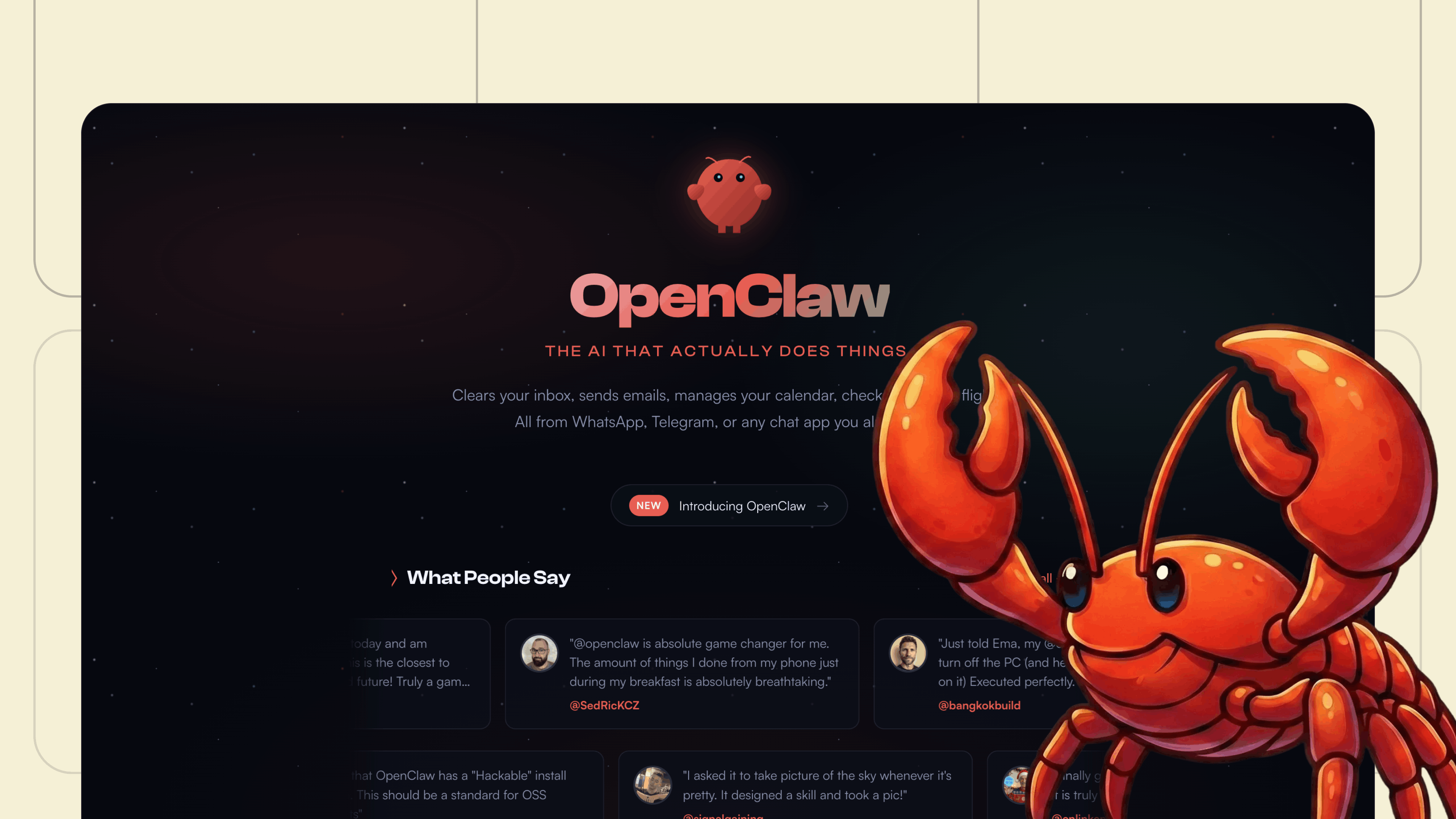
Following significant buzz around OpenClaw, a next-generation artificial intelligence framework touted as a major breakthrough in scalable model interoperability and extensibility, several AI researchers and industry experts are urging caution — suggesting the technology may not be as transformative as early hype implied. While OpenClaw has attracted attention for its promise to unify disparate AI systems and accelerate development workflows, critics argue that the actual technical advantages may be incremental rather than revolutionary.
The debate highlights a broader theme within the AI community: distinguishing genuine innovation from marketing-driven expectations, especially as startups and established tech giants compete for attention in an increasingly crowded AI landscape.
What Is OpenClaw?

OpenClaw was introduced as an open-architecture AI system designed to enable developers to combine, extend, and manage multiple model types and frameworks seamlessly. Its core goals include:
- Unified tooling for different model architectures
- Cross-framework compatibility
- Simplified deployment workflows
- Community-driven extensibility
The idea was that OpenClaw could serve as a common foundation connecting models trained in different environments, streamlining model reuse and reducing development friction.
The Hype Cycle

At launch, OpenClaw generated excitement for several reasons:
- High-profile backers in the AI industry
- Strong messaging around interoperability and modular AI
- Potential to reduce fragmentation in model ecosystems
- Early access previews and demos
Many observers initially interpreted this as a sign of a major shift toward more collaborative and open AI infrastructure.
Why Some Experts Are Unimpressed
Despite early enthusiasm, several AI researchers and developers have expressed skepticism about OpenClaw’s practical impact.
1. Incremental vs. Breakthrough Innovation
Critics argue that while OpenClaw’s goals are worthwhile, similar concepts already exist in:
- Model orchestration tools
- Standardized machine learning frameworks (e.g., ONNX)
- Pipeline and workflow platforms (e.g., Kubeflow, MLflow)
This has led some experts to describe OpenClaw as evolutionary rather than revolutionary.
2. **Integration Complexity Remains

Even with unified interfaces, integrating disparate models across organizations and deployment environments still involves:
- Legacy dependencies
- Performance discrepancies
- Version mismatches
- Operational overhead
Experts note that OpenClaw may simplify some workflows but doesn’t eliminate these foundational challenges.
3. Limited Real-World Benchmarks

One common critique is that OpenClaw’s performance metrics and real-world case studies are still limited, making it difficult to assess genuine improvements over existing tooling. Without demonstrable benchmarks in production environments, enthusiasm may be premature.
Voices from the AI Community

Several developers and researchers have shared their perspectives:
- Some describe OpenClaw as a good idea with unfinished execution
- Others appreciate the concept but note that industry adoption will depend on ease of integration
- A few point out that many organizations prefer established ML platforms with mature ecosystems
These voices highlight that hype can sometimes outpace practical utility, especially in fast-moving AI domains.
What OpenClaw Could Still Deliver
Despite criticisms, experts acknowledge possible long-term value if OpenClaw:
- Gains broader community support and developer tools
- Releases robust production-grade benchmarks
- Demonstrates clear advantages in reducing deployment friction
- Builds ecosystem integrations with major AI frameworks
The technology may yet evolve into a useful interoperability layer — but the timeline and adoption curve remain uncertain.
Why Hype Happens in AI

Hyperbolic narratives are common in the AI industry due to:
- Investor and media excitement
- Competition for developer mindshare
- Rapidly shifting benchmarks of progress
- Marketing framing that emphasizes potential over practical results
As a result, products often face high expectations before real-world performance can be evaluated.
The Path Forward for OpenClaw
Experts suggest that for OpenClaw to gain credibility, its developers should focus on:
- Publishing transparent performance data
- Building real use cases with enterprise partners
- Integrating with established AI ecosystems
- Prioritizing usability and operational tooling
If these areas are addressed, OpenClaw could still forge a niche as a valuable tool in the AI stack — even if it doesn’t live up to its initial hype.
Conclusion
OpenClaw’s journey reflects the dynamic nature of the AI industry — where innovation, expectation, and reality often intersect unevenly. While the framework’s goals resonate with ongoing challenges in interoperability and model management, many experts argue that its current form is not yet sufficiently differentiated from existing tools.
The debate serves as a reminder that real industry impact depends not just on bold ideas but also on clear, measurable advancements that solve practical problems at scale.
FAQ
What is OpenClaw?
OpenClaw is an AI framework intended to unify model development, deployment, and interoperability across different architectures and ecosystems.
Why was it hyped initially?
The concept promised to address fragmentation in AI tooling and reduce development friction through a unified interface and extensible architecture.
Why are some experts unimpressed?
Critics argue existing tools already address many of the same challenges, and OpenClaw has limited real-world benchmarks so far.
Could OpenClaw still succeed?
Yes — if it expands its utility, demonstrates clear performance gains, and builds strong ecosystem support.
What alternatives exist to OpenClaw?
Existing frameworks include ONNX, MLflow, Kubeflow, and other orchestration and interoperability platforms.
What will determine its future adoption?
Practical utility, ease of integration, community involvement, and transparent performance results will be key.
Mentioned in this article
Tools

Klyra AI
Klyra AI is an innovative AI-powered content creation platform designed to empower users to gener

Klyra AI is an innovative AI-powered content creation platform designed to empower users to generate diverse content formats ΓÇô text, images, videos, and voice ΓÇô from a single, unified interface. Klyra AI addresses the challenges of fragmented content creation workflows, where users often rely

Beatoven.aiNew
Beatoven.ai: The Leading AI Background Music Generator for Content Creators Introduction to Beatoven

Beatoven.ai: The Leading AI Background Music Generator for Content Creators Introduction to Beatoven.ai Beatoven.ai stands as a premier AI-powered music generation platform specifically designed for content creators, filmmakers, game developers, and digital marketers. With over 2 million creators us

Soundraw
Soundraw represents a cutting-edge AI music generation platform designed specifically for content cr
Soundraw represents a cutting-edge AI music generation platform designed specifically for content creators, filmmakers, podcasters, and musicians seeking professional-quality, customizable royalty-free music. Unlike generic stock music libraries, Soundraw employs advanced machine learning algorithms

Florafauna.aiNew
Florafauna.ai is an AI-powered image generation and creative design platform specializing in produc
Florafauna.ai is an AI-powered image generation and creative design platform specializing in producing high-quality, nature-inspired visuals such as flora, fauna, botanical art, landscapes, and organic imagery. Using advanced generative models, Florafauna.ai enables artists, designers, educators,
Mind Luster
Mindluster.com is an online platform that claims to offer a very large collection of free online c

Mindluster.com is an online platform that claims to offer a very large collection of free online courses and MOOCs (Massive Open Online Courses) across subjects such as programming, graphic design, accounting, language learning, technology, and more. The site presents itself as a place where lear

OpenAI Codex
OpenAI Codex is an advanced artificial intelligence model designed to understand natural language an
OpenAI Codex is an advanced artificial intelligence model designed to understand natural language and generate computer code across multiple programming languages. It helps developers write, edit, debug, and explain code using simple instructions, making software development faster and more accessib

Lipsync AINew
(Product Features) Audio-driven lip-sync video generator (online) Upload video + audio to generate a

(Product Features) Audio-driven lip-sync video generator (online) Upload video + audio to generate a talking video with lip movements synced to the voice. Two main workflows Image + Audio → Talking portrait Video + Audio → Redub existing video Long Mode (longer outputs) Supports videos up to 5 minut

Arcads AI
Arcads AI is the premier AI-powered platform for creating professional User-Generated Content (UGC)
Arcads AI is the premier AI-powered platform for creating professional User-Generated Content (UGC) style advertising videos that convert. As a cutting-edge generative AI solution specifically designed for marketing teams, Arcads AI enables brands to produce high-quality, authentic-looking video adv


