Anthropic and OpenAI Join AI Stage at TechCrunch Disrupt 2026
**Anthropic and OpenAI are headlining the AI Stage at TechCrunch Disrupt 2026, and the agenda reads less like a product keynote and more like a survival manual...
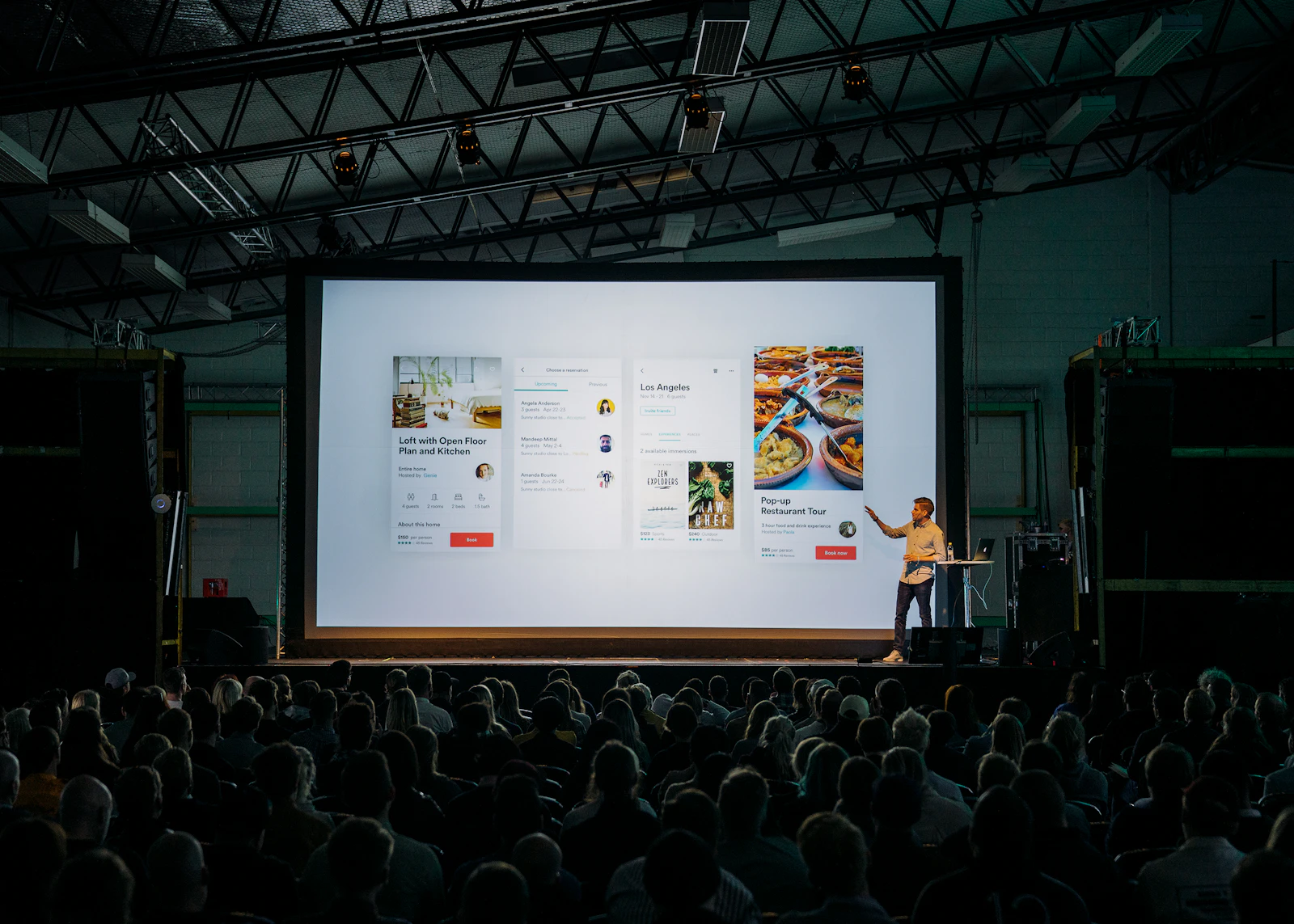
Anthropic and OpenAI are headlining the AI Stage at TechCrunch Disrupt 2026, and the agenda reads less like a product keynote and more like a survival manual for the AI economy. With Anthropic's Cat de Jong and OpenAI's Tara Seshan booked for Moscone Center in San Francisco (October 13-15), the conference is zeroing in on the questions founders are actually losing sleep over: how to price AI when models are commoditizing, why agent security is fundamentally broken, and what "AI-native go-to-market" means when nobody has a playbook yet. For the thousands of startups, developers, and marketers building on AI in 2026, this is the first major conference agenda that treats deployment problems, not model demos, as the headline act.
Section 1: Background: What Is the AI Stage at Disrupt?
TechCrunch Disrupt has been the startup world's flagship gathering for over a decade, and this year's edition (October 13-15 at Moscone Center, San Francisco) is expected to pull in 10,000+ startup, tech, and VC leaders. The AI Stage, presented by Google for Startups, is a dedicated track built around one premise: AI hasn't just changed how startups build, it has broken how they sell, secure their data, and scale.

The session slate is structured around three uncomfortable truths the industry is hitting in 2026:
- Pricing is broken. When frontier models commoditize, how do you charge for the layer above them?
- Security is playing catch-up. Agentic AI is making autonomous decisions inside enterprise systems, and legacy frameworks weren't built for it.
- The go-to-market (GTM) playbook is dead. AI collapsed the traditional sales stack and created a brand-new job category in its place.
For an audience that has watched AI move from "look what it can do" to "how do we actually run a business on this," the agenda is deliberately practical. TechCrunch is also closing a pricing window where tickets save up to $200, a nudge that early registration is the cost of admission for the builder crowd.
Section 2: The Core News: What Was Announced
TechCrunch dropped the first wave of AI Stage sessions on August 27, 2026, and the lineup reads like a who's who of the companies actually shipping enterprise AI. Here is the full slate announced so far:
| Session | Speaker(s) | Company | Core Question |
|---|---|---|---|
| What Anthropic Sees When Enterprises Deploy Claude | Cat de Jong | Anthropic | Why do real deployments succeed or stall? |
| What Building AI Native Actually Means | Tara Seshan | OpenAI | What is AI-native GTM in practice? |
| The Enterprise Isn't Broken. Your Assumptions About It Are. | Arsalan Tavakoli | Databricks | What does enterprise AI security require in 2026? |
| The Agent Security Problem Nobody Is Talking About | Ric Smith | Okta | Why are app-level permissions fundamentally flawed? |
| The Video Intelligence Race | Dean Leitersdorf, Amit Jain | Decart, Luma AI | What happens when generation becomes real-time reasoning? |
| Rewriting SaaS: Why AI Breaks the Old Business Model | Arvind Jain, Barr Moses, Cathy Gao, Aaron Jacobson | Glean, Monte Carlo, Sapphire Ventures, NEA | How do you price AI sustainably and build moats? |
| The GTM Engineer: AI's Next Big Job Category | Kareem Amin | Clay | How did GTM engineering become a million-dollar career? |
| Securing the AI Enterprise | Chet Kapoor, Katie Moussouris, Wendy Nather | AWS, Luta Security, 1Password | What does infrastructure-level AI security look like? |
The two headline bookings matter beyond the star power. Anthropic and OpenAI rarely share a conference billing at this depth, and both sessions are notable for who they're sending: not policy folks or product marketers, but people who work hands-on with enterprise deployments and productivity tooling. That signals the two labs are now competing on implementation credibility, not just benchmark scores.
Section 3: Why This Matters: The Stakes for the AI Economy
This agenda arrives at a specific inflection point. In the past two years, the conversation shifted from "which model is smarter?" to "which model can be trusted inside a regulated business without blowing up the budget?" The stakes for founders and operators are concrete:
- Margin pressure is real. When every competitor can call the same API, your pricing power migrates to workflow design, data moats, and distribution. The Rewriting SaaS session with Glean and Monte Carlo is essentially a masterclass in surviving that squeeze.
- Agent risk is now a board-level topic. Okta's session directly names the problem: agentic systems were built for capability, not security. Enterprises that rushed agents into production are now discovering that application-level permission models can't govern autonomous decision-making.
- New roles are being created faster than the talent pipeline. The GTM engineer didn't exist two years ago; today it's one of tech's fastest-growing roles, with independent practitioners reportedly building million-dollar businesses. That's a hiring signal every startup should be reading.
Compare the positioning to other major AI events:
| Conference | Focus | Who It Serves |
|---|---|---|
| TechCrunch Disrupt AI Stage | Deployment, pricing, security, GTM | Founders and operators |
| Google Cloud Next | Cloud infrastructure and enterprise AI | IT and platform teams |
| AWS re | AWS-native AI services | AWS customers and engineers |
| AI Engineer Summit | Agent frameworks and coding | Hands-on developers |
Disrupt's edge is that it asks business questions, not just technical ones. That's a differentiator for a market drowning in model announcements.
Section 4: Key Details: The Sessions Worth Tracking
### The Anthropic Session: Post-Deployment Reality
Cat de Jong, Head of Applied AI at Anthropic, is set to talk about what happens after Claude goes live inside enterprises. Her thesis, per the announcement: most AI conversations happen before deployment, but the patterns that matter are the ones that show up later. Expect concrete detail on where deployments stall, what separates organizations extracting real value from those stuck in 18-month pilots, and what it reveals about where enterprise AI is heading.
The OpenAI Session: GTM Engineering as a Discipline
Tara Seshan, OpenAI's Head of Productivity, will trace how AI collapsed the traditional go-to-market stack and spawned an entirely new discipline. The framing is sharp: two years ago, GTM engineering didn't exist. Today, independent practitioners are building seven-figure businesses around it. The takeaway for founders: the people who can wire AI tools into revenue workflows are now more valuable than the people selling the tools.
The Security Block: Databricks, Okta, AWS
Three sessions attack the same problem from different layers:
- Databricks (Arsalan Tavakoli) makes the case that enterprise assumptions, not the technology, are the real bottleneck.
- Okta (Ric Smith) argues that application-level permission models are fundamentally flawed for agentic AI, requiring infrastructure-level rebuilds.
- AWS (Chet Kapoor), Luta Security (Katie Moussouris), and 1Password (Wendy Nather) deliver the observability and governance view: what enterprises can trust versus what they can't afford to touch.
The Business Model Sessions: Glean, Monte Carlo, and the VCs
The Rewriting SaaS panel brings together founders (Glean, Monte Carlo) with investors (Sapphire Ventures, NEA) to answer the question that keeps CFOs up at night: if the model layer keeps commoditizing, where does durable value live? It's a rare setup where the people setting valuations and the people building products share a stage.
Section 5: Competitive Landscape: The Conference Wars Heat Up
TechCrunch Disrupt isn't the only game in town, but it is staking out a specific territory. Google for Startups backing the AI Stage is a strategic play: Google gets early access to thousands of the world's most promising AI startups while rival cloud providers also take the stage. The inclusion of AWS, Databricks, and Okta alongside OpenAI and Anthropic shows TechCrunch is deliberately building a neutral arena, unlike vendor-run events that double as marketing funnels.
The bigger picture: enterprise AI spending has moved to security, observability, and governance, and the vendors who own those categories (Okta, Databricks, AWS) are positioning themselves as the toll roads of the agentic era. For incumbents like Salesforce, ServiceNow, and Microsoft, whose copilot stories have aged unevenly, a conference agenda this focused on GTM and pricing is a quiet warning: the "AI washing" era is over, and buyers are asking hard ROI questions.
What This Means for AI-Tool and AI-News Publishers
This announcement is a content goldmine for anyone running an AI newsletter, tool-review site, or SEO blog. Here are five concrete angles you can publish this week:
- "GTM Engineer" explainer with a salary angle. The session claims independent GTM engineers build million-dollar businesses. Write a career guide: what skills they need, which AI tools they use, and what a typical engagement costs. That's a high-intent keyword search founders are already making.
- A pricing-model roundup. When Glean's Arvind Jain and Monte Carlo's Barr Moses discuss AI pricing sustainability, repackage it as "How AI companies should price in 2026" with examples from real SaaS pricing pages. Add a comparison table of usage-based vs. seat-based vs. outcome-based pricing.
- Agent security checklist. Okta's "nobody is talking about this" framing is an open invitation for a technical explainer: why application-level permissions fail for agents, and what infrastructure-level alternatives exist. This targets your developer audience with strong long-tail SEO.
- Enterprise AI adoption stats post. The "18-month pilot" problem Anthropic will address is a classic data-backed post: how many AI pilots actually reach production, and what the laggards do wrong. Pull in third-party surveys to own this topic.
- Conference coverage remix. Since most of your readers can't fly to San Francisco, build a "cheat sheet" of the AI Stage agenda with one-paragraph summaries per session, plus a prediction for what each company will announce. Optimize for "TechCrunch Disrupt 2026 AI Stage" keywords and ride TechCrunch's search authority via name mentions.
For newsletter writers, each session title doubles as a ready-made subject line: "Your AI pilot is 18 months old. That's a problem." "Why your SaaS pricing is about to collapse."
Challenges Ahead: What Could Go Wrong
Even a well-curated lineup has gaps and risks worth flagging:
- Keynote-itis: Big names can still deliver recycled talking points. Whether Anthropic and OpenAI go beyond brand positioning and actually share deployment data remains to be seen.
- The security gap is real but unsolved. Sessions can diagnose agent security problems faster than vendors can ship fixes. There's a risk the conference produces more warnings than answers.
- Pricing debate may lack consensus. Investors and founders on the SaaS panel have conflicting incentives; venture capitalists want growth narratives, while founders need sustainable margins.
- Missing voices: The announced slate skews heavily toward US-based, Western vendors. For a global audience in markets like India, that limits relevance on local deployment realities like UPI-first payments, language models, and data localization rules.
- Ticket cost and accessibility: With prices running into the hundreds of dollars, the in-person value is mostly limited to funded founders and enterprise teams, not the indie builder community.
Final Thoughts
The 2026 Disrupt agenda marks the moment the AI industry stopped selling potential and started accounting for it. By putting deployment failures, agent security, and pricing math on the main stage, TechCrunch is reflecting what builders already know: the model race was the opening act, and the real competition now is in the messy middle layer of operations, trust, and revenue. Watch this lineup closely, because the questions these sessions ask are the ones your own AI roadmap will have to answer within the next two quarters.
FAQ
Why are Anthropic and OpenAI both headlining the same conference?
Both labs are competing on enterprise credibility, not just model quality, and sharing a stage lets them position their platforms as implementation-ready. It also signals to buyers that deployment and security expertise, not raw benchmarks, are the new differentiators.
What is the "GTM engineer" role everyone is talking about?
A GTM engineer is a practitioner who uses AI tools to automate and scale go-to-market work, like prospecting, enrichment, and outreach. The role barely existed two years ago and is now one of tech's fastest-growing job categories, with independent practitioners building six- and seven-figure businesses.
When and where is TechCrunch Disrupt 2026?
It runs from October 13-15, 2026 at Moscone Center in San Francisco. The AI Stage is presented by Google for Startups, and more than 10,000 startup, tech, and VC leaders are expected to attend.
Why is agent security a bigger deal than traditional cybersecurity?
Agentic AI makes autonomous decisions inside enterprise systems at a speed and scale legacy frameworks weren't built for. Application-level permission models can't govern an agent that acts on its own, so security has to be rebuilt at the infrastructure level.
What's the risk of attending or relying on this conference for strategy?
Sessions can be heavy on diagnosis and light on ready-to-ship fixes, and the slate skews toward US-based enterprise vendors. Take the agendas as a map of the right questions, then validate answers against your own deployments and your local market's regulations.
How can publishers and creators profit from this announcement?
By turning each session topic into standalone content: GTM engineer career guides, AI pricing comparisons, agent security checklists, and deployment failure-rate analyses. These are high-search-volume, high-intent topics that map directly to what founders and marketers are already looking for.