Apple Debuts M5 Ultra and M6, Its 'Most Powerful Chip Ever'
Apple just dropped its most aggressive silicon play yet, unveiling the M5 Ultra and M6 chips to power the new Mac Mini and Mac Studio models...

Apple just dropped its most aggressive silicon play yet, unveiling the M5 Ultra and M6 chips to power the new Mac Mini and Mac Studio models. With the M5 Ultra billed as Apple’s "most powerful chip ever" and a 2nm-based M6 built for on-device AI, this is a direct challenge to the idea that serious AI work must live in the cloud. For Indian developers juggling expensive GPU rentals and data-residency concerns, local AI inference just got a lot more credible.
What Is Apple Silicon?
Apple has controlled its own chip destiny since the M1 launched in late 2020, steadily closing the gap with Intel and Nvidia on raw performance while winning on power efficiency. The lineup has now expanded to the M5 Ultra and M6, each aimed at a different kind of user. The M5 Ultra is a professional monster built for heavy AI workloads, while the M6 is designed for everyday users who still want serious local machine learning muscle.
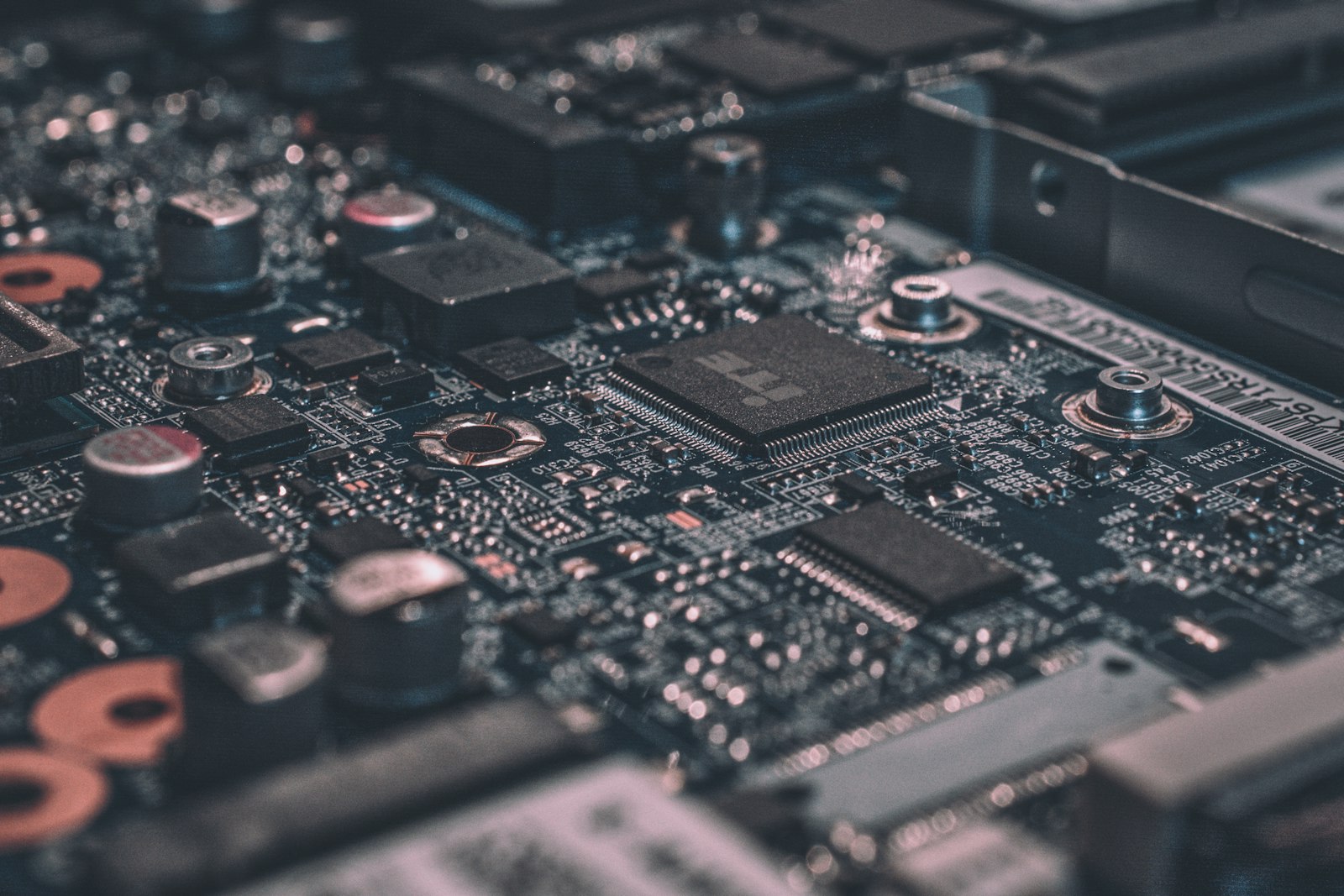
The two-chip strategy
- M5 Ultra: Apple’s first quad-die chip, made by fusing two dual-die M5 Max processors. It targets 3D artists, VFX studios, and developers running frontier AI models.
- M6: A 2nm chip with a new CPU complex, more cores, and a Dual 16-core Neural Engine for efficient on-device performance.
The M3 Ultra arrived only about a year and a half ago, so the jump to the M5 Ultra marks an unusually fast generational leap for Apple’s pro line.
The Core News: Apple’s First Quad-Die Chip
The headline is the M5 Ultra, which Apple claims is its most powerful chip ever. By fusing two dual-die M5 Max chips into a single package, Apple has created a processor capable of handling workloads that previously demanded dedicated GPU servers.
Key specs at a glance

| Spec | M5 Ultra | M6 | M3 Ultra (for reference) |
|---|---|---|---|
| Chip design | Quad-die (two fused M5 Max) | 2nm single die | Dual-die |
| CPU cores | Up to 36-core | 12-core (2 more than M5) | Up to 32-core |
| GPU cores | Up to 80-core | 2 more than M5 | Up to 80-core |
| Unified memory bandwidth | 1.2 TB/s | More than M5 | 800 GB/s |
| Neural Engine | Multi-Engine setup | Dual 16-core | Single 16-core |
What Apple is claiming
- 50% more memory bandwidth than the M3 Ultra, hitting 1.2 TB/s, which matters enormously for feeding large language models.
- Roughly 30% higher peak GPU compute for AI compared to the M5, accelerating prompt processing for on-device LLMs.
- The ability to run and fine-tune large AI models locally, using Apple Foundation Models, App Intents, or your own proprietary models.
Apple vice president of Silicon Engineering Sri Santhanam said the M6 combines a new CPU complex, extra CPU and GPU cores, and unified memory bandwidth to "power through workloads with amazing energy efficiency."
The new Mac Mini is available for preorder now starting at $899 (roughly ₹75,500 in India before import duties), with shipping after September 22.
Why This Matters: The On-Device AI Tipping Point
Apple has trailed badly in the race to build its own frontier AI model. The long-awaited Siri upgrade is powered by Google Gemini, a rare admission of weakness. But Apple’s strategy has never been about matching OpenAI model-for-model. It’s about privacy-preserving, on-device intelligence, and these chips supercharge that bet.

For Indian developers and startups, the stakes are immediate. Cloud GPU costs in India remain prohibitive for bootstrapped teams, and data-residency regulations push many companies toward local processing.
| Factor | Cloud GPU | On-Device Mac (M5 Ultra/M6) |
|---|---|---|
| Cost | Pay-per-hour, high at scale | One-time hardware cost |
| Privacy | Data leaves your machine | Fully local, no data egress |
| Latency | Network-dependent | Near-zero for inference |
| Scalability | Easy to rent more | Limited by hardware RAM |
| Electricity | N/A | Running costs are minimal |
The M5 Ultra’s 80-core GPU and 1.2 TB/s bandwidth mean a Mac Studio can now hold and process models that would have required a small cluster of Nvidia A100s just two years ago. That is a genuinely disruptive shift for solo developers and small studios.
Key Details: How the M5 Ultra and M6 Work
The M5 Ultra: A Quad-Die Beast
The M5 Ultra is not a simple chip. It uses Apple’s custom UltraFusion packaging to combine two dual-die M5 Max chips, creating a single processor that macOS sees as one chip. This design doubles memory bandwidth and lets the machine run massive model weights entirely in unified memory. If you have ever hit an "out of memory" error while loading a 70B-parameter model, this chip is the answer.
The M6: Efficiency Meets Intelligence
The M6 is more interesting for the mainstream. Built on a 2nm process, it adds two CPU cores and two GPU cores over the M5, plus the Dual 16-core Neural Engine. Apple says the M6 offers a nearly 30% increase in peak GPU compute for AI, which directly improves prompt processing speed when you are chatting with an on-device LLM. The efficiency gains matter too: your MacBook won’t sound like a jet engine while running local inference.
How developers will actually use these chips
- Download or convert a model using Apple’s MLX framework or PyTorch.
- Fine-tune the model locally with frameworks that automatically split work across CPU, GPU, and Neural Engine.
- Run inference on-device with Core ML, using Apple Foundation Models or your own proprietary weights.
- Tap into Apple Intelligence features via App Intents, keeping user data on the device.

This workflow is a direct answer to the growing concern that AI development is being centralized in cloud giants. Apple’s pitch is simple: keep your models, keep your data, keep your leverage.
Competitive Landscape: Who Else Is Playing Here?
Apple is not alone in chasing on-device AI. Qualcomm has pushed the Snapdragon X Elite for Windows laptops, AMD continues to expand its Ryzen AI lineup, and Nvidia still rules the server GPU world. But none of them offers Apple’s combination of unified memory, power efficiency, and developer-friendly tooling.
| Chip | Process | AI Focus | Best For |
|---|---|---|---|
| Apple M5 Ultra | ~3nm class | Quad-die, 1.2 TB/s bandwidth | Pro AI, VFX, local fine-tuning |
| Apple M6 | 2nm | Dual Neural Engine, 30% AI boost | Everyday devs, creators |
| Qualcomm Snapdragon X Elite | 4nm | 45 TOPS NPU | Windows laptops, ARM portability |
| Nvidia RTX laptop GPU | 5nm | CUDA ecosystem, raw tensor cores | Gamers, CUDA-heavy workflows |
Apple’s real advantage is software integration. Xcode, Core ML, and MLX are tightly coupled, meaning an app built for one Mac device runs well across the stack. Nvidia still wins for training billion-plus parameter models from scratch, but Apple is carving out the inference and fine-tuning layer where privacy and latency matter most.
What This Means for AI-Tool and AI-News Publishers
This story is gold for content creators and tool-review sites because it touches pricing, hardware, and practical workflows. Here are concrete angles to chase:
- Benchmark the Mac Mini M6 as a budget AI box. At roughly ₹75,500, it competes with cloud GPU rentals. Run a cost comparison with a year of A100 or L40S cloud usage and show Indian devs the payback math.
- Publish a "fine-tune a local LLM on Mac Studio" tutorial. Step-by-step guides using MLX on the M5 Ultra will pull serious search traffic.
- Write a privacy-focused enterprise angle. Frame the M6 as the answer to data-residency headaches in Indian banks, hospitals, and government projects.
- Compare M6 vs Snapdragon X Elite for creators and marketers. A practical performance-and-price breakdown will attract Windows switchers.
- Cover the Siri/Gemini paradox honestly. Apple’s hardware is ahead of its AI models. Explore whether third-party model integration makes Apple the best "AI phone and desktop" shell in the market.
- SEO keywords to target: "M5 Ultra India price," "Mac Mini local LLM," "on-device AI fine-tuning Mac," "M6 vs M5 AI benchmark," "best budget AI development machine."
Challenges Ahead: What Apple Still Gets Wrong
Apple’s silicon is impressive, but the launch doesn’t fix everything:
- Rental vs. ownership: Apple charges steep premiums for RAM and storage upgrades in India, which can double the effective price of a Mac Studio.
- Nvidia lock-in: The majority of open-source AI tooling, especially CUDA-dependent libraries, still favors Nvidia. Porting to Apple’s MLX or Metal isn't always trivial.
- Gaming gap: The M6’s GPU improvements won't move the needle for gamers, and Apple’s gaming library remains thin compared to Windows.
- Cloud still wins for scale: If you are training a 100B-parameter model from scratch, a Mac Studio is not replacing a cloud cluster.
- Apple’s own AI model deficit: Siri still leans on Google Gemini. Apple’s hardware advantage doesn’t fix its absence of a frontier model strategy.
- Global availability: Indian buyers often face delayed availability and higher import duties, which dampens early adoption.

None of these are fatal, but they keep the M5 Ultra and M6 from being a universal answer.
Final Thoughts
The M5 Ultra and M6 mark the moment Apple stopped waiting for cloud providers and made local AI development a serious default. Apple remains behind on proprietary models, but its hardware advantage gives developers a private, low-cost playground for the fast-growing world of on-device intelligence. Watch for the benchmark leaks in September.
FAQ
When will the new Mac Mini and Mac Studio ship?
The Mac Mini is available for preorder now starting at $899, with devices shipping after September 22. Mac Studio availability was announced alongside, though Indian market timing may vary.
Can I really fine-tune a large AI model on the M5 Ultra?
Yes. Apple says the M5 Ultra’s 1.2 TB/s unified memory bandwidth and 80-core GPU let developers run and fine-tune large models locally using MLX, Core ML, or PyTorch.
Is the M6 better than the M5 for AI work?
For AI, yes. The M6 offers roughly 30% higher peak GPU compute for AI versus the M5 and a Dual 16-core Neural Engine, which speeds up prompt processing and on-device LLM responses.
Who should buy the M5 Ultra instead of the M6?
Professionals doing 3D rendering, VFX, or running frontier-scale AI models should choose the M5 Ultra. The M6 is better suited to everyday developers, creators, and prosumers who want efficient local AI.
How does this compare to Nvidia for AI workloads?
Nvidia still leads for massive model training and CUDA-heavy pipelines. Apple wins on unified memory, power efficiency, privacy, and total cost of ownership for local fine-tuning and inference.
What does this mean for India’s AI ecosystem?
It lowers the barrier to entry. Developers can avoid high cloud GPU costs and keep sensitive data on-device, which aligns well with India’s tightening data-residency requirements and privacy expectations.


