OpenAI Pursues $30B Raise at $1.25T Valuation Ahead of Planned IPO
OpenAI is reportedly lining up up to $30 billion in fresh private capital at a $1.25 trillion pre-money valuation , led by Coatue and investors from...

OpenAI is reportedly lining up up to $30 billion in fresh private capital at a $1.25 trillion pre-money valuation, led by Coatue and investors from the UAE, according to CNBC. If it closes, OpenAI becomes the most valuable private company in history, and it resets the bar for an IPO that the company quietly filed confidential paperwork for back in June 2026. For anyone building on top of OpenAI models, the signal is not the headline number: it's that the compute supply behind ChatGPT is now being financed by sovereign capital, not just venture funds.
What Is Actually Being Negotiated Here
OpenAI is not a normal startup raising a normal round. It is a research lab with a for-profit arm, a consumer app with hundreds of millions of users, and an infrastructure appetite that behaves more like a utility than a software company. Each funding round since 2023 has effectively been a down payment on data centers.

The mechanics matter more than the drama:
- $1.25T pre-money means the valuation is set before the new $30 billion lands, so the post-money figure would land slightly higher.
- $30B against a $1.25T pre-money base implies roughly 2.4% dilution for existing holders, remarkably light for a round this size.
- Coatue is described as lead investor, with UAE backers participating, and the UAE money may be tied to a compute capacity deal, meaning OpenAI gets chips and megawatts alongside cash.
The Core News: Three Numbers, One Story
Here is the cleanest way to read the report. The same $30 billion round has now been reported at two different valuations within a month, which tells you the price is still moving.
| Round / Report | Valuation | Type | Status |
|---|---|---|---|
| March 2026 raise | $852B post-money | Private round (completed) | Closed |
| Bloomberg, ~Sept 2026 | $1.4T | Private round (reported) | Terms under discussion |
| CNBC, Oct 22, 2026 | $1.25T pre-money | Private round, Coatue + UAE | Being negotiated |
| Confidential IPO filing | Not applicable | S-1 precursor | Filed June 2026 |
Two things jump out. First, the reported valuation fell from $1.4T to $1.25T in roughly a month, which is either negotiation noise or a sign that investors are pushing back on price. Second, OpenAI is raising private money after filing IPO paperwork, which is unusual sequencing and suggests the company wants a higher public-market anchor before it lists.

Why This Matters: The IPO Math Nobody Wants to Say Out Loud
An IPO prices what public investors will pay. A private round prices what a small group of believers will pay. OpenAI is doing both at once, and the gap between those two numbers is the whole story.
The valuation jump is extreme even by 2026 standards. Going from $852 billion post-money in March to $1.25 trillion pre-money is a roughly 47% increase in about seven months, on top of a business that is still burning enormous amounts of cash to serve inference.
It reframes the IPO bar. If OpenAI lists at or above $1.25 trillion, the first-day pop that venture investors crave becomes mathematically harder. You need a lot of public market buyers to move a company that large.
Sovereign capital is now core infrastructure funding. The UAE angle is the part most coverage underplays. Cash from a Gulf state, bundled with compute, is a different instrument than a Sequoia check. It buys wattage.
| Entity | Latest private mark | IPO status | Reported ask |
|---|---|---|---|
| OpenAI | $852B (Mar 2026), negotiating $1.25T | Confidential filing, June 2026 | Up to $30B round |
| Anthropic | $965B (May 2026, $65B raised) | Confidential filing, June 2026 | $1.5T to $2T for debut |
| xAI | Not disclosed here | Private | Not disclosed |
The uncomfortable detail for OpenAI: Anthropic is reportedly seeking a higher IPO valuation ($1.5T to $2T) than OpenAI's private round. For the first time, the challenger is asking the market to value it above the category leader.
Key Details: Inside the Structure
The valuation ladder, in order
- March 2026: OpenAI raises at $852 billion post-money, widely read as a pre-IPO round.
- June 2026: Confidential IPO paperwork is filed, with no public S-1 yet.
- September 2026: Bloomberg reports a $30B raise at $1.4 trillion.
- October 22, 2026: CNBC reports $30B at $1.25 trillion pre-money, Coatue leading with UAE investors.
- Next: Either the round closes and the IPO is re-benchmarked, or the IPO comes first and the private round becomes a bridge.
The UAE compute bundle
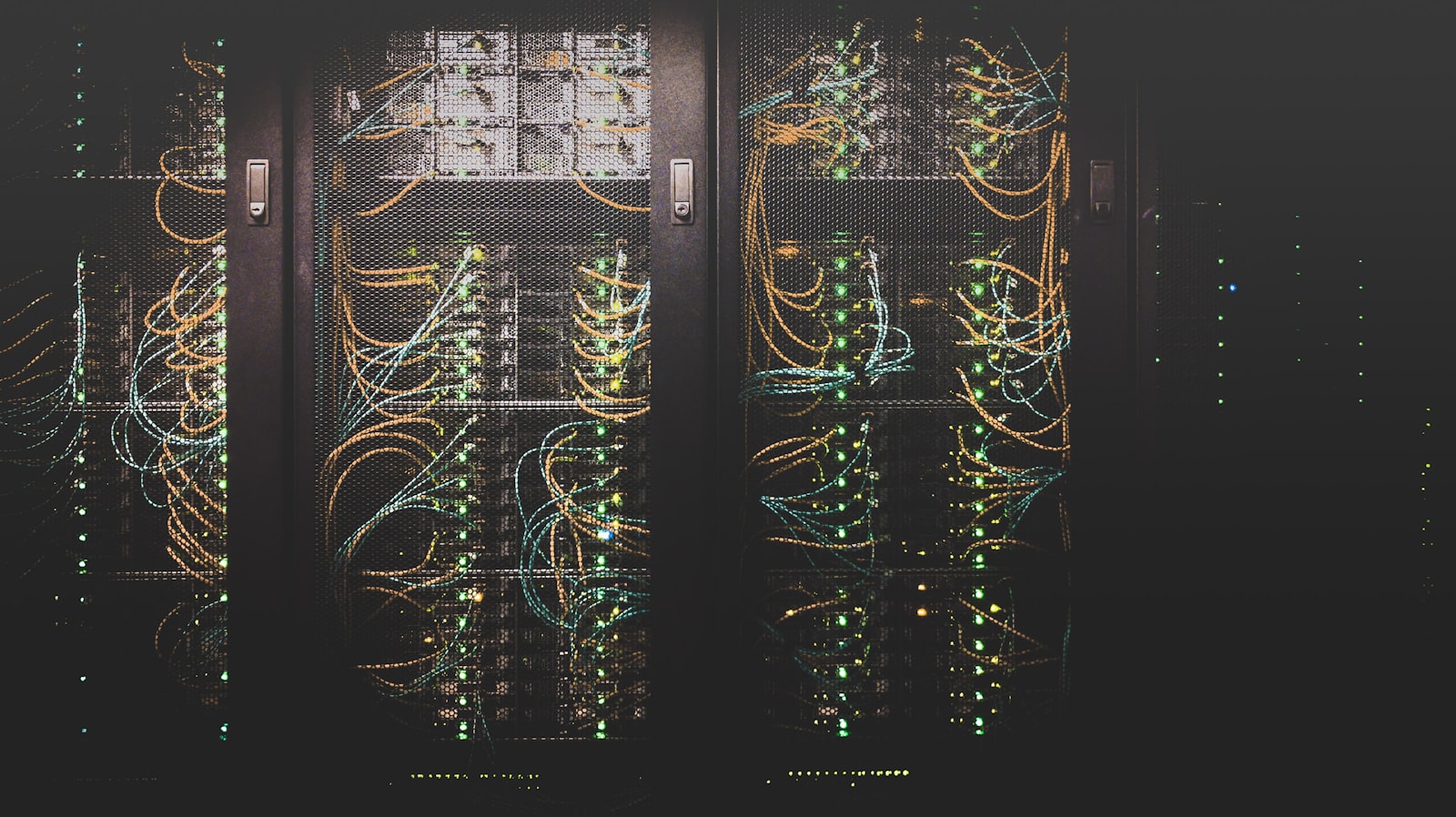
The UAE connection is not incidental. Gulf capital has been structuring AI deals around megawatts, not just equity for the past two years, with sovereign-backed campus projects designed to host frontier training clusters. If OpenAI's UAE funding includes a compute commitment, the round is partly an energy contract dressed as a cap table event.
Why a private round beats an IPO right now
- Control: No quarterly earnings call, no activist pressure, no disclosure of unit economics that are still ugly.
- Speed: A negotiated round with two or three counterparties closes faster than a roadshow.
- Anchor pricing: A trillion-dollar private mark makes a lower public debut look like a discount, which helps underwriters.
- Risk transfer: Sovereign funds have longer horizons than mutual funds and are less spooked by a single bad quarter.
Competitive Landscape: Everyone Is Filing at Once
The 2026 AI IPO window is crowded in a way that has no precedent. OpenAI and Anthropic both filed confidential paperwork in June. Anthropic raised $65 billion at a $965 billion valuation in May and is now reportedly asking for $1.5T to $2T in public markets. xAI remains private but competes directly for the same GPU supply.
Meanwhile the demand side is accelerating faster than anyone modeled. Uber putting 30,000 employees on ChatGPT Work, reported this week, is exactly the kind of enterprise deployment that justifies a trillion-dollar multiple. If seat-based AI adoption inside large enterprises becomes standard, revenue durability improves and the IPO story gets easier.
For Indian builders, the practical read is different. API pricing, rate limits, and model access terms are set by companies that now answer to sovereign wealth funds and public shareholders simultaneously. Both types of owner want returns, and returns come from usage-based pricing.

What This Means for AI-Tool and AI-News Publishers
This is a gift for anyone writing about AI for a living, because the story is a timeline, not a single event. Concrete angles:
- Build a live "AI IPO tracker" page. Table columns: company, last private mark, filing date, reported ask, expected window. Update it on every new report. These pages earn links for years.
- Write the explainer "What is pre-money valuation, and why does the $1.25T vs $1.4T gap matter?" Nobody in the AI newsletter space has explained dilution math well. That is a 900-word SEO win with low competition.
- Publish a UAE compute angle. Search interest in "UAE AI data centers," "G42," and "sovereign AI capital" is climbing and English-language coverage is thin. This is where Delhi and Gulf readers overlap.
- Create a comparison tool post: "OpenAI vs Anthropic: which IPO do you actually want to own?" Fund managers, HN readers, and retail investors in India all want this. Use the $1.25T vs $1.5T spread as the hook.
- Track pricing risk for tool reviewers. When a lab takes sovereign money, usage-based price cuts become a board decision, not a growth tactic. Your tool reviews should now flag "pricing stability" as a criterion.
- Localize it. Indian founders raising Series A will be asked by investors about OpenAI dependency risk. A post titled "How to de-risk your startup from a single AI vendor" writes itself.
Challenges Ahead: Risks and Limitations
- The valuation is moving in the wrong direction for the narrative. A drop from $1.4T to $1.25T in a month undercuts the "everyone wants in" story.
- Neither company has published a public S-1. All revenue figures in circulation are estimates, leaks, or projections.
- Sovereign capital invites political scrutiny. US lawmakers have already shown interest in Gulf AI ties, and a compute-for-equity deal will draw questions about export controls.
- Compute is a physical constraint. Money does not create megawatts or advanced packaging capacity overnight, and 2027 supply is reportedly tight.
- The IPO could still get repriced. Late 2026 and early 2027 listings depend on rate conditions and on whether AI revenue growth holds through a full enterprise buying cycle.
- Downstream effects on developers. A public OpenAI faces margin pressure, and margin pressure historically shows up as higher API prices or tighter free tiers.
Final Thoughts
The number that matters is not $1.25 trillion. It is that OpenAI is choosing sovereign compute partners over public markets at the exact moment its biggest rival is racing to list. That choice tells you the company believes infrastructure, not capital, is the binding constraint through 2027. Watch the next filing date, not the next valuation leak: the S-1 will be the first document in this saga that nobody can walk back.
FAQ
What exactly is OpenAI raising?
Up to $30 billion in a private round at a $1.25 trillion pre-money valuation, per CNBC, led by Coatue with participation from UAE investors. Terms are still being negotiated and could change.
Why is the valuation lower than the earlier Bloomberg report?
Bloomberg reported $1.4 trillion about a month earlier; CNBC now reports $1.25 trillion pre-money. This is likely negotiation movement rather than a formal down round, since no round has closed at either figure.
Does this delay OpenAI's IPO?
Not necessarily. OpenAI filed confidential IPO paperwork in June 2026, and a large private round can serve as a bridge or as a price anchor before listing. No public S-1 has appeared yet.
How does this affect Anthropic?
Anthropic reportedly wants a $1.5 trillion to $2 trillion valuation for its own debut, above OpenAI's private mark. That makes Anthropic's S-1 the more interesting document for anyone tracking AI valuations.
What is the UAE getting out of the deal?
Likely compute capacity commitments alongside equity. Reports suggest the UAE funding may be coupled with a deal to secure more computing for OpenAI from the region, which mirrors how Gulf sovereign funds have structured AI infrastructure bets.
What should developers and tool builders watch?
API pricing, rate limits, and free-tier terms once OpenAI has public shareholders. Margin pressure after an IPO typically reaches developers through pricing changes within two to four quarters.


