Tesla Prepares Cybercab Expansion Beyond Austin as CFO Vows to Own All Transportation
Tesla is taking its gold Cybercab on the road. On Wednesday's third-quarter 2026 earnings call , CFO Vaibhav Taneja said the company will push its pu...

Tesla is taking its gold Cybercab on the road. On Wednesday's third-quarter 2026 earnings call, CFO Vaibhav Taneja said the company will push its purpose-built robotaxi beyond Austin, starting with Dallas in November and more cities before the year ends. It is the clearest signal yet that Tesla wants a real fight with Waymo and not just a demo fleet in one Texas city. And it comes with one very deliberate omission: Tesla still will not tell anyone how much money the robotaxi business actually makes.
The Setup: What Tesla's Robotaxi Business Actually Looks Like Today
Tesla does not have one robotaxi product. It has two, and they are at very different stages.
- The Model Y fleet: Standard SUVs running the company's Full Self-Driving software, operating without a driver in small supervised fleets across Austin, Dallas, Houston, Miami, Orlando, and Tampa.
- The Cybercab: A two-seat, purpose-built, gold-wrapped vehicle with no steering wheel or pedals. It launched in Austin in September 2026.
- The Robovan: A multi-passenger concept Tesla has shown but never explained in detail. Taneja's comments about owning "transportation of any kind on Earth" revived speculation about it, without confirming anything.
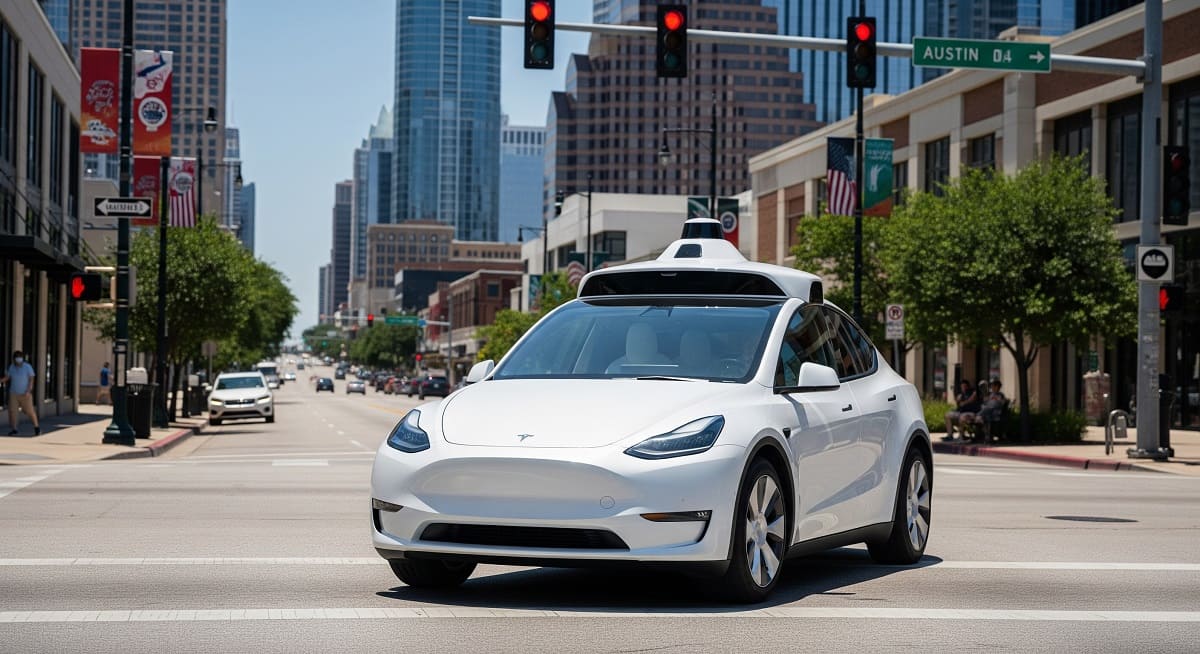 Image: Tesla's robotaxi service began with Model Y SUVs before the purpose-built Cybercab arrived.
The critical context is scale. Tesla's fleet is small, geographically narrow, and tightly supervised. Waymo's is not. That gap is what the next six months are supposed to close.
The Core News: Dallas First, Then Everywhere
The headline from Wednesday is a rollout schedule, plus an unusual amount of swagger for an earnings call.
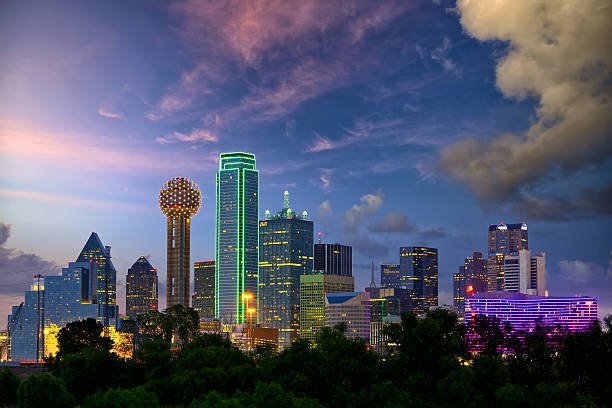 Image: Dallas becomes the second Cybercab city, with more markets promised before the end of 2026.
The expansion timeline Tesla outlined
| Timeframe | What Tesla says will happen | Why it matters |
|---|---|---|
| November 2026 | Cybercab service opens in Dallas | First proof the model can leave Austin |
| By end of 2026 | Additional cities added; Cybercabs sold to fleet operators | Turns Tesla into a vehicle supplier, not just an operator |
| Q2 2027 | Robotaxi revenue becomes "noticeable" in financials | Earliest real visibility into unit economics |
| Q3–Q4 2027 | Robotaxi business becomes "a big deal" | Musk's own framing of when this scales |
What Tesla would not answer
Here is where the call got slippery. Tesla quietly changed a chart in its shareholder letter. In the second-quarter letter it showed "Cumulative Paid Robotaxi Miles." A close read of that chart showed a 36% decline from Q1. In the new letter, the chart is titled "Cumulative Unsupervised Robotaxi Miles", which counts miles driven whether or not a paying passenger is inside.
That is a meaningful substitution. Unsupervised miles measure engineering progress. Paid miles measure whether anyone wants the product. Tesla swapped the second metric for the first at the exact moment it declined.
When an analyst asked directly about paid miles, Taneja said utilization is "improving" and offered nothing else.
Why This Matters: The Business Model Is Changing
Tesla is not simply adding cities. It is repositioning.
Selling Cybercabs to fleet operators by the end of 2026 means Tesla can generate robotaxi revenue without owning the operational headache: depots, cleaning, insurance, local permits, customer support. Waymo owns all of that, city by city. It is expensive and slow. Tesla's bet is that shipping a cheap vehicle to a third party is faster than building an operations company in 50 metros.
 Image: Waymo remains the US market leader with more than 4,000 robotaxis deployed.
Tesla vs Waymo, on the numbers that exist
| Dimension | Tesla | Waymo |
|---|---|---|
| Deployed robotaxis | Small fleets in six cities, Cybercabs only in Austin | 4,000+ vehicles across more than a dozen cities |
| Vehicle approach | Camera-only, no lidar, purpose-built two-seater | Lidar, radar and camera suite on Jaguar I-Pace |
| Cost argument | Claims lower build cost, fewer parts, faster scaling | Higher hardware cost per vehicle, richer sensor stack |
| Regulatory status | Under NHTSA investigation over missing brake pedal and mirrors | Cleared for driverless operation in multiple states |
| Revenue disclosure | None, and the key chart was redefined | Parent Alphabet reports segment figures |
The dollars are the story here. Tesla's entire thesis is that a Cybercab can be built so cheaply that it undercuts Waymo on price per mile and makes the economics work at lower utilization. That thesis is unproven outside Austin, and Tesla has now removed the one metric that would have tested it.
Technical Breakdown: Where the Real Bottleneck Sits
Tesla executives contradicted each other on Wednesday, and the contradiction is the most interesting part of the call.
1. The CFO blames regulations
Taneja said the challenge is getting "all the regulatory approvals" so Tesla can "start deploying the Cybercabs as fast as we can produce them." This is Musk's long-standing position.
2. The autonomy VP blames the software
Ashok Elluswamy, VP overseeing autonomy, disagreed: "It's not purely regulatory. It's technology driven."
3. The evidence backs Elluswamy
Tesla's service hours tell the story better than any quote:
- Original window: 6 a.m. to 9 p.m.
- Expanded to: 10 p.m. to 11 p.m.
- Next milestone: 2 a.m.
Those expansions are gated by AI capability, not paperwork. A regulator did not stop Tesla from driving at 1 a.m. The software's comfort zone did.
4. Highways are still off-limits
Tesla's robotaxi service does not operate on highways. That limits airport runs and longer suburban trips, which are among the highest-value rides in any ride-hailing network. Tesla says it will tackle harder scenarios, including highways, by the end of 2026.
5. The sensor question is unresolved
Tesla's camera-only approach, and its refusal to add lidar, remains the central technical argument in autonomy. Waymo's cars have largely avoided heavy rain. Tesla's have been spotted operating in it in Austin, which Tesla treats as a validation of the vision-only stack.
 Image: The lidar-versus-camera debate remains the fault line between Tesla and the rest of the industry.
The Regulatory Problem Tesla Keeps Waving Away
In September 2026, hours after Tesla formally launched the Cybercab in Austin, the National Highway Traffic Safety Administration opened an investigation into whether the vehicle complies with federal motor vehicle safety standards.
The wrinkle: the Cybercab has no brake pedal and no side mirrors. Both are currently required. Automakers self-certify compliance, and Tesla claims the Cybercab is compliant. NHTSA has proposed removing some of those requirements, but that rulemaking is likely months away.
Tesla's argument is essentially that the rules will catch up to the product. That is a bold position for a company planning to sell vehicles to third-party fleet operators, who will need their own state-level permits.
 Image: Tesla says the Cybercab is one of its easiest products to manufacture at scale.
Competitive Landscape: Crowded, and Getting Crowder
Tesla is entering a market that has matured considerably while it was perfecting a two-seater.
| Player | Position | Threat to Tesla |
|---|---|---|
| Waymo | Market leader, 4,000+ vehicles, 12+ cities | Highest. Real operations experience and regulatory track record |
| Zoox (Amazon) | Purpose-built robotaxi, testing in multiple cities | Direct competitor on the "custom vehicle" thesis |
| Baidu Apollo Go | Scale leader in China, millions of rides | Sets the cost benchmark Tesla must beat |
| Traditional automakers | Largely retreated or partnered up | Low near-term threat, but they own manufacturing |
| Chinese EV entrants | Aggressive cost structures | Pressure on the Cybercab's pricing story |
The uncomfortable irony: Tesla's biggest claimed advantage is manufacturing simplicity, but the Cybercab's first real obstacle is a regulatory exemption, not a production line. Taneja said the manufacturing team believes "scaling would not be that much of a challenge." That is the easy part of the problem.
What This Means for AI-Tool and AI-News Publishers
This story is unusually rich for content businesses because it contains a verifiable data trick, a quote-level contradiction, and a clear timeline. Here is how to use it.
- Build the "metric swap" explainer. A short piece titled something like "Tesla quietly changed its robotaxi chart, and the old one showed a 36% decline" is highly linkable. Chart-comparison posts travel well on X and LinkedIn and are easy to update quarterly.
- Create a robotaxi tracker page. A living table of Tesla cities, service hours, Waymo city counts, and NHTSA filings gives you a recurring SEO asset. Every earnings call refreshes it. Target queries like "Tesla robotaxi cities list" and "Cybercab launch date."
- Publish the "camera vs lidar" primer as an evergreen. Tie it to the rain-in-Austin claim and the Elluswamy comments. This ranks for years and pulls steady search traffic independent of news cycles.
- Mine the executive contradiction. "Tesla's CFO says regulations, its autonomy chief says software" is a ready-made hook for a 700-word analysis. Disagreement between named executives is the most quotable material on the call.
- Angle for Indian readers specifically. Indian founders and developers are watching whether Tesla's fleet-operator model could work in markets with weak public transit. A piece on "what a fleet-operator robotaxi licence would need to look like in India" is a local, high-intent traffic magnet nobody else is writing.
Challenges Ahead: What Could Still Go Wrong
- NHTSA could rule against the Cybercab's exemptions. A formal non-compliance finding would freeze expansion in the US market regardless of manufacturing capacity.
- Fleet buyers may not show up. Selling vehicles to operators shifts the demand risk onto third parties, who will want proven utilization data. Tesla has not published any.
- Highways remain unsolved. Without highway capability, Tesla cannot capture airport and long-haul rides, which anchor ride-hailing economics.
- The paid-miles decline is unexplained. A 36% quarter-over-quarter drop, even in a small fleet, suggests either capacity constraints or soft demand. Tesla has addressed neither.
- Revenue visibility arrives late. Musk says robotaxi will not be material until Q2 2027. That is a long time to defend a valuation story on unsupervised miles alone.
- Safety tolerance is zero. Elluswamy's line about not taking "the slightest possible risk" is admirable and also a scaling constraint, since expansion requires accepting new edge cases.
Final Thoughts
Tesla has built the most interesting robotaxi hardware in the market and is now trying to prove it can exist outside one Texas city on a schedule it controls. The Dallas launch in November will be the first genuine test, and the fleet-operator sales plan is the smartest thing in the strategy: it converts a brutal operations problem into a manufacturing one, where Tesla is genuinely strong.
But this quarter's shareholder letter told a subtler story than the earnings call did. When a company replaces a demand metric with a supply metric at the moment demand softens, the market eventually notices. The next two earnings calls will show whether Cumulative Unsupervised Robotaxi Miles was a temporary reframing or the first draft of a new narrative.
FAQ
What did Tesla announce about the Cybercab on its Q3 2026 earnings call?
Tesla said Cybercab service will expand to Dallas in November 2026, then to additional cities by the end of the year, and that it will begin selling Cybercabs to fleet operators before 2026 closes.
How does the Cybercab differ from Tesla's existing robotaxi service?
The existing service uses Model Y SUVs with FSD software. The Cybercab is a purpose-built two-seater with no steering wheel, pedals, or side mirrors, which is why it has drawn regulatory scrutiny.
Why is Tesla under NHTSA investigation?
The agency opened a probe in September 2026 into whether the Cybercab meets federal motor vehicle safety standards, since it lacks a brake pedal and side mirrors that current rules require.
When will Tesla's robotaxi business actually show up in its financials?
CEO Elon Musk said the ride-hailing business won't be noticeable in company figures until Q2 2027, and would become "a big deal" in Q3 or Q4 of 2027.
What changed in Tesla's shareholder letter chart?
Tesla replaced "Cumulative Paid Robotaxi Miles" with "Cumulative Unsupervised Robotaxi Miles." The earlier chart showed a 36% quarter-over-quarter decline in paid miles, while the new metric counts miles driven without passengers.
Do Tesla executives agree on what is holding back the rollout?
No. CFO Vaibhav Taneja pointed to regulatory approvals, while autonomy VP Ashok Elluswamy said the constraint is "technology driven," citing service hours that expand only as the AI software improves.


