Cerebras CEO Says Personal AI Assistants Will Soon Live in Every Home
Cerebras Systems CEO Andrew Feldman just put a timeline on something the entire consumer AI industry has been circling for years: a personal AI assistant th...

Cerebras Systems CEO Andrew Feldman just put a timeline on something the entire consumer AI industry has been circling for years: a personal AI assistant that lives in your home, runs partly on a local device, and has your credit card on file. Speaking on the main stage at TechCrunch Disrupt 2026 in San Francisco on Tuesday, Feldman said the leap to a true home AI appliance is "not very far away." That single soundbite matters because Cerebras builds the silicon that makes fast inference cheap, and when the person selling the picks and shovels predicts the gold rush is local, founders should pay attention.
What Is Cerebras, and Why Its CEO Is Talking About Your Living Room
Cerebras Systems is the chipmaker behind wafer-scale processors that are literally the size of a dinner plate, a deliberate bet against the thousands of tiny chips rivals like Nvidia string together. Its flagship parts, including the WSE-3 and CS-3 systems, are built to run massive AI models faster and with less networking overhead, which is why the company has become a poster child for the "Nvidia alternative" narrative.
 Image: A wafer-scale AI processor, the size of a dinner plate, that powers Cerebras data-center systems.
Feldman is not a neutral observer here. Every dollar that flows into AI inference is a dollar that could eventually flow to Cerebras hardware. So when a chip executive predicts mainstream home adoption of AI agents, treat it as both a genuine trend call and a sales pitch.
The Core News: A Home AI Appliance Is "Not Very Far Away"
The headline came in response to a simple question at Disrupt: what would it take for AI to become a real home appliance? Feldman's answer was blunt and specific.
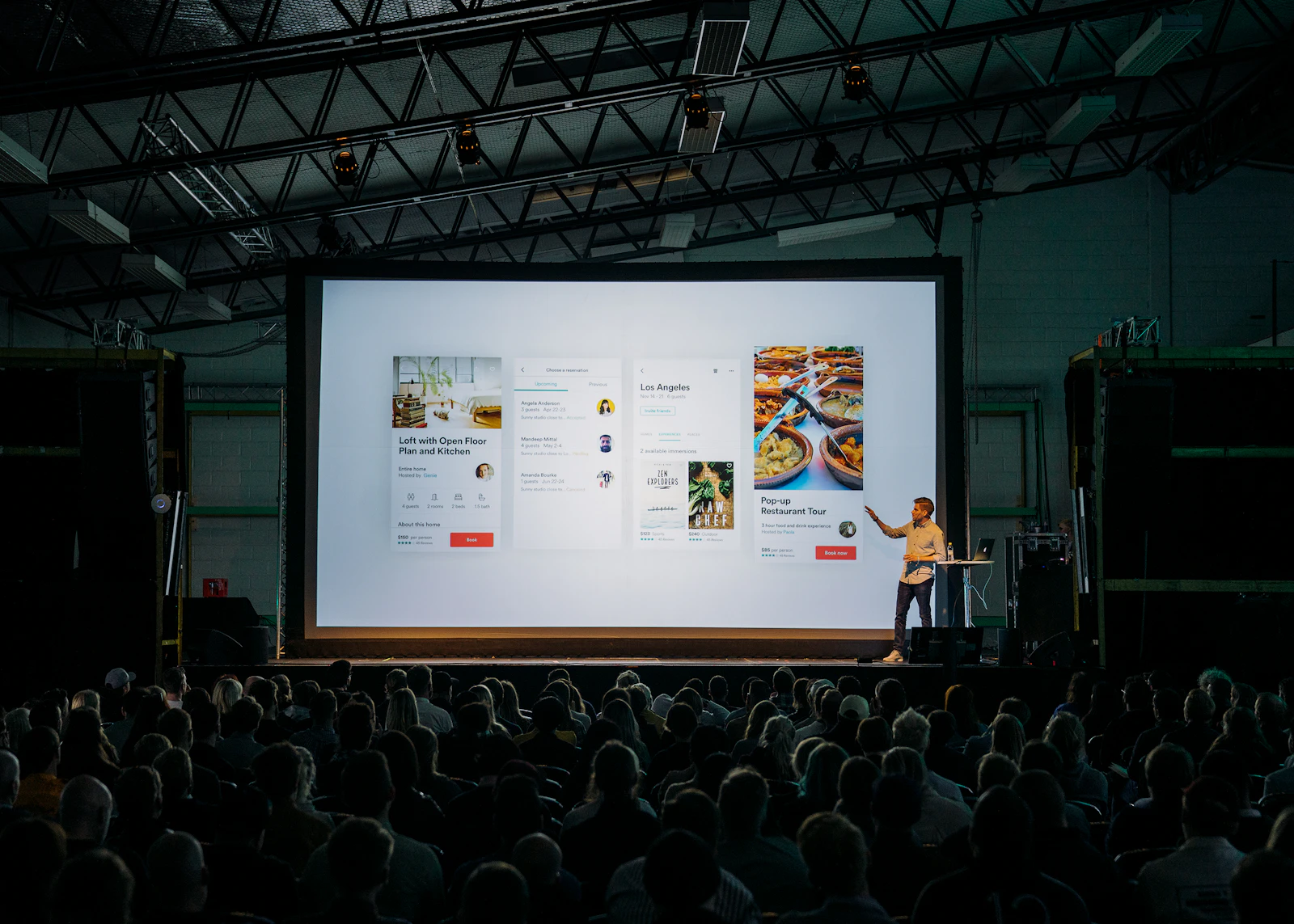
 Image: The main stage at TechCrunch Disrupt, where founders and executives make their biggest bets public.
Key points from his on-stage comments:
- Local-first architecture: The assistant will do some processing on the device and some in the cloud, exactly like a modern smartphone.
- Deep personalization: These agents "will get to know you very well," building a long-term memory of your habits and preferences.
- A security perimeter: Feldman framed privacy as an architectural feature, not an afterthought, with a protected boundary around your AI.
- Agentic purchasing: The assistant "will certainly have access to credit cards and be able to buy things for you."
- Real-world proof points: He pointed to consumer AI agents like Meta's Muse and Instinct, the startup now valued at $10 billion, as evidence that agents are finding mainstream footing.
Feldman also revealed he is a heavy user himself, running what he called "a collection of agents" to sweep his calendar and pull background on the people he is about to call. But he was clear about where his ambitions stop: "One of the reasons I love being in infrastructure is because I don't need the consumer-facing idea," he said. "I like building the platforms that other people's ideas take flight on."
Why This Matters: The Agentic AI Land Grab Moves Into the Home
For the past two years the AI fight has been about models and cloud compute. Feldman is pointing at the next battleground: the physical space inside your house. That shift has three big consequences.
1. Inference costs become the whole game. If assistants run locally, the hardware must be cheap enough for a consumer and fast enough to feel instant. That is precisely the problem Cerebras, Nvidia, Apple, and Qualcomm are all racing to solve, and it explains why inference economics is now the hottest topic in chip design.
2. Privacy becomes a product, not a policy page. A device that knows your calendar, your spending, and your family's routines is useless if users do not trust it. Feldman's "security perimeter" language is a preview of the marketing language every consumer AI device will use in 2027.
3. The credit card is the killer app. The moment an AI can transact on your behalf, it stops being a novelty and becomes infrastructure for commerce. That is where the real revenue (and the real regulatory scrutiny) will live.
| Layer | Today (2026) | Likely Home-AI Future |
|---|---|---|
| Compute | Cloud GPUs, rented by the hour | Hybrid: on-device chip plus cloud fallback |
| Interaction | Chat windows, phone apps | Always-on ambient assistant |
| Trust model | Terms of service and opt-ins | Hardware security perimeter |
| Commerce | You click buy | Agent buys on your behalf |
| Hardware | You own a phone and a laptop | You own a dedicated AI appliance |
Key Details: The Hybrid Architecture Behind a Home AI Assistant
Feldman's smartphone analogy is the clearest technical clue. Here is how that split typically works and why it matters.
- On-device inference handles latency-sensitive, privacy-sensitive tasks such as wake-word detection, local memory, and simple commands. No round trip to a server means instant responses.
- Cloud inference handles heavy reasoning, large model calls, and tasks that need up-to-date world knowledge.
- A local memory store keeps your personal context on the device so the assistant "gets to know you" without shipping your whole life to a data center.
- An agentic action layer turns intent into action, whether that is booking a table, reordering groceries, or paying a bill.
- A security perimeter wraps the whole stack, controlling what the agent can see, store, and spend.
 Image: Today's smart speakers are passive responders. The next wave is meant to act on your behalf.
The gap between "smart speaker that plays music" and "AI appliance that buys your groceries" is not a single feature. It is a stack of hardware, memory, trust, and payments that all have to mature at once.
Competitive Landscape: Who Else Wants an AI Appliance in Your House
Feldman is not the only person betting on this. The home AI race already has crowded lanes.
- Nvidia dominates the data center but has signaled interest in edge and consumer inference, meaning the same fight could play out in your living room.
- Apple has the strongest distribution advantage: hundreds of millions of devices already in homes, plus a silicon roadmap that makes on-device AI a default rather than a purchase.
- Google owns the assistant habit and the Nest hardware line, but has struggled to convert early smart-home leads into agentic commerce.
- Meta is already shipping consumer AI agents like Muse, giving it a direct claim on everyday users.
- Startups like Instinct, now valued at $10 billion, show investors are willing to pay premium prices for agent-first consumer products.

The strategic irony is sharp: Cerebras makes money from centralized data centers, yet its CEO is describing a future where more intelligence runs at the edge. That tension is exactly why the hybrid model, not a pure local model, is the safe prediction.
What This Means for AI-Tool and AI-News Publishers
This story is a content goldmine because it is a prediction, not a product launch, which means you can own the narrative before competitors do.
- Write the "home AI appliance buyer's guide" now. Rank ahead of the launch by comparing on-device vs cloud assistants, and update it as Apple, Google, and Meta ship.
- Turn the security perimeter into a trust explainer. A deep dive on "what your home AI knows about you and how to lock it down" is evergreen, high-intent SEO with strong affiliate potential.
- Build a comparison table of agentic purchasing tools. When an AI can spend your money, readers will search for "is it safe" and "how to set spending limits." Own those queries early.
- Mine the Disrupt 2026 stage for clip-ready quotes. Feldman's "collection of agents" line is a perfect short-form hook for LinkedIn and X threads aimed at founders.
- Angle for Indian founders specifically. With India's device-first, price-sensitive market, a piece on "what a home AI appliance must cost to win in India" gives you a localized take no US outlet will write.
Challenges Ahead
It would be easy to walk away from a Disrupt keynote believing the home AI appliance ships next quarter. It does not. Several hard problems remain unsolved.
- Consumer hardware economics are brutal. A device that runs capable local models needs serious silicon, and that cost has to fall dramatically before it becomes a mass-market purchase.
- Privacy is a promise you cannot un-break. A single high-profile breach of a home assistant with payment access could set consumer trust back years.
- Agentic purchasing carries real liability. If your AI buys the wrong thing or gets scammed, who is responsible: you, the model vendor, or the device maker? No one has answered this cleanly.
- The "killer app" is still missing. Feldman admitted he is happy to leave the consumer idea to others, which is a candid way of saying nobody has nailed the must-have use case yet.
- Local models lag frontier models. On-device intelligence will almost always trail the biggest cloud models, so the hybrid split is a compromise, not a clean win.
Final Thoughts
Feldman's Disrupt comments are less a product announcement than a map of where the smartest infrastructure money thinks consumer AI is heading: toward a hybrid, always-on assistant that knows you, guards you, and spends for you. The winners will not be the companies that build the biggest model, but the ones that make local inference cheap, private, and trustworthy enough to hand over a credit card. Watch the silicon announcements over the next 12 to 18 months, because that is where this prediction either becomes a product or quietly fades.
FAQ
What exactly did the Cerebras CEO say at Disrupt 2026?
Andrew Feldman said a future where everyone has a personal AI assistant at home is "not very far away," describing agents that run partly on-device, know you well, and can buy things using your credit card.
How would a home AI assistant actually work?
It would use a hybrid model: light, private tasks run locally on the device, while heavier reasoning goes back to the cloud, all wrapped in a security perimeter with access to local memory.
Who else is competing in home AI?
Apple, Google, Meta, and Nvidia are all positioned in this space, while startups like Instinct, valued at $10 billion, show how much investor appetite exists for agent-first consumer products.
Is there a release date for a Cerebras home AI device?
No. Feldman described an industry trend rather than a Cerebras product, and explicitly said he prefers building infrastructure platforms rather than consumer-facing devices.
What are the biggest risks?
Rising hardware costs, privacy breaches, and unresolved liability for an AI that spends your money are the three problems most likely to slow adoption.
Why does this matter for founders right now?
Because if inference shifts toward the edge, the next wave of startups will be built on cheap local compute and agentic commerce, not just bigger cloud models, which changes where the opportunity sits.
Sources: TechCrunch Disrupt 2026 keynote coverage by Sarah Perez (published October 13, 2026).